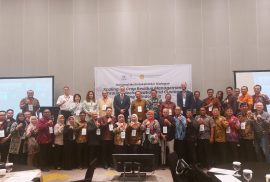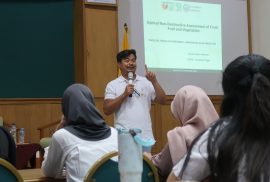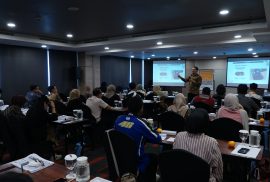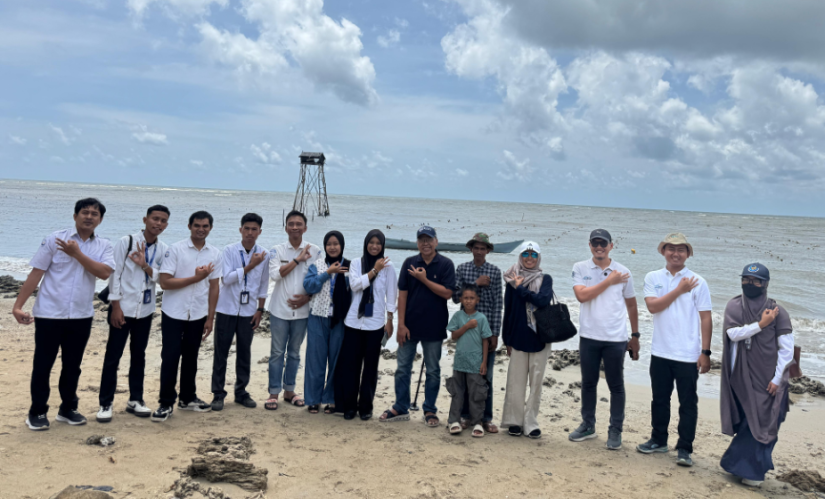
Takalar, South Sulawesi — The Department of Agricultural and Biosystems Engineering, Faculty of Agricultural Technology, Universitas Gadjah Mada (UGM), conducted a survey and market price dataset collection for seaweed commodities in Punaga Village, Takalar Regency, South Sulawesi, from 25 to 27 January 2026. This activity forms part of the research project Digital Aquaculture: Sustainable Seaweed Cultivation through Smart Technology and Automation (SeaTech), supported by the Partnerships for Australia–Indonesia Research (PAIR) program.
The SeaTech research is implemented through a cross-institutional collaboration that integrates expertise in aquaculture, agricultural and biosystems engineering, information systems, remote sensing, and the development of dashboards and decision support systems. The research team comprises Prof. Andi Dirpan (Universitas Hasanuddin), Prof. Lilik Sutiarso (Universitas Gadjah Mada), Prof. Nurjannah Nurdin (Universitas Hasanuddin), Prof. Mokhamad Nur Cahyadi (Institut Teknologi Sepuluh Nopember), and Dr. Derry Wijaya (Monash University).
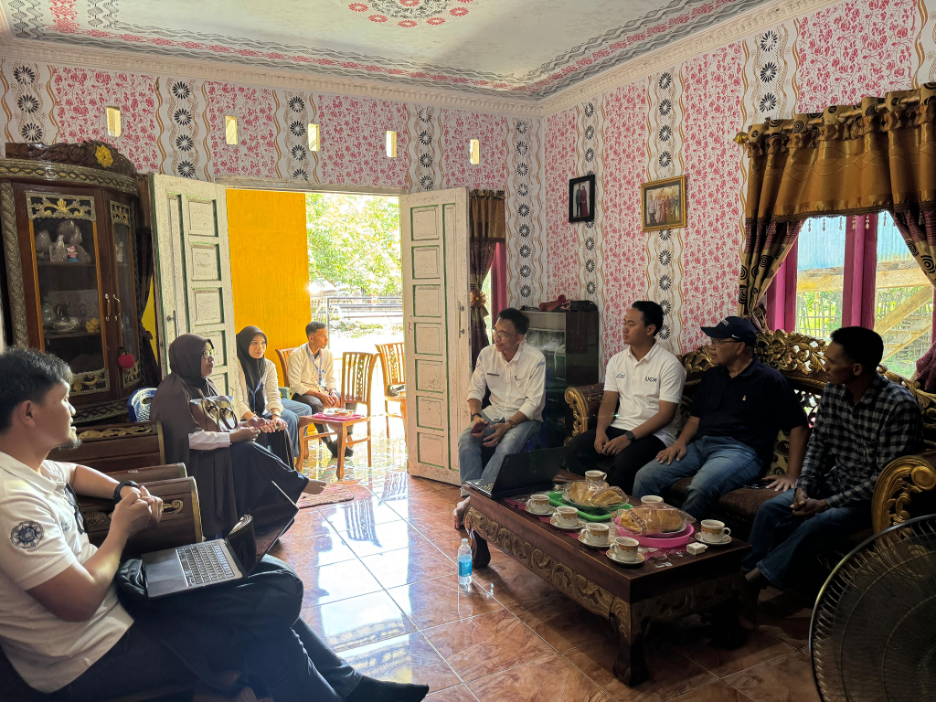
The survey activities were led by Prof. Dr. Ir. Lilik Sutiarso, M.Eng., a Professor at UGM, together with the research team Dr. Andri Prima Nugroho and Ardan Wiratmoko, M.Sc., from the Department of Agricultural and Biosystems Engineering, UGM. The survey implementation also involved local stakeholders, ranging from government representatives to seaweed farmers as the main actors in the field.
The survey focused on the collection of market price data, supply chain dynamics, production conditions, and institutional aspects, which will subsequently be integrated into a Government User Interface Dashboard. This dashboard is designed as a decision support system to assist local governments in managing the seaweed sector in a more measurable, transparent, and data-driven manner.
Prof. Lilik Sutiarso emphasized that the survey represents a critical stage in establishing a robust foundation for data-driven decision-making systems.
“This survey is not merely about data collection; it is an initial step toward building a government dashboard supported by strong field-based data. Our objective is to develop a system that goes beyond data visualization and is capable of supporting operational, evidence-based policy decisions,” said Prof. Lilik.
He further explained that the developed dashboard is intended to evolve from a simple visual showcase into a decision-grade system, capable of delivering strategic information, identifying risks, and providing concrete support for policy formulation in the seaweed sector at the regional level.
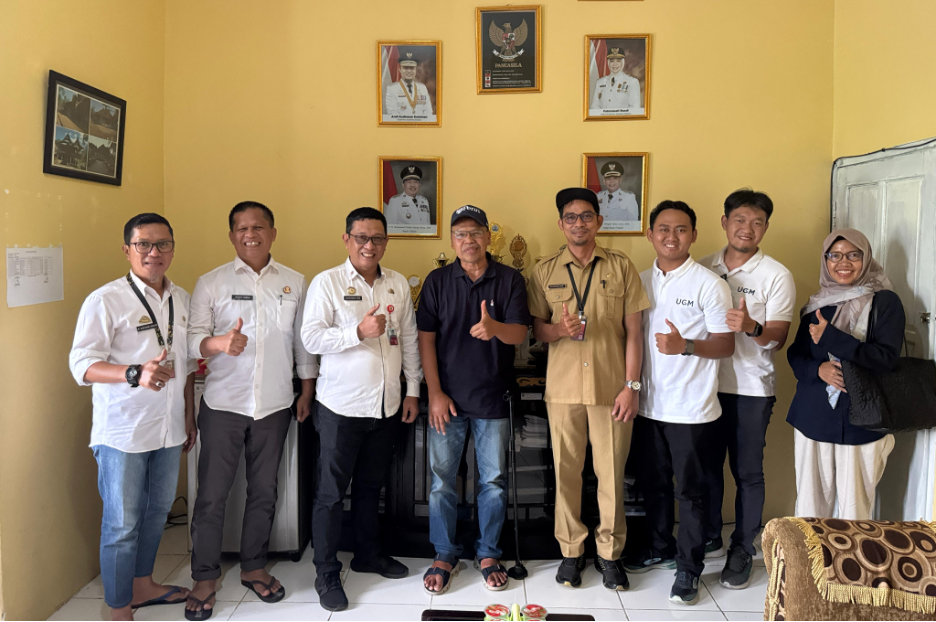
From the perspective of local government, Mr. Nasrudin Azis stated that the availability of an integrated dashboard would significantly support planning and monitoring functions.
“With market prices, production data, and field conditions integrated into a single dashboard, local governments will be better equipped to formulate policies that are more targeted and responsive to real conditions on the ground,” he noted.
Meanwhile, Mr. Abdul Bakri Daeng Rewa, a seaweed farmer from Punaga Village, highlighted that data transparency is an urgent need at the farmer level.
“Farmers urgently need clear information on prices and market conditions. A system like this can help us better determine harvest timing and selling strategies,” he explained.
The development of the Government User Interface Dashboard within the SeaTech program is aligned with the achievement of the Sustainable Development Goals (SDGs), particularly SDG 1 (No Poverty) through improved transparency of market and price information that supports seaweed farmers’ livelihoods; SDG 8 (Decent Work and Economic Growth) by promoting business efficiency and coastal economic growth through supply chain digitalization; SDG 12 (Responsible Consumption and Production) through more efficient and circular-economy-oriented production and waste management; SDG 13 (Climate Action) through the integration of environmental and climate risk data to support adaptive responses to climate change; and SDG 14 (Life Below Water) through the monitoring of marine conditions and the promotion of sustainable seaweed cultivation practices.