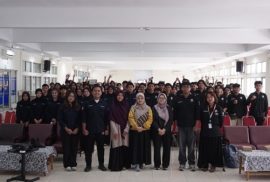
YOGYAKARTA — Lecturer at the Department of Agricultural and Biosystems Engineering (DTPB) Faculty of Agricultural Technology UGM, Dr. Andri Prima Nugroho, S.T.P., M.Sc., Ph.D., served as the primary trainer for the Bappenas AI Capacity Building 2026 program, held in Yogyakarta on October 15–16, 2026. Dr. Andri, who also serves as a Researcher at the Smart Agriculture Research Center and Research Coordinator for the UGM-AI Flagship at the UGM Digital Transformation Bureau, trained policy analysts from the Deputy for Human Development and Cultural Affairs (PMK), Ministry of National Development Planning/Bappenas, in leveraging artificial intelligence for development planning and strategic decision-making.
Throughout the training, Dr. Andri delivered a comprehensive curriculum covering prompt engineering for policy analysis and synthesis, structured prompt crafting (combining role, context, task, constraints, and verification), critical evaluation of AI outputs, as well as AI governance and responsible AI principles. The modules focused on utilizing AI to streamline policy document drafting while maintaining human oversight, evidence verification, and strict accountability.

To complement the session, Dr. Andri demonstrated the use of Obsidian for Personal Knowledge Management (PKM). By structuring notes and references within Obsidian, analysts can build a robust knowledge base integrated with AI tools to facilitate seamless workflows from policy analysis to policy brief drafting.
Dr. Andri Prima Nugroho’s leadership in training national policy planners stands as a concrete recognition of the academic expertise of DTPB FAT UGM faculty members in artificial intelligence, information engineering, and digital transformation. The multidisciplinary competence of DTPB FAT UGM academics extends beyond conventional agricultural engineering, demonstrating national leadership in applying digital technologies and AI to enhance public governance and strategic national planning.
This interactive capacity-building program, combining lectures, tool demonstrations, and hands-on exercises, equips policy planners to adopt AI in a targeted, critical, and responsible manner. This initiative advances the United Nations Sustainable Development Goals (SDGs), particularly SDG 4: Quality Education, SDG 9: Industry, Innovation, and Infrastructure, and SDG 16: Peace, Justice, and Strong Institutions.