Sleman, 12 August 2025 — In commemoration of the 80th Anniversary of the Independence of the Republic of Indonesia, the Serayu Opak River Basin Organization (BBWS Serayu Opak) held the Clean Irrigation Movement as part of the government’s priority program to achieve national food self-sufficiency. The event took place at the Van der Wijck Canal, Karang Talun Irrigation Area, within the Buk Renteng Cultural Heritage site, located in Tangkisan Hamlet, Banyurejo Village, Tempel Subdistrict, Sleman Regency, Special Region of Yogyakarta.
The program featured Prof. Dr. Sigit Supadmo, Professor at the Department of Agricultural and Biosystems Engineering (DTPB), Faculty of Agricultural Technology (FTP), Universitas Gadjah Mada, as the keynote speaker. In his session titled “Prioritizing the Role of Irrigation as the Foundation of Food Self-Sufficiency,” Prof. Sigit discussed the background of the Clean Irrigation Movement.
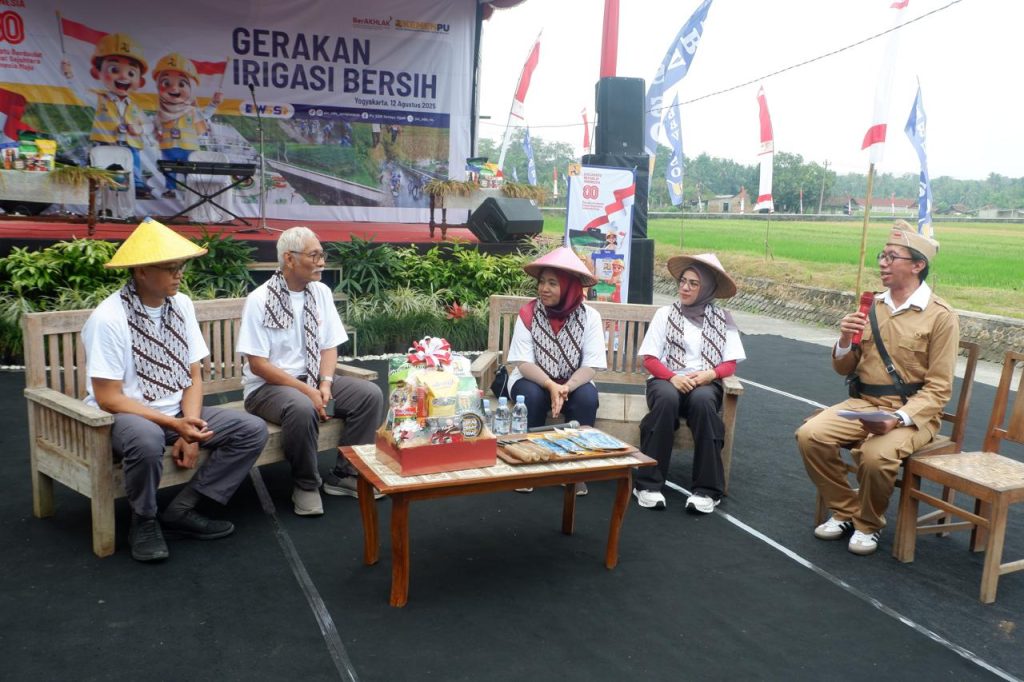
He explained that the movement was first initiated at the Tegal Kiri Weir on 26 March 2013 by Dr. Donny Azdan, then Director of Water Resources and Irrigation at the National Development Planning Agency (Bappenas). The initiative was named Merti Tirto Amartani, a tribute to Sultan Agung Hanyakrokusumo of the Islamic Mataram Kingdom, who reigned in Pleret. “Amartani” refers to the Sultan’s childhood name, “Martani.” The movement also revived the long-lost agricultural ritual known as Mapag Toya—the ceremonial first release of water into the rice fields to mark the start of the farming season. According to Prof. Sigit, sustaining this initiative requires ongoing dialogue among communities, government, and academia.
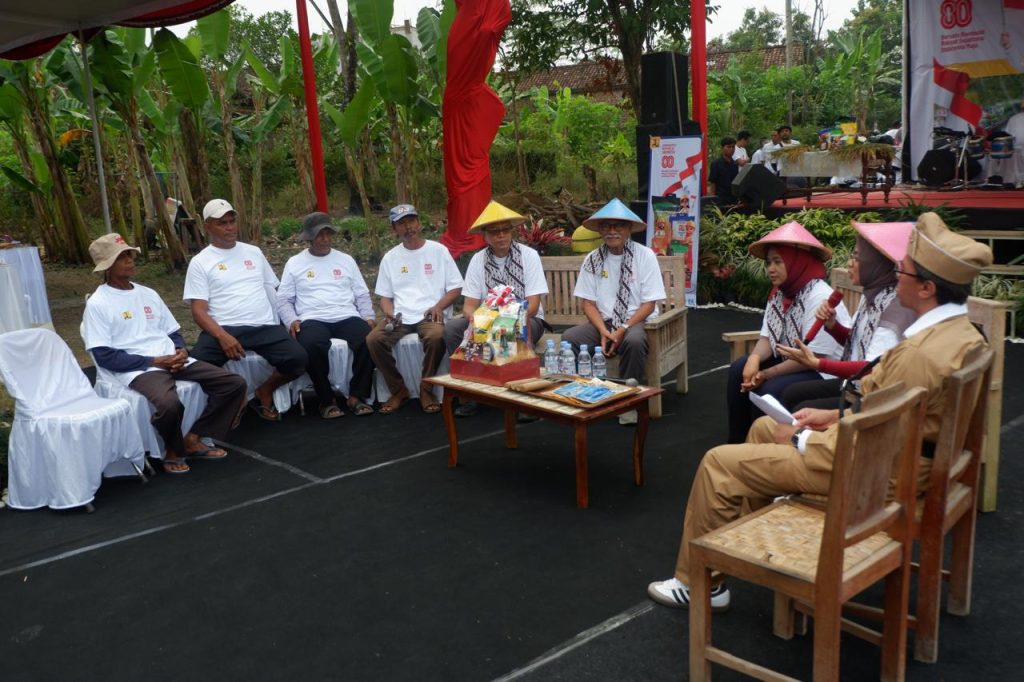
In addition to the dialogue session, the event included the symbolic declaration of the Clean Irrigation Movement and a canal-cleaning activity at the Van der Wijck Canal. This effort brought together local communities, farmers, and various institutions, reflecting cross-sector collaboration to preserve agricultural water resources.
BBWS Serayu Opak emphasized that the movement is part of a long-term commitment to improving irrigation network efficiency and cleanliness, while strengthening community involvement in water resource management. The initiative directly aligns with several United Nations Sustainable Development Goals (SDGs):
-
SDG 2: Zero Hunger — by safeguarding clean and reliable irrigation systems, contributing to higher agricultural productivity and national food security.
-
SDG 6: Clean Water and Sanitation — by ensuring better quality and distribution of irrigation water for farmland.
-
SDG 11: Sustainable Cities and Communities — by preserving irrigation networks in cultural heritage areas like Buk Renteng, thus protecting both the environment and cultural legacy.
-
SDG 17: Partnerships for the Goals — through the synergy of government, academia, farmers, and the community to achieve sustainable water management.