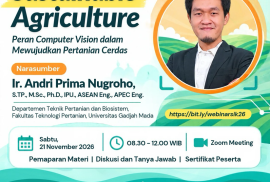
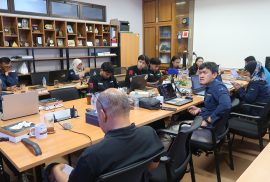
YOGYAKARTA — Utilizing technology to understand crop conditions and support agricultural research activities was the central focus of the SMART Agriculture session in Corteva’s Learning Academy on Tuesday, November 10, 2026. Held online via Microsoft Teams, the session featured two speakers from the SmartAgri team at the Department of Agricultural and Biosystems Engineering (DTPB), Faculty of Agricultural Technology, Universitas Gadjah Mada (FAT UGM): Ir. Andri Prima Nugroho, S.T.P., M.Sc., Ph.D., IPU., ASEAN Eng., APEC Eng. and Ardan Wiratmoko, S.T.P., M.Sc.
This knowledge-sharing session brought together academic research perspectives with technology development needs in the industry. Preparation for the session focused on applying smart and precision agriculture to research farm trials, targeting Corteva’s Research and Development (R&D) teams across ASEAN and Pakistan.
Case Studies on UAVs, Sensors, and Field Feasibility
In preparing the session materials, the SmartAgri DTPB FAT UGM team used case studies to bridge precision agriculture concepts with operational challenges. Developed alongside the partner, the scope covered crop monitoring, imagery from unmanned aerial vehicles (UAVs), and controlled growing-environment technologies.
Precision agriculture links observations of crop and environmental conditions with management decisions. Accordingly, deploying sensors or imagery needs to be paired with field verification and defining the information required by users, ensuring technology choices align with research goals and site conditions.
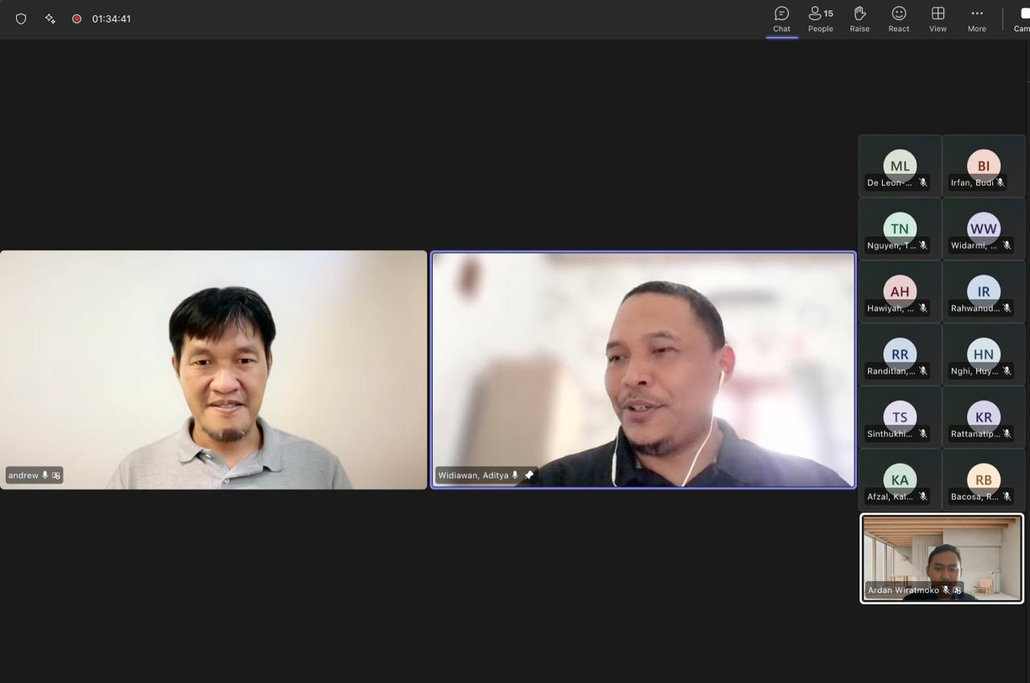
Discussions highlighted practical questions, including how to distinguish crop conditions using UAV imagery and cost comparisons between conventional farming and smart farming. These points underscored the need to weigh technical capability alongside implementation feasibility, where technologies generating more detailed data should still be evaluated against observation needs, cost, and available operational support.
Exchanges between researchers and practitioners create openings to shape more specific precision agriculture case studies and evaluation designs for future research. The initiative aligns with the Sustainable Development Goals (SDGs), particularly SDG 2 (Zero Hunger) through technology supporting crop management and sustainable agriculture, SDG 4 (Quality Education) by building technical knowledge and skills among R&D personnel, SDG 9 (Industry, Innovation, and Infrastructure) by strengthening research and innovation capacity around sensors, UAV imagery, and data utilization, and SDG 17 (Partnerships for the Goals) through knowledge-sharing collaboration between academia and industry.
Contributor: Andri Prima Nugroho