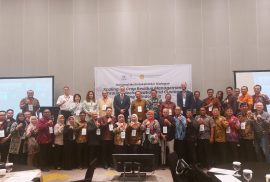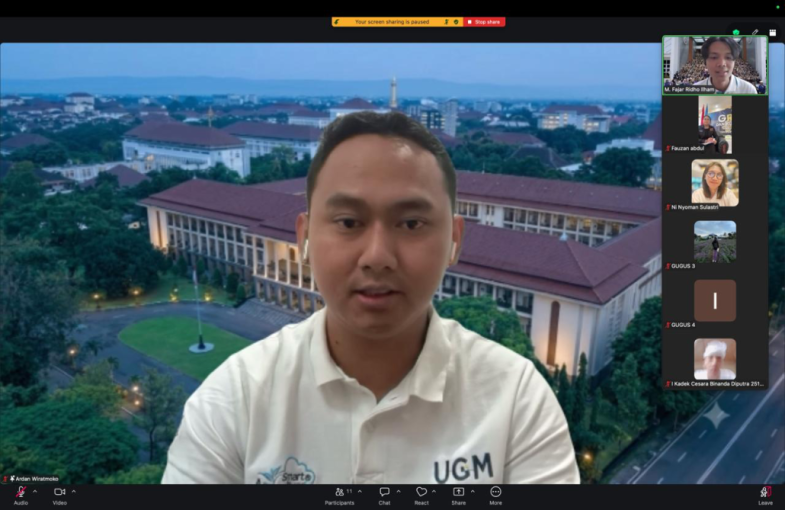
Bali, August 22, 2026 – Agricultural innovation in the future requires not only advanced technology but also the ability to understand real-world challenges and transform them into impactful solutions. This perspective was shared by Ardan Wiratmoko, S.T.P., M.Sc., a lecturer at the Department of Agricultural and Biosystems Engineering (DTPB), Faculty of Agricultural Technology, Universitas Gadjah Mada (FTP UGM), when he served as a speaker at the event “From Campus Innovation to Future Career: Program Kreativitas Mahasiswa in Supporting Climate-Smart Agriculture and Precision Agriculture”, organized by the Agricultural and Biosystems Engineering Study Program, Faculty of Agricultural Technology, Universitas Udayana, on Saturday (August 22).
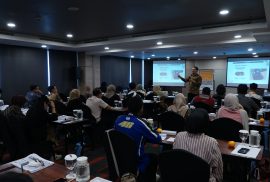
Held in a hybrid format through Zoom Meeting and Gedung JA, Bukit Jimbaran Campus, Badung, Bali, the event was part of Universitas Udayana’s efforts to strengthen student creativity, innovation, and competitiveness through the Program Kreativitas Mahasiswa (PKM). During the forum, Ardan shared perspectives on developing student ideas so that they remain relevant to the challenges facing the future of agriculture.
Ardan Wiratmoko Shares Insights on Student Innovation

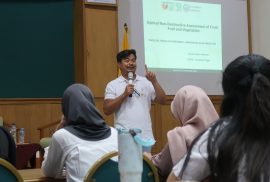
In his presentation, entitled “From Problem to Impact: Student Innovation for Climate-Smart & Precision Agriculture,” Ardan emphasized the importance of using real-world problems as the starting point for developing innovation.
According to Ardan, students should not merely produce ideas that are academically interesting. An innovation needs to be scientifically grounded, testable, relevant to users’ needs, and capable of generating real impact for the agricultural sector.
“Good innovation does not simply start with advanced technology, but with the ability to properly understand a problem. Students need to learn how to transform real-world problems into ideas, research, prototypes, and ultimately solutions that create tangible impact,” said Ardan.
This approach is also in line with various research and development activities carried out by the Smart Agriculture Research Center UGM, particularly in promoting the utilization of technology to address real agricultural challenges.
Membuka Peluang PKM melalui Climate-Smart dan Precision Agriculture
Ardan discussed various opportunities for developing PKM ideas in the fields of Climate-Smart Agriculture and Precision Agriculture.
Technologies such as sensors, Internet of Things (IoT), remote sensing, automation, artificial intelligence, and decision support systems can be integrated into solutions for addressing various agricultural challenges.
These technologies are increasingly relevant for improving water and production-input efficiency, adapting to climate change, increasing productivity, and managing agricultural resources more precisely and sustainably.
Through this approach, students can develop ideas that go beyond conceptual proposals and move toward research, prototype development, testing, and real-world implementation.
PKM as a Learning Platform for Students
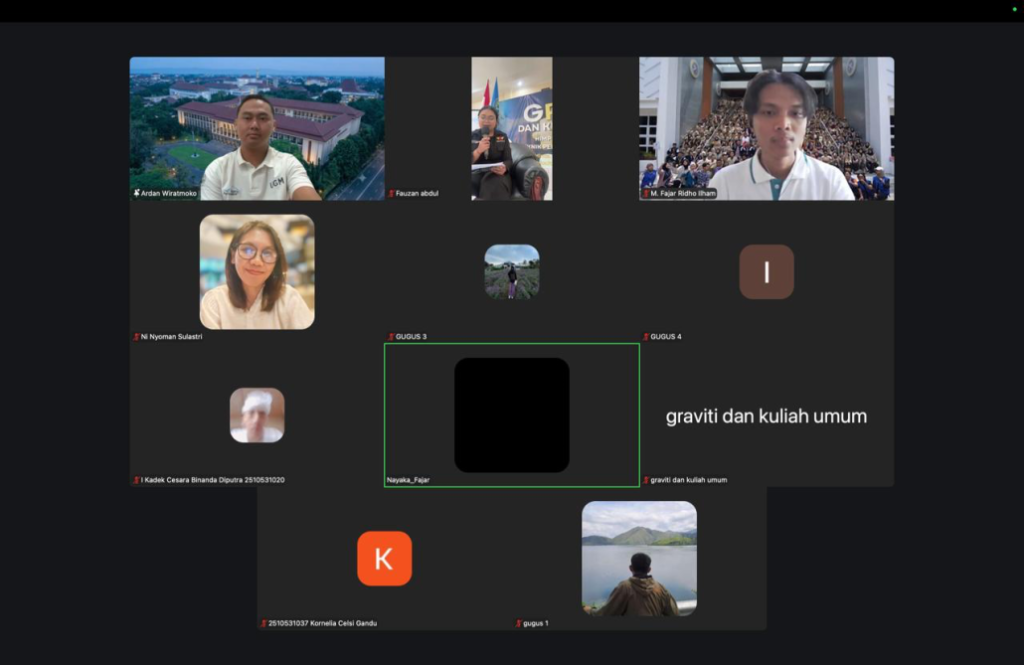
In addition to Ardan, the event also featured M. Fajar Ridho Ilham, S.T.P., who shared his experience participating in the Program Kreativitas Mahasiswa and advancing to the Pekan Ilmiah Mahasiswa Nasional (PIMNAS).
His experience provided participants with insights into the process of developing PKM ideas, from building effective teamwork and implementing projects to presenting student innovations at the national level.
The two perspectives demonstrated that PKM is not merely a student competition, but also a learning platform for developing research skills, creativity, scientific communication, teamwork, and the confidence to bring ideas toward real-world implementation.
Ardan added that participation in PKM can help students develop an innovative mindset while preparing them for their future professional careers.
“PKM can serve as an early laboratory for students to learn how to work in teams, develop data-based solutions, test ideas, and communicate their findings. These experiences are highly relevant when students later enter research, industry, or technology-based entrepreneurship,” Ardan added.
Strengthening Academic Collaboration between UGM and Udayana University
The event was part of the Pra Gema Kreativitas dan Ilmiah (GRAVITI) and General Lecture 2026, organized by the Association of Agricultural and Biosystems Engineering Students in collaboration with the Agricultural and Biosystems Engineering Study Program, Faculty of Agricultural Technology, Universitas Udayana.
The participation of a DTPB FTP UGM lecturer in the event also contributed to strengthening academic relations between higher education institutions, particularly in developing student competencies and exchanging knowledge in the field of agricultural and biosystems engineering.
Such collaboration provides students with opportunities to gain broader perspectives on developments in agricultural technology while understanding how knowledge acquired at university can be directed toward addressing real-world challenges.
Encouraging Adaptive and Sustainable Agriculture
The development of student ideas through Climate-Smart Agriculture and Precision Agriculture is closely connected to the broader sustainable development agenda. These approaches can support more productive and efficient agricultural systems while strengthening the sector’s capacity to adapt to climate change.
Through its involvement in academic forums and student capacity-building activities, DTPB FTP UGM continues to encourage knowledge exchange and innovation in agriculture. Strengthening students’ ability to transform problems into ideas, ideas into research, and research into solutions is expected to contribute to the emergence of a new generation of innovators capable of advancing Indonesia’s agricultural sector toward a more adaptive, precise, and sustainable future.