Vienna, April 27, 2025 — Dr. nat. techn. Rizki Maftukhah, S.T.P., M.Sc., lecturer at the Department of Agricultural and Biosystems Engineering, Faculty of Agricultural Technology, Universitas Gadjah Mada (FTP UGM), is currently participating in a research and training program at the Institute of Soil Research, University of Natural Resources and Life Sciences (BOKU), Vienna, Austria. This activity is part of a long-term research collaboration between FTP UGM and BOKU, which has been established for over a decade, particularly focusing on tropical soil health and land management.

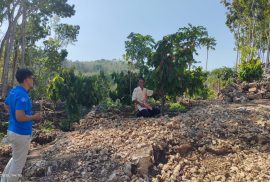
In this program, Dr. Rizki is conducting research on the management of post-mining land in Bangka Regency, Indonesia. Bangka is known as one of Indonesia’s largest tin-producing regions. However, extensive mining activities over the past decades have left behind serious environmental issues, including land degradation and contamination with heavy metals such as cadmium (Cd) and lead (Pb), which pose potential risks to agricultural products and the health of local communities.
As part of this research, Dr. Rizki brought soil samples from former mining areas in Bangka to be comprehensively analyzed at BOKU’s internationally accredited soil research laboratories. Prior to conducting the detailed research, Dr. Rizki also completed technical training on the use of laboratory equipment, including the C-N Analyzer, a crucial tool for analyzing carbon and nitrogen content in soil samples. This training was supported by the Erasmus+ program, which provides opportunities to enhance the research capacities and competencies of academics and researchers in the field of environmental studies.
The research activities are also integrated into the Joint Supervision program between UGM and BOKU, reflecting a concrete commitment to international academic collaboration. The research focuses on several stages, including soil sample sorting, heavy metal content analysis, characterization of physical and chemical soil properties, and testing the potential for land remediation using Nature-Based Solutions (NBS) approaches.
This research also forms part of the broader ASEAN-Uninet project titled Transforming Restoration of Post-Mining Soils with Nature-Based Solutions in Tropical Areas (RENTROP), which will be implemented in Indonesia, Thailand, and Vietnam. The results of this research are expected to provide practical technical recommendations for restoring degraded post-mining lands in tropical regions, including the use of locally available soil amendments to reduce heavy metal concentrations in soil and crops.
This initiative not only demonstrates the tangible contribution of academic researchers in addressing environmental challenges but also strengthens FTP UGM’s international research network in the field of sustainable development. Furthermore, this collaboration contributes to the achievement of several Sustainable Development Goals (SDGs), particularly:
-
SDG 3 (Good Health and Well-being): By ensuring agricultural land is free from harmful contamination.
-
SDG 12 (Responsible Consumption and Production): By promoting environmentally friendly land management solutions.
-
SDG 15 (Life on Land): Through efforts to rehabilitate and preserve degraded terrestrial ecosystems.
-
SDG 17 (Partnerships for the Goals): By strengthening academic collaboration between Indonesia and Austria.
Through this research, it is expected that land restoration efforts in Bangka will not only improve soil quality but also enhance food security, support local community welfare, and contribute to long-term environmental sustainability.