Magelang, August 10, 2026 – Environmental stewardship is built not only through government programs but also through active community participation in creating clean, healthy, productive, and sustainable living environments. This spirit was demonstrated by the Sambak Village Government, Kajoran District, Magelang Regency, through the Environmental Cleanliness and Beauty Competition commemorating the 81st Anniversary of the Republic of Indonesia, which involved lecturers from the Department of Agricultural and Biosystems Engineering (DTPB), Faculty of Agricultural Technology, Universitas Gadjah Mada (FTP UGM), as judges.
Held on Monday, August 10, 2026, the competition was participated in by 10 Rukun Warga (RW) across Sambak Village. The competition was part of the Sambak Village Government’s efforts to encourage community participation in maintaining environmental quality while strengthening the village’s commitment to implementing the Climate Village Program (Program Kampung Iklim/ProKlim).
DTPB FTP UGM Lecturers Join the Judging Team

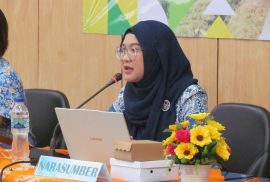
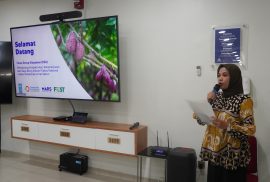
The Sambak Village Government invited three DTPB FTP UGM lecturers to serve as judges: Dr. Bayu Nugraha, S.T.P., M.Sc., Ph.D., Dr. Aryanis Mutia Zahra, S.T.P., M.Sc., Ph.D., and Dr. Nurhayati Tarigan, S.T.P., M.Sc.
The involvement of DTPB FTP UGM lecturers represents part of the collaboration that has been established between DTPB FTP UGM and the Sambak Village Government through various research activities, community engagement programs, and the development of environmental and sustainable agricultural initiatives.
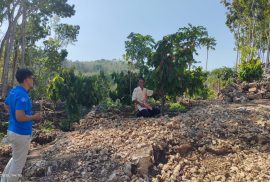
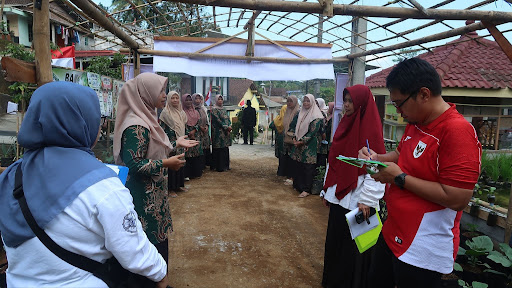
The judges conducted direct assessments of the environmental conditions in each participating area. The evaluation was carried out comprehensively by examining both the physical condition of the environment and various environmental management practices implemented by the community.
Assessment Covers Cleanliness, Environmental Management, and Community Empowerment
The Environmental Cleanliness and Beauty Competition in Sambak Village was designed to assess more than cleanliness and aesthetic appearance. Ten assessment criteria were used to evaluate the extent to which residents had implemented sustainable environmental management and community empowerment practices.
The first criteria included the cleanliness and aesthetic condition of neighborhood environments, as well as the cleanliness of village roads and the surrounding environment.
The assessment also covered household conditions, including the availability of adequate waste disposal facilities, the use of proper domestic wastewater disposal systems (SPAL), and households that were free from sources of pollution.

The utilization of home gardens was also assessed through the presence of TOGA (Family Medicinal Plants). In addition to household-level environmental management, the evaluation also considered community institutions and activities, including village-level Family Welfare Empowerment (PKK) groups, Waste Banks, and Women’s Farmer Groups (KWT).
The final criterion was the presence of village-level innovations or routine programs that had been implemented and sustained. This criterion provided an opportunity for each participating area to demonstrate creativity and locally developed initiatives aimed at improving environmental conditions and community well-being.
Each RW Showcases Unique Environmental Innovations
The competition also demonstrated that each RW had developed various unique and innovative programs based on local potential and community needs.
One notable innovation was the conversion of plastic waste into concrete paving blocks (conblocks). Plastic waste that could otherwise become a source of pollution was repurposed into a useful product. This initiative demonstrates the community’s efforts to reduce waste generation while developing locally appropriate waste utilization solutions.
In addition to waste management, residents also showcased innovations in the diversification of coffee-based processed products. Various coffee-derived products were developed to increase the added value of local agricultural commodities while strengthening the economic potential of Sambak Village.
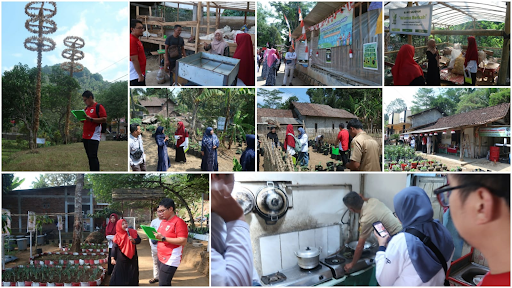
Another innovation involved the utilization of available land for Women’s Farmer Group (KWT) activities. Available land was used to cultivate various plants for household needs as well as productive group activities. The harvested products were subsequently developed through innovative processing of KWT products, allowing the activities to go beyond raw agricultural production and generate greater added value.
These diverse initiatives demonstrate that environmental management in Sambak Village has expanded beyond cleanliness to include local resource utilization, waste reduction, community economic development, women’s empowerment, and strengthening village resilience.
Building a Community-Based Environmental Culture
The various assessment criteria and innovations showcased during the competition demonstrate that environmental management in Sambak Village is being integrated into residents’ daily lives.
Environmental cleanliness, waste and wastewater management, home-garden utilization, wastewater treatment, KWT and PKK activities, and village-level innovations are interconnected components in building a healthy and sustainable rural environment.
As a village implementing the Climate Village Program, Sambak continues to encourage residents to actively participate in various environmental initiatives. The competition served as a platform to identify good practices that have emerged at the RW level while providing opportunities for communities to learn from innovations implemented in other areas.
Strengthening Collaboration between DTPB FTP UGM and Sambak Village
The involvement of DTPB FTP UGM in this activity further strengthens the collaborative relationship established with Sambak Village. This collaboration encompasses various research activities, dissemination of research findings, community engagement, and the development of programs related to agriculture and environmental management.
Through the involvement of lecturers as judges, academic perspectives can be integrated with environmental management practices implemented directly by the community. The activity also provided DTPB FTP UGM with an opportunity to directly observe the potential, innovations, and challenges associated with environmental management at the community level.
The various innovations identified during the competition have the potential to be further developed and replicated in other communities. This is in line with the collaborative efforts between DTPB FTP UGM and Sambak Village to build a community that is more adaptive, self-reliant, and sustainable.
The Environmental Cleanliness and Beauty Competition commemorating the 81st Anniversary of the Republic of Indonesia ultimately served not merely as a competition among Rukun Warga, but also as a platform to identify, document, and appreciate community-based good practices in environmental stewardship and local resource development.
By integrating cleanliness, waste and wastewater management, home-garden utilization, community empowerment, and village-level innovation, Sambak Village continues to strengthen its commitment as an environmentally conscious and sustainable village through the Climate Village Program (ProKlim).