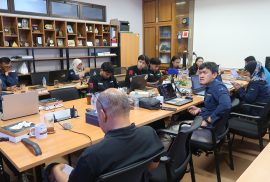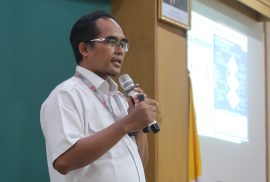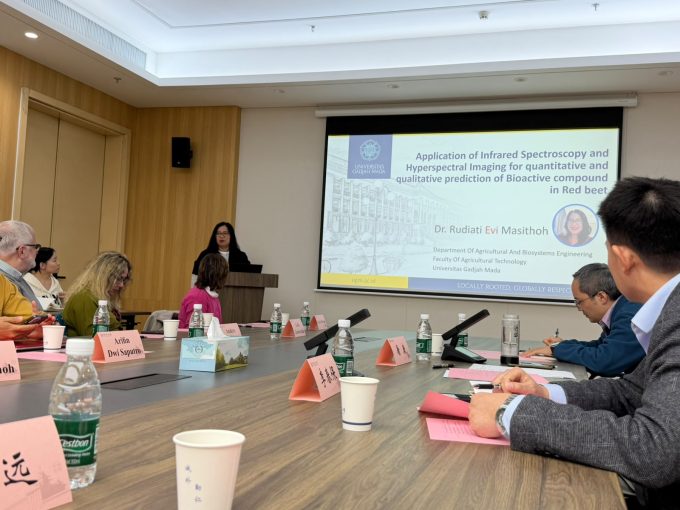
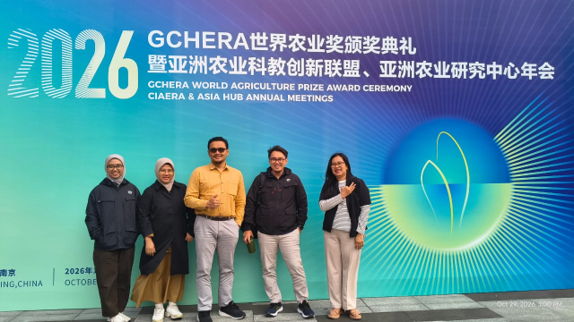
NANJING — Lecturer and researcher at the Department of Agricultural and Biosystems Engineering (DTPB), Faculty of Agricultural Technology (FAT), Universitas Gadjah Mada (UGM), Dr. Rudiati Evi Masithoh, S.T.P., M.Dev.Tech., Ph.D., continues to pioneer advanced methods in agricultural product quality evaluation. She participated as a research presenter at the international 2026 World Agriculture Prize CIAERA & Asia Hub Annual Meeting held at Nanjing Agricultural University in Nanjing, China, on October 29, 2026.
This prestigious global scientific gathering is the annual meeting of the Consortium for Innovation in Agricultural Education and Research in Asia (CIAERA) alongside Asia Hub—a research collaboration center spearheaded by top global universities including Michigan State University and Nanjing Agricultural University.
During the international forum, Dr. Rudiati presented her research titled “Nondestructive Quantification of Betalains in Red Beet (Beta vulgaris) using Visible-Near Infrared (Vis-NIR), Near Infrared (NIR) spectroscopy, and Hyperspectral Imaging (HSI)”.
Non-Destructive Detection of Betalain Content
The primary objective of this study was to develop a rapid, accurate, and non-destructive analytical approach to detect and quantify betalain concentration levels in red beet (Beta vulgaris) powder. Betalains are water-soluble natural pigments rich in health benefits and industrial applications, comprising betacyanins (providing red-violet coloration) and betaxanthins (providing yellow-orange coloration).
Conventionally, the detection and quantification of betalain contents rely on traditional laboratory testing methods that demand complex sample preparation, chemical reagents, and lengthy analytical procedures.
To address these limitations, Dr. Rudiati presented an innovative solution at the international forum by combining Visible–Near-Infrared (Vis–NIR), Near-Infrared (NIR) spectroscopy, and Hyperspectral Imaging (HSI) technologies integrated with statistical modeling and machine learning. Before the audience, she explained that this precision approach successfully achieved accurate detection of betacyanin and betaxanthin levels while generating spatial distribution maps of pigment content efficiently without complex chemical analysis.
Strengthening UGM’s Global Academic Network and Expertise
The development of this precision imaging-based betalain detection method provides a practical alternative for the food industry and agro-sector in real-time quality evaluation.
Dr. Rudiati’s research participation and contribution at CIAERA 2026 serve as a vital platform to gain the latest scientific advancements in food engineering and postharvest technology, broaden academic horizons, and reinforce international research collaboration networks between UGM and leading global institutions. Such research endeavors actively support the United Nations Sustainable Development Goals (SDGs), particularly SDG 4: Quality Education, SDG 9: Industry, Innovation, and Infrastructure, and SDG 17: Partnerships for the Goals.