MALANG — Amid growing global industry demands for consistent flavor profiles and strict quality standards in estate commodities, the integration of digital technology in postharvest processing has become an urgent necessity for coffee producers in Indonesia. Addressing this challenge, Hilda Maya Sintia Dewi, M.Sc., a faculty member at the Department of Agricultural and Biosystems Engineering (DTPB), Faculty of Agricultural Technology, Universitas Gadjah Mada (FAT UGM), actively participated in developing Smart Fermentation technology powered by the Internet of Things (IoT) and Edge Artificial Intelligence (Edge-AI) through the 2026 Indonesian Collaborative Community Service Program (PMKI).
This strategic initiative is an inter-university research and community service collaboration initiated by Ahmad Radhy from the Department of Instrumentation Engineering, Faculty of Vocational Studies, Institut Teknologi Sepuluh Nopember (ITS), alongside DTPB FAT UGM and Irfan Dwi Aditya from the Physics Study Program, FMIPA Institut Teknologi Bandung (ITB). The smart fermentation system was developed in partnership with Alir Coffee MSME in Malang Regency, East Java, to establish a highly measurable, controlled, and consistent coffee bean fermentation process.

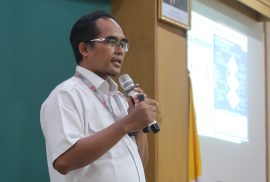
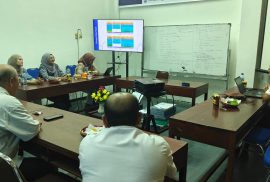
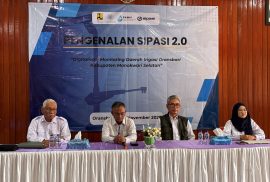
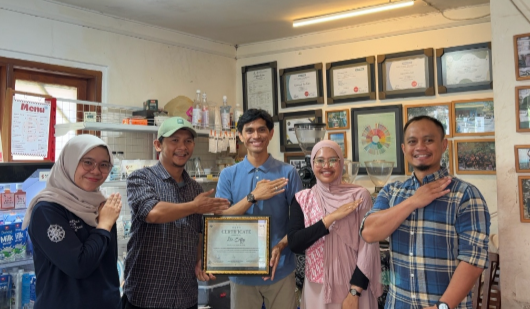
As part of the field implementation phase, the collaborative team conducted a working visit to Alir Coffee MSME on Saturday, November 14, 2026. During the visit, the team formally introduced the smart fermenter prototype, demonstrated the IoT and Edge-AI monitoring workflow, and gathered practical feedback from the business partner regarding the system’s integration into daily coffee processing operations.
Strategic Role of DTPB UGM in Postharvest Quality Validation
Within this tri-institutional synergy, DTPB FAT UGM plays a pivotal role in validating the fermentation process and evaluating postharvest coffee quality. The scope of work encompasses testing the precision and accuracy of sensor readings inside the fermenter, alongside evaluating physical and chemical quality test results following the fermentation cycle. This comprehensive validation is essential to ensure that the data recorded by the system accurately reflects actual biological process conditions, providing a reliable foundation for final product quality assessment.
Contribution to Sustainable Development Goals (SDGs)
Through this active engagement, DTPB FAT UGM successfully bridges cutting-edge instrumentation engineering with practical applications in agricultural postharvest handling while supporting the United Nations Sustainable Development Goals (SDGs). This collaborative program directly contributes to SDG 8 (Decent Work and Economic Growth) by boosting the competitiveness and added value of local coffee MSMEs, SDG 9 (Industry, Innovation, and Infrastructure) through the downstreaming of appropriate IoT and Edge-AI technologies in the agro-industrial sector, SDG 12 (Responsible Consumption and Production) by ensuring measurable postharvest production standards that minimize quality defects, and SDG 17 (Partnerships for the Goals) by strengthening academic-industry synergy among ITS, UGM, ITB, and local MSMEs.