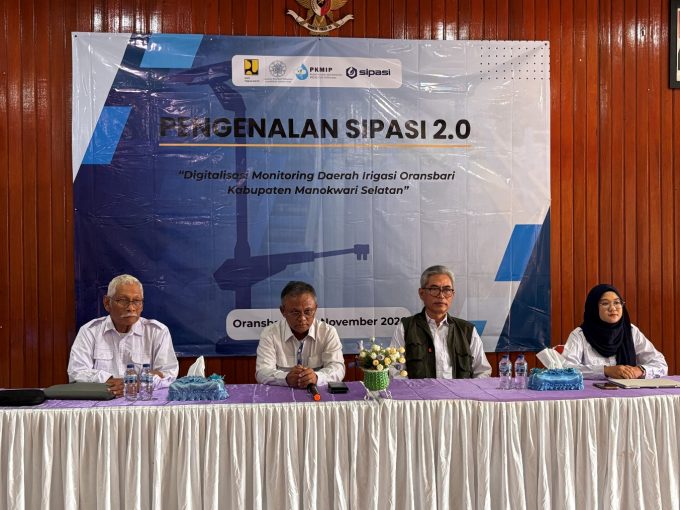
MANOKWARI — The Department of Agricultural and Biosystems Engineering (DTPB), Faculty of Agricultural Technology (FAT), Universitas Gadjah Mada (UGM) continues to accelerate the adoption of digital technology in water resources management across eastern Indonesia. Through a collaborative program between FAT UGM and the West Papua River Basin Organization (BWS Papua Barat), Directorate General of Water Resources, Ministry of Public Works, held from November 5–7, 2026, a team of DTPB UGM lecturers organized an outreach program introducing the Irrigation Management System (SIPASI) 2.0 to support monitoring digitalization in the Oransbari Irrigation Area (DI Oransbari), South Manokwari Regency.
The DTPB FAT UGM expert team directly involved in this activity was led by Dr. Eng. Ansita Gupitakingkin Pradipta, S.T., M.Eng., IPM., alongside Prof. Dr. Ir. Sigit Supadmo, M.Eng., Dr. Ir. Murtiningrum, S.T.P., M.Eng., IPM., ASEAN Eng., Ir. Andri Prima Nugroho, S.T.P., M.Sc., Ph.D., IPU., ASEAN Eng., APEC Eng., and Ardan Wiratmoko, S.T.P., M.Sc. The activity also involved researchers from the Center for Irrigation Modernization Study (PKMIP), namely Ir. Djito, SP1, Nindya Marsya Larasati, S.Sos., Petrus Bambang Edi Subiantara, S.T.P., M.T., and Yohanes Sujut Triyanta. The introduction of SIPASI 2.0, which took place from Thursday (Nov 5, 2026) to Saturday (Nov 7, 2026) in the Oransbari District, was attended by BWS Papua Barat staff as well as Operations and Maintenance (O&M) personnel of DI Oransbari, including irrigation observers (Pengamat), gatekeepers (PPA), and weir operators (POB).
Introducing SIPASI 2.0: From Irrigation Modernization Concepts to Field Practice
During the event, participants were introduced to smart irrigation water management as an integral part of irrigation modernization. This approach is supported by the Irrigation Management System (SIPASI) 2.0, a decision support system that integrates data from Automatic Weather Stations (AWS) and Automatic Water Level Monitoring Systems (AWLMS) with CCTV feeds and field staff reports. Measurement data is transmitted via telemetry, processed, and displayed on a dashboard. Through this dashboard, managers can compare water availability, crop water requirements, and discharged flow rates to determine water allocation across different sections of the network and adjust them when conditions change. Field personnel can also record daily discharge rates and report disruptions via a mobile application. The utilization of this data supports the irrigation modernization trilogy: real-time monitoring, real allocation, and tracing water losses within the network.

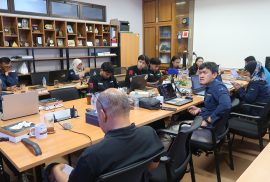
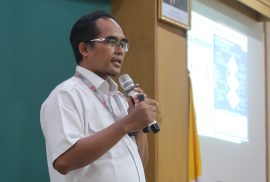
On the first day, participants were equipped with an understanding of irrigation modernization from policy, technical, and institutional perspectives. Prof. Sigit Supadmo opened the session with an presentation on irrigation modernization policies in Indonesia, followed by Ir. Djito covering modern irrigation operation and maintenance. Dr. Ansita Gupitakingkin Pradipta then explained irrigation modernization as a bridging process connecting current irrigation management practices with smart irrigation water management. Nindya Marsya Larasati concluded the session by discussing the role of institutions and irrigation management staff in supporting modernization implementation in the field. This series of lectures served as an introduction to understanding how SIPASI 2.0 supports irrigation modernization in practice.

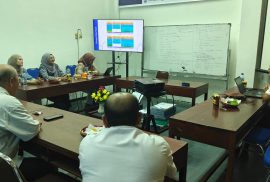
On the second day, participants learned how to use SIPASI 2.0 for irrigation planning and monitoring. Dr. Murtiningrum explained the preparation of cropping pattern plans within SIPASI, while Dr. Andri Prima Nugroho introduced the role of SIPASI in modern irrigation management and its supporting devices. Petrus Bambang Edi Subiantara then guided participants through the SIPASI dashboard features and how to read the displayed information. On the same day, Dr. Ansita Gupitakingkin Pradipta, Prof. Sigit Supadmo, and Ir. Djito conducted a field visit to inspect the condition and readiness of monitoring equipment supporting the implementation of SIPASI 2.0 in DI Oransbari.

On the third day, participants engaged in field practice across the Oransbari irrigation network, including the Waroser Weir. The team demonstrated directly how SIPASI 2.0 supporting devices function, including how sensors record water levels and transmit data via telemetry. Participants then utilized SIPASI 2.0 to view monitoring data, record canal conditions, and submit digital reports. Through this hands-on practice, participants experienced firsthand how data from monitoring devices and field observations are applied in daily irrigation operation and maintenance activities.
Higher Education and Government Synergy for Sustainable Irrigation Management

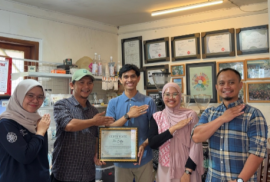
The introduction of SIPASI 2.0 in DI Oransbari marks a joint effort between FTP UGM and BWS Papua Barat to drive irrigation modernization through digital technology. This collaboration is expected to strengthen the capacity of managers and field personnel in utilizing data to support decision-making, improve irrigation service quality, and manage water resources more efficiently and sustainably.
This initiative aligns with DTPB FAT UGM’s commitment to supporting the Sustainable Development Goals (SDGs), particularly SDG 6 (Clean Water and Sanitation) through enhanced irrigation water management efficiency, SDG 9 (Industry, Innovation, and Infrastructure) via digital technology application for irrigation network monitoring, and SDG 17 (Partnerships for the Goals) through strategic cooperation between academia and government.