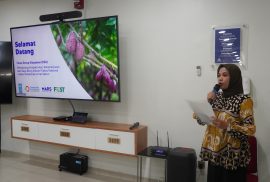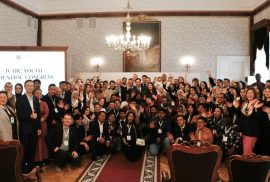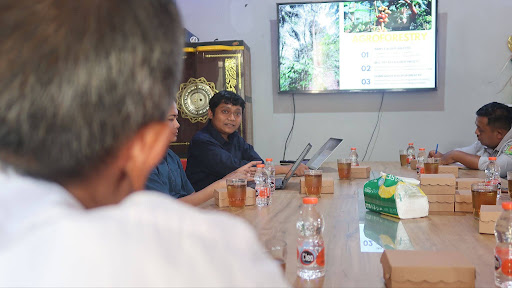
Magelang, August 7, 2026 – Understanding carbon stocks within a landscape is an important aspect of supporting environmental management and strengthening community-based climate change mitigation efforts. To introduce initial research findings while promoting data-driven environmental management, the Department of Agricultural and Biosystems Engineering (DTPB), Faculty of Agricultural Technology, Universitas Gadjah Mada (FTP UGM), in collaboration with the Yanmar Environmental Sustainability Support Association (YESSA), organized the Dissemination of Initial Research Findings on Carbon Stocks in the Agroforestry Landscape of Sambak Village, Magelang Regency, Central Java, on Friday, August 7, 2026.
Held in Sambak Village, Kajoran District, Magelang Regency, the activity featured Dr. Muhamad Khoiru Zaki, who presented the initial research findings. The event was attended by Sambak Village Head Dahlan, representatives of the Sambak Village Government, and stakeholders who have been involved in supporting environmental programs and the development of the ProKlim Lestari Village initiative.
Identifying Carbon Stocks across Different Land-Use Types
In his presentation, Dr. Zaki explained the initial research findings on carbon stock and carbon sequestration potential across various land-use categories in Sambak Village. The study examined the village landscape comprehensively by considering vegetation within agroforestry systems.
The findings indicate that carbon stocks in Sambak Village are not limited to areas with extensive vegetation cover. Multistrata agroforestry systems represent one of the land-use categories with high carbon sequestration potential.
Initial Research as a Basis for Village Environmental Management
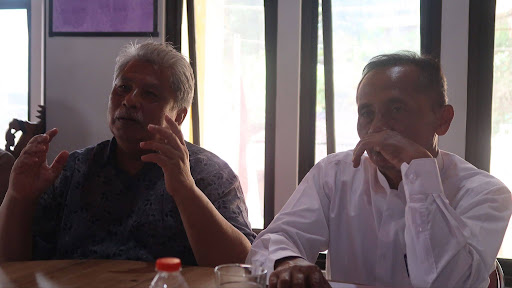
The dissemination activity provided an opportunity for the Sambak Village Government and community members to understand the village’s carbon stocks based on scientific data. The data can serve as a basis for developing vegetation management strategies and maintaining trees and plants that contribute to the village’s carbon stocks.
During the discussion, participants also highlighted the importance of incorporating research findings into the long-term sustainability of environmental programs in Sambak Village. Carbon stock data was considered a valuable information asset that could support the village in designing future environmental management policies and programs.
Joko, who has been involved in supporting the Climate Village Program (ProKlim Lestari) in Central Java, explained that community-based carbon management is one of the aspirations to be achieved through the continuation of the program.
“As a legacy of the collaboration between UGM and YESSA, we hope to encourage the development of regulations governing carbon use. We do not want ProKlim Lestari to stop here. We hope that carbon credits generated from carbon capture can become a continuation of this program and make Sambak Village a pioneering example in this area,” said Joko.
He added that Sambak Village is also expected to serve as a reference for other villages implementing or developing the ProKlim Lestari program.
“We hope other ProKlim Lestari villages can also look to Sambak Village as a reference,” he added.
Potential for Carbon Market Development as a Follow-Up
In addition to discussing the research findings, the discussion also explored the potential use of carbon stock data to support village-level carbon programs, including the development of carbon credits and potential connections with the carbon market.
However, moving toward such mechanisms requires several further stages, including data updating, measurement and verification, institutional strengthening, and further assessment of applicable carbon market mechanisms and regulations.
Joko viewed the initial research findings presented during the activity as an important step toward developing more measurable carbon management.
“Throughout our involvement in supporting the ProKlim Lestari program in Central Java, this carbon capture initiative has been a dream we have sought to realize. What is being done in Sambak Village is now an important step toward making that vision a reality,” he said.
According to Joko, Sambak Village has significant potential for further development based on the research findings presented during the dissemination.
“Based on the findings presented, Sambak Village has the potential to enter the carbon market. The initial research data presented here is extraordinary and can become an asset for Sambak Village,” Joko explained.
The research data on carbon stocks and sequestration can subsequently serve as a basis for determining future development strategies, including vegetation conservation, institutional strengthening, and further studies on carbon market mechanisms.
Maintaining Carbon Stocks through Community Participation
The sustainability of carbon stocks depends not only on measurement results but also on the ability of the community and village government to maintain the vegetation that contributes to the village’s carbon stocks.
The village government plays an important role in encouraging residents to protect trees and vegetation throughout the village and prevent indiscriminate logging. These efforts are essential for maintaining carbon stocks while preserving the environmental quality of Sambak Village.
Vegetation management in agroforestry areas and home gardens can also provide additional benefits for the community, including agricultural products, improved environmental quality, and strengthened ecological functions within the rural landscape.
Through this approach, carbon stock research findings can go beyond serving as academic data and become a basis for more targeted environmental management that reflects the local conditions of Sambak Village.
Sambak Village Government Supports Continued Research
Sambak Village Head Dahlan welcomed the research findings presented during the activity. He expressed hope that research on carbon stocks and environmental management in Sambak Village could continue to be developed and ultimately provide tangible benefits for the community.
“We hope that the research findings and carbon capture initiative will not stop here, but can continue so that they can ultimately provide real benefits for Sambak Village,” Dahlan said.
Dahlan also expressed hope for further assistance to help the village government and community understand the carbon stock calculations, maintain existing carbon stocks, and identify opportunities for appropriate utilization that could benefit both the village and its residents.
Towards Data-Driven Agroforestry Landscape Management
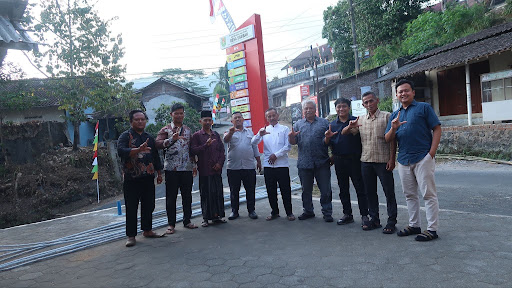
The dissemination of the initial carbon stock research findings represents part of the collaboration between DTPB FTP UGM, YESSA, the Sambak Village Government, and the local community to promote science- and data-based environmental management.
The research provides an initial overview of the distribution of potential carbon stocks across different land-use types in Sambak Village while demonstrating the important role of agroforestry systems in supporting the ecological functions of rural landscapes.
Further development of the research will require several stages, including updating carbon stock data, strengthening vegetation management, monitoring changes in carbon stocks, and conducting further studies on the potential development of carbon credits.
At the conclusion of the activity, Dr. Muhamad Khoiru Zaki expressed his commitment to continue supporting Sambak Village in developing the research findings within the scope and capacity of his academic role. This support is expected to assist the village government and community in understanding carbon stock data and determining evidence-based environmental management strategies.
Through collaboration among universities, development partners, village governments, and communities, the initial carbon stock research is expected to provide a foundation for Sambak Village to develop a more measurable and sustainable agroforestry landscape management system, while generating ecological and socioeconomic benefits for the community.