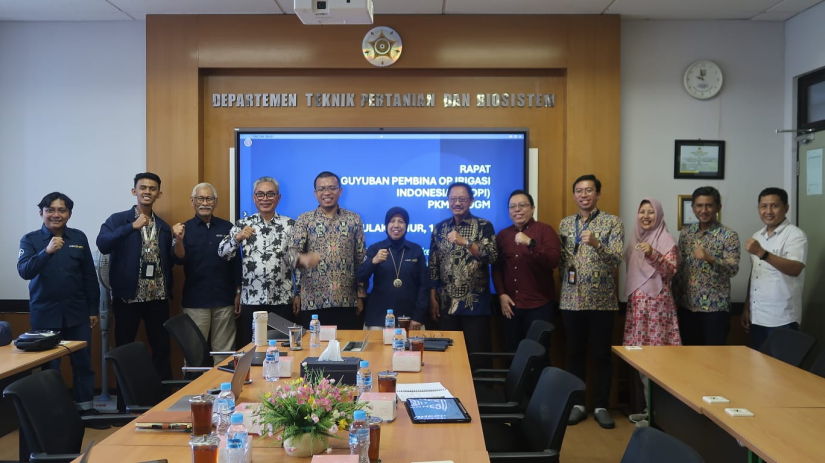
Yogyakarta, April 1, 2026 – Efforts to promote single management irrigation were once again highlighted in a discussion forum organized by the Center for Agricultural Irrigation Modernization (PKMIP), Faculty of Agricultural Technology, Universitas Gadjah Mada (UGM), held at the Department of Agricultural and Biosystems Engineering.
The forum brought together academics, practitioners, and stakeholders from various institutions, including the Ministry of Public Works (PU), the Ministry of Agriculture, and the Indonesian Association of Irrigation Operation and Maintenance Personnel (P2OPI), to discuss more integrated and sustainable irrigation management.
The event was officially opened by the Dean of the Faculty of Agricultural Technology UGM, Prof. Dr. Ir. Eni Harmayani, M.Sc., who expressed hope that the discussion would generate constructive ideas.
The discussion featured Prof. Dr. Ir. Sigit Supadmo Arif, M.Eng., a professor in irrigation engineering and management at UGM, as the facilitator. Other speakers included Ir. Djito, SP1., Advisor to the Indonesian Irrigation Operation and Maintenance Association, Ir. Suparji, S.ST., M.T., former Director of Irrigation and Swamps at the Directorate General of Water Resources, Ministry of Public Works, and Dr. L.M. Bakti, S.T., M.T., Head of the Subdirectorate of Groundwater and Raw Water at the Directorate of Irrigation and Swamps, Ministry of Public Works.
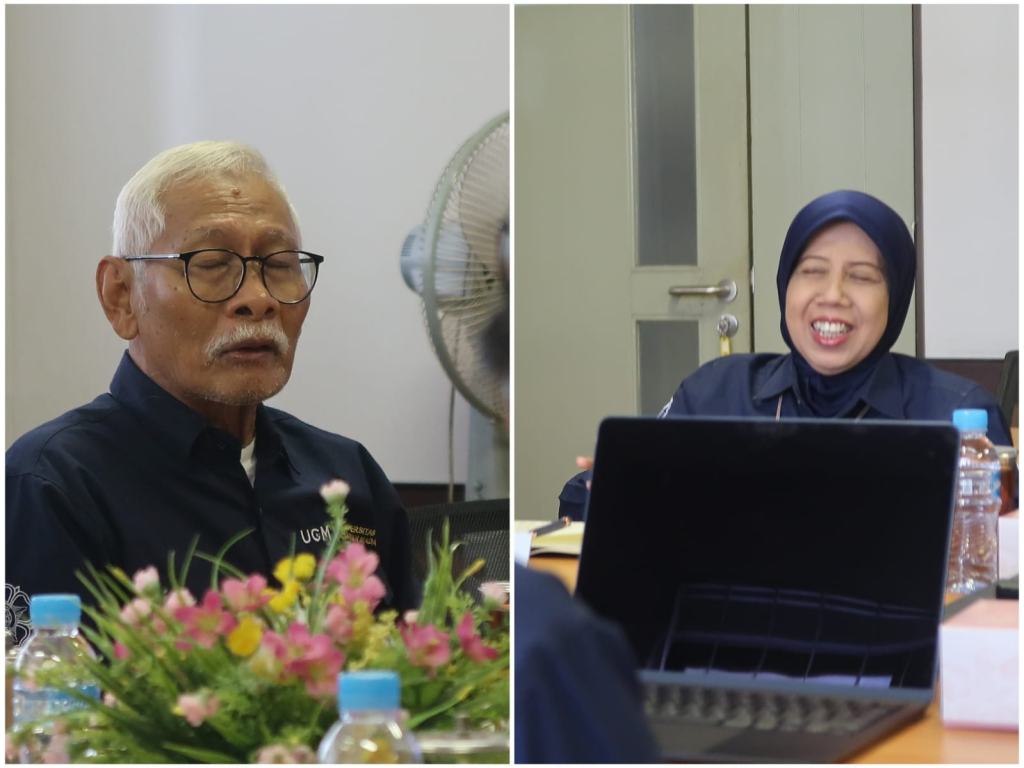
Single Management Irrigation as a Key Focus
The main issue discussed was the implementation of single management irrigation, considered essential for improving water management effectiveness in the agricultural sector.
Ir. Djito emphasized the importance of unified management while allowing flexible implementation across institutions.
“The management should be unified, but the implementation can be carried out by different parties according to their respective authorities,” he stated.
He also highlighted the need for clearer role distribution between the Ministry of Public Works and the Ministry of Agriculture, particularly in managing tertiary irrigation networks.
Overlapping Authorities Remain a Challenge
The discussion revealed ongoing institutional challenges between the Ministry of Public Works and the Ministry of Agriculture, especially following the enactment of Law No. 17 of 2019 on Water Resources.
Ir. Suparji explained that while policy changes have long been acknowledged, implementation in the field remains complex.
“What has changed is the tertiary level, but the goal remains a single management system,” he noted.
Participants agreed that stronger inter-agency coordination is necessary to avoid overlapping responsibilities.
Strengthening Human Resources in Irrigation
Human resource (HR) capacity was identified as a critical issue. Dr. Ir. Murtiningrum, S.T.P., M.Eng., IPM., lecturer at UGM and Chair of the PKMIP Expert Council, highlighted the imbalance between infrastructure investment and human capacity development.
“We observe that irrigation funding is still heavily focused on physical infrastructure, while human resource development has not received adequate attention,” she stated.
She noted that this imbalance could affect long-term sustainability, given the crucial role of human resources in irrigation system operation and maintenance.
As a reference, she pointed to practices in Sleman Regency, where training programs are tailored to village-level needs.
Irrigation Modernization: Beyond Infrastructure
The forum also discussed irrigation modernization, emphasizing that it does not always require full-scale infrastructure upgrades or digital transformation.
Prof. Sigit Supadmo Arif stressed that mindset transformation is the primary requirement.
“The first requirement in irrigation modernization is changing the mindset of human resources,” he explained.
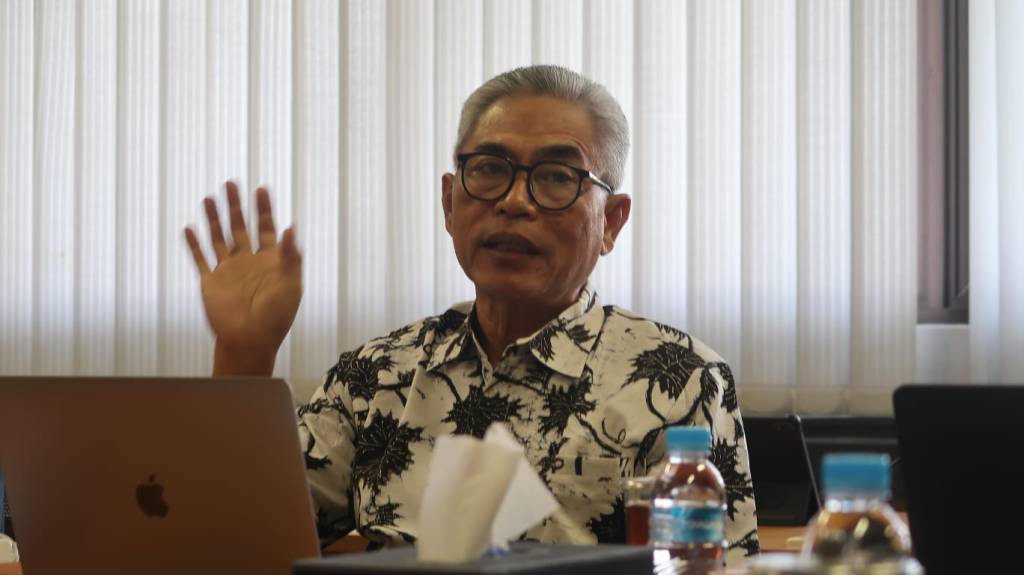
Ir. Djito added that modernization can start from improving service quality.
“It does not have to begin with full digitalization; improvements can start from administration and water service delivery,” he said.
The Role of Universities in Irrigation Policy
Universities were positioned as neutral and objective contributors in policy discussions. UGM, through PKMIP, plays a role in providing research-based recommendations and data to support government decision-making.
This academic approach is expected to bridge technical field needs with national-level policies, particularly in strengthening integrated irrigation systems.