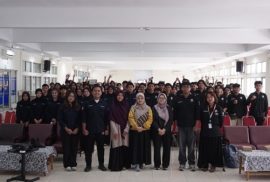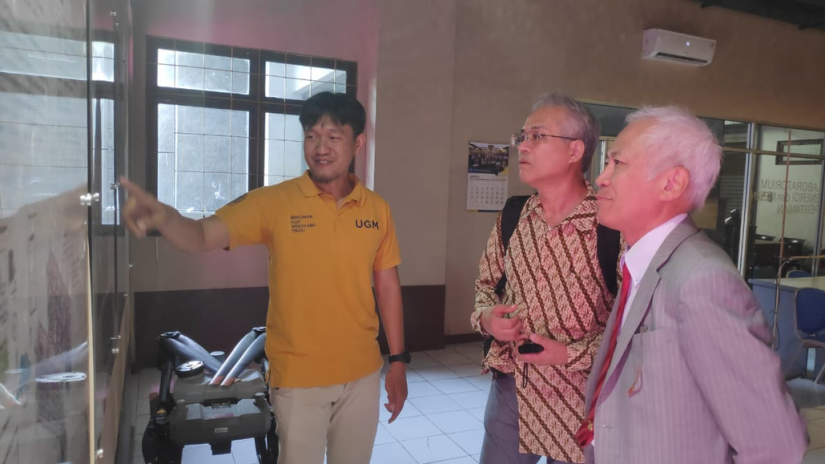
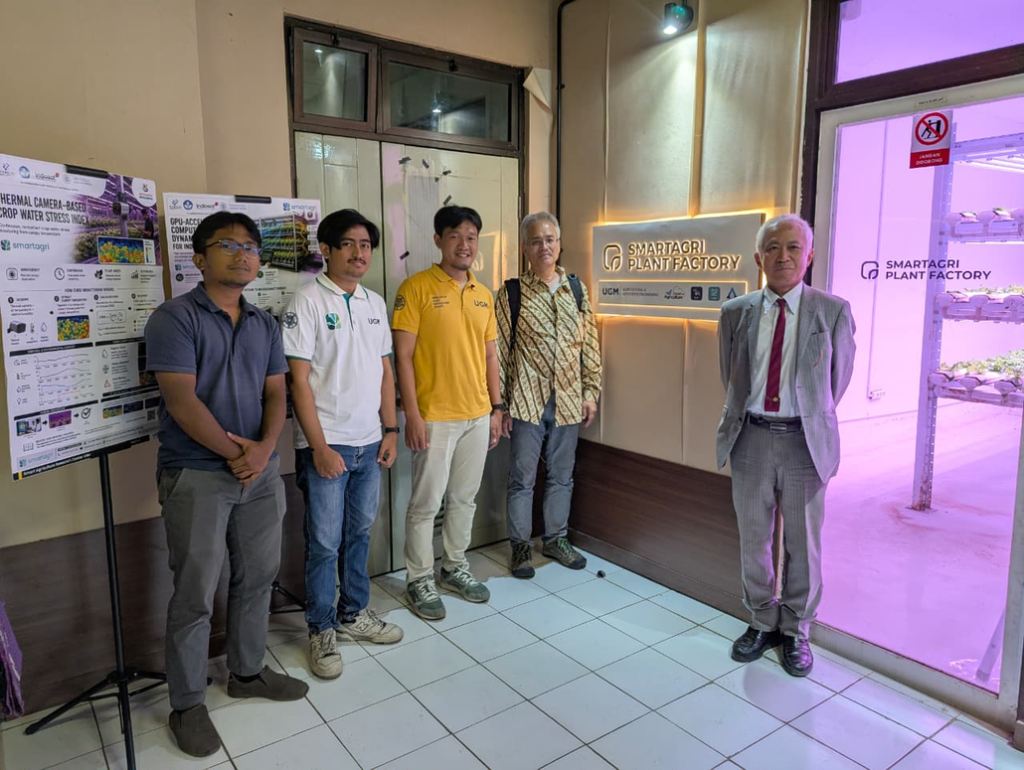
Yogyakarta, August 21, 2026 – The development of precision agriculture technologies continues to address challenges in crop production, particularly in monitoring plant conditions and managing growing environments rapidly, accurately, and non-destructively. This issue was among the topics discussed during Prof. Naoshi Kondo’s visit from Kyoto University, Japan, to the Smart Agri Plant Factory at the Faculty of Agricultural Technology (FTP), Universitas Gadjah Mada (UGM), on Friday (August 21).
During the visit, Prof. Naoshi Kondo was accompanied by Kamikubo Keita from the Yanmar Environmental Sustainable Support Association (YESSA). The visit was part of the YESSA program monitoring activities conducted by the Department of Agricultural and Biosystems Engineering (DTPB), FTP UGM.
The delegation was welcomed by Andri Prima Nugroho, Ph.D., Coordinator of the Smart Agriculture Research Center and Head of the Agricultural Energy and Machinery Laboratory at FTP UGM. During the meeting, Andri introduced various activities of the Smart Agriculture Research Center, which focuses on applying precision agriculture technologies to support tropical agriculture through information technology and smart farming concepts.
In addition to touring the Smart Agri Plant Factory facilities, the visit continued with discussions among researchers on the development of biosensing engineering as a supporting technology for smart agriculture. Biosensing technology has the potential to enhance agricultural systems’ ability to rapidly obtain information about plant and environmental conditions, providing a basis for more informed crop management decisions.
Developing Thermal Imaging for Crop Water Stress Detection
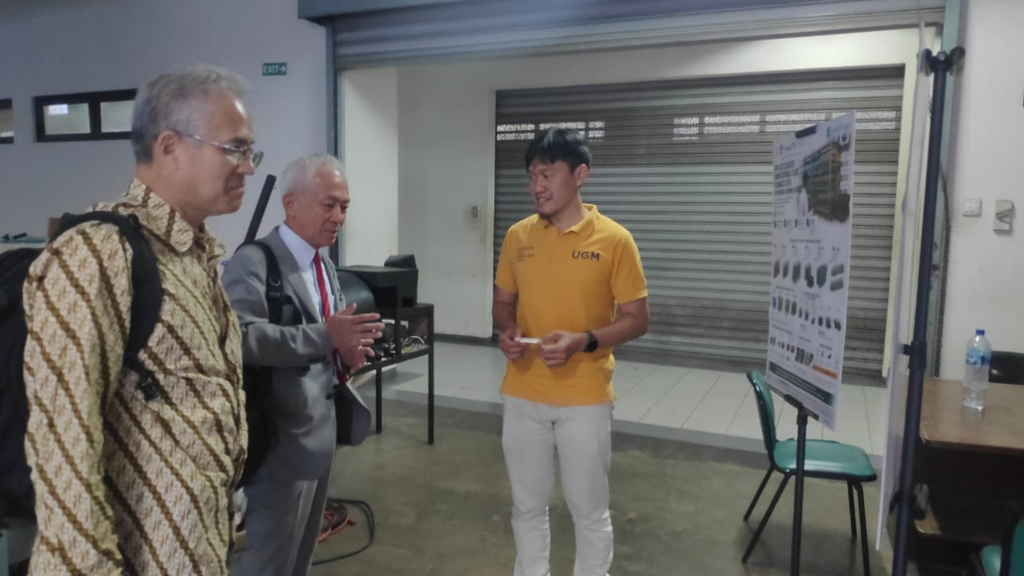
One of the research projects presented during the visit focused on the use of thermal imaging to detect the Crop Water Stress Index (CWSI) in indoor farming systems.
This technology utilizes information on plant canopy temperature to help evaluate the level of water stress experienced by crops. Thermal imaging enables plant conditions to be monitored without requiring destructive sampling.
This approach represents an important component of precision agriculture, as information on plant conditions can be used to support more accurate water and growing-environment management.
In addition to thermal imaging, the research team also utilizes Computational Fluid Dynamics (CFD) to support the design and optimization of indoor farming or plant factory systems. CFD enables researchers to analyze growing-environment conditions and airflow distribution, allowing system management and operations to be carried out more effectively.
Prof. Kondo Encourages the Use of Fluorescence Imaging
During the discussion, Prof. Naoshi Kondo also provided insights into the potential application of fluorescence imaging to evaluate plant conditions.
The technology utilizes fluorescent light sources combined with computer vision as an approach for plant assessment. This method has the potential to be further developed into a more affordable monitoring system capable of evaluating plants non-destructively.
The input from Prof. Kondo opens opportunities for further research in biosensing, particularly in developing plant-monitoring technologies that can be applied to precision agriculture systems.
Strengthening International Research Collaboration
Prof. Naoshi Kondo’s visit to the Smart Agri Plant Factory provided an opportunity to strengthen knowledge exchange and potential collaboration among FTP UGM, Kyoto University, and YESSA. Such collaboration is expected to encourage the development of smart agricultural technologies suited to the characteristics and needs of tropical agriculture.
The development of biosensing, thermal imaging, fluorescence imaging, computer vision, and CFD forms part of the effort to establish agricultural systems capable of more precise monitoring while promoting efficient resource utilization.