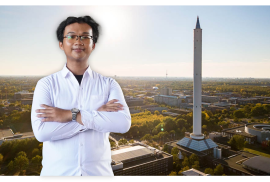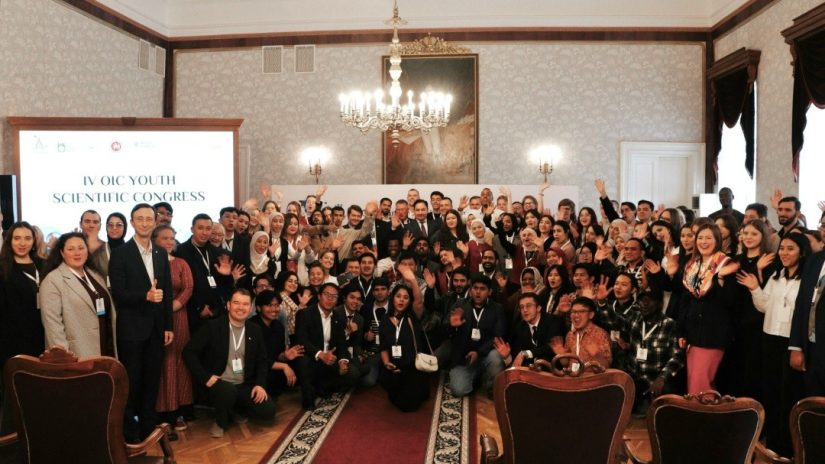
Kazan, Russia, September 30–October 3, 2026. Science, culture, and international friendship came together in Kazan as young researchers from across the Muslim world gathered for the IV OIC Youth Scientific Congress of the Organization of Islamic Cooperation (OIC) countries. Aryanis Mutia Zahra, Ph.D., IPM., ASEAN Eng., from the Department of Agricultural and Biosystems Engineering (ABE), Faculty of Agricultural Technology (FAT), Universitas Gadjah Mada (UGM), represented Indonesia at the congress and was selected as one of the best paper presenters in Track 1, Biomedicine and Biotechnology.
The congress was held from September 30 to October 3, 2026, at Kazan (Volga Region) Federal University (KFU). It is an annual international platform that brings together young researchers and scientists aged 18 to 35 from OIC Member States to present their research, exchange ideas, and develop international scientific cooperation. The event was organized by the Academy of Youth Diplomacy and KFU, with the support of the Ministry of Youth Affairs of the Republic of Tatarstan and the Group of Strategic Vision “Russia and the Islamic World”. This year, 100 participants from up to 25 countries were selected from more than 2,500 submissions, with English as the working language.
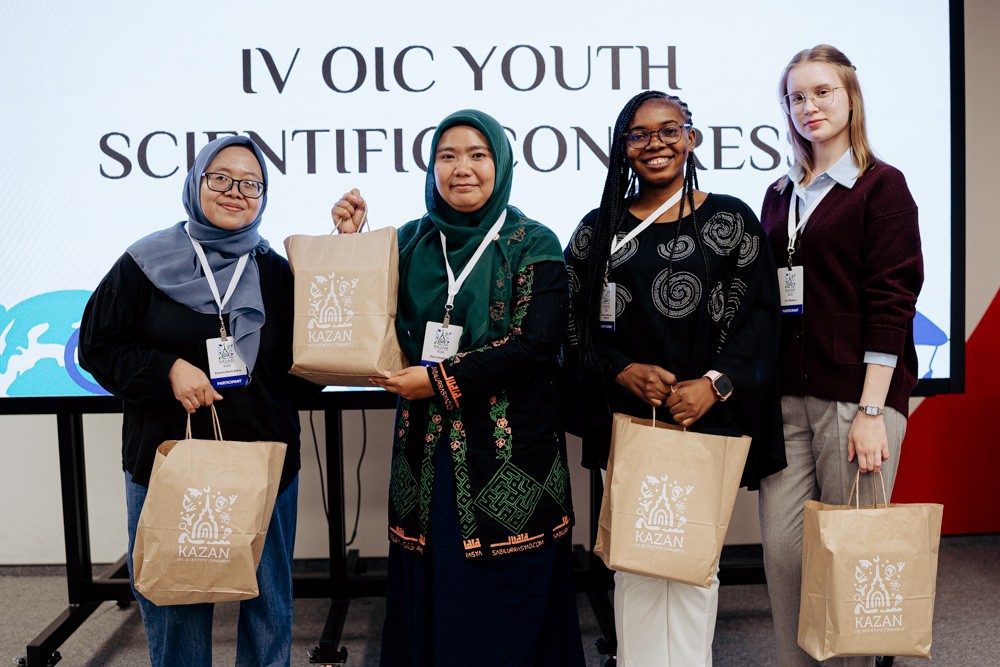
Day One: Visiting the Lobachevsky Lyceum

The programme opened on September 30 with a social visit to the Lyceum of Kazan Federal University named after N. I. Lobachevsky. Established in 1989 as an experimental school and given the name of the mathematician Nikolai Lobachevsky in 2004, the lyceum is a state boarding school operating under the patronage of KFU. It educates approximately 700 students, with a strong emphasis on the exact and natural sciences, particularly mathematics and physics, and its students take part in the academic and scientific activities of the university.
During the visit, the congress participants toured the lyceum and learned about its history, laboratories, and learning facilities. The students then presented their activities and performances, offering the international guests a glimpse of how young talent is nurtured in Kazan long before university.
Day Two: The Kazan Kremlin, a Symbol of Coexistence
On the morning of October 1, participants joined a city tour that included the Kazan Kremlin. The Historic and Architectural Complex of the Kazan Kremlin was inscribed on the UNESCO World Heritage List in 2000. The site has roots in the Islamic period of the Golden Horde and the Kazan Khanate, and after its conquest by Ivan the Terrible in 1552 it became the centre of the Orthodox Christian presence in the Volga region.
Today, the Kremlin is best known for two landmarks that stand side by side: the Annunciation Cathedral, built between 1554 and 1562, and the Kul Sharif Mosque, a reconstruction of the Khanate’s principal mosque that opened in 2005. According to UNESCO, the new mosque symbolizes the peaceful coexistence of different cultures, Islam and Christianity. For participants from OIC countries, the visit offered a meaningful picture of how Muslim and Christian heritage can share one space in peace.

Opening Ceremony: Science in an Era of Global Change
The congress was officially held at KFU on the same day (October 1, 2026). The main topic of the opening was science in an era of global change and the role of artificial intelligence (AI). Participants were welcomed by Marat Gatin, Assistant to the Rais (Head) of the Republic of Tatarstan, Minister for Interaction with Religious Organizations, a Presidential Department in Tatarstan, and Deputy Chairman of the Group of Strategic Vision Russia and the Islamic World; Timur Suleimanov, Aide to the Rais of Tatarstan; Vladislav Usanov, Deputy Minister for Youth Affairs of Tatarstan; Dr. Shahid Mahmood, Chairman of Interactive Group and Senior Honorary Adviser to COMSTECH; and Timirkhan Alishev, Vice-Rector for International Affairs at KFU.
“It is gratifying that this forum is being held in Kazan for the fourth time. It should also be noted that Kazan Federal University has not only become the venue for this important event, but is also the initiator of this project,” Mr. Gatin stated. Dr. Alishev noted that the standard of the congress and the number of applications continue to rise. “There are enormous competition and a rigorous selection process. Naturally, it is very important for us that young people see KFU not only as a place to study, but also as a continuation of their scientific careers,” he said. Dr. Shahid Mahmood added that, in his view, the world currently faces two challenges for which AI must be used: food security and climate change.
The ceremony continued with a panel session entitled “Science in an Era of Global Change: The University of the Future and the Transformation of Educational Ecosystems”. The panelists discussed how AI is reshaping science and education. Professor Leonid Isaev of the National Research University Higher School of Economics urged the audience not to overestimate AI and to respond to it, “not through bans”, while Dr. Kazbek Dyussembayev, Senior Lecturer at the L. N. Gumilyov Eurasian National University, emphasized that AI should assist, not replace, natural intelligence. “AI can help process large datasets, but scientific conclusions must still be drawn by humans,” he concluded, underlining that academic integrity must remain a human responsibility.

Tracing the History of Science at KFU
After the opening, participants toured the KFU museums to learn about the university’s history and its contributions to science. Founded in November 1804, Kazan Federal University is among the oldest universities in Russia. It is the place where Nikolai Lobachevsky developed non-Euclidean geometry, Karl Ernst Claus discovered the element ruthenium in 1844, Aleksandr Butlerov formulated the theory of the chemical structure of organic compounds, and Evgeny Zavoisky discovered electron paramagnetic resonance in 1944.


Laboratory Visit: Advanced Mass Spectrometry
In the afternoon, each track visited the laboratories of its host institute. Track 1 participants visited the Institute of Fundamental Medicine and Biology (IFMB) of KFU and were divided into two groups. The first group explored laboratories related to genetics, microbiology, and vaccine research, while the second group focused on mass spectrometry.
Dr. Aryanis Mutia Zahra joined the mass spectrometry group, which is closely related to her own metabolomics research. The host researchers presented their advanced technologies and ongoing research, together with laboratory facilities that support transcriptional analysis, an AB SCIEX TripleTOF high-resolution mass spectrometer, MALDI-TOF, and GC-MS/MS instruments. The visit opened discussion on how high-resolution analytical platforms can support research in biomedicine, food, and agriculture.

Research Presentations in Biomedicine and Biotechnology Track
On October 1 and 2, participants presented their research in five tracks: Biomedicine and Biotechnology; AI and Digital Solutions in Education; Modern International Relations and International Law; Architecture, Design, Art; and Environmental Sustainability. Each track hosted 20 presenters.
In Track 1, Biomedicine and Biotechnology, the presentations were evaluated by Dr. Kazbek Dyussembayev of the L. N. Gumilyov Eurasian National University, Dr. Dina Yarullina, and Dr. Airat Rashitovich Kayumov of Kazan Federal University. Dr. Aryanis Mutia Zahra presented her research in the Agriculture and Sustainable Development session.
The study showed that combining plasma-activated water (PAW) with a milk-derived protein hydrolysate (MPH) under supplemental white LED lighting improved photosynthetic performance and mineral uptake in hydroponic Cos lettuce while reducing nitrate accumulation. During 21 days of cold storage, the treated lettuce retained more pigments and antioxidants and lost about one-third less weight, keeping it within the 5% weight-loss marketability limit for at least six days longer. Among 132 metabolites, network analysis identified 4,5-dicaffeoylquinic acid as the central hub linking phenylpropanoid and flavonoid biosynthesis with stress markers and phytohormones. The findings point to protein hydrolysates, PAW, and LED lighting as a sustainable strategy for producing lettuce with better nutritional quality, nitrate safety, and postharvest longevity.

Group Project: Agriculture and Sustainable Development
Beyond individual presentations, participants worked in thematic groups to prepare and present joint projects. Dr. Aryanis Mutia Zahra joined the Agriculture and Sustainable Development group together with Usman Wajid, Sofya Kanaeva, and Elizaveta Gavrilova, bringing together young researchers from Pakistan, Russia, and Indonesia.
The group began by identifying and scoring fifteen problems facing agriculture. The highest scoring issues were limited resources, vulnerability to climate change, low salaries, the need for a new generation of farmers, and the conversion of land and rivers for urbanization and development. The group then mapped the main barriers behind these problems, including economic and political conditions, low income for young farmers, and the values attached to land and water use, and matched them with solutions such as sustainable management, standardized protocols, and the exchange and development of local knowledge.
Building on this analysis, the group proposed the Scientific Skills Development Program Initiatives (SSDPI), a cooperation programme on efficiency, management, and troubleshooting in agricultural systems. The programme is built on three pillars: joint research between organizations and institutions; people and knowledge, through exchanges, training, mentoring, and engagement with practitioners; and technology and policy, through standardized protocols and shared databases on the physiological conditions of crops and livestock and on pest and disease management. It targets farmers, policy makers, relevant ministries, researchers and technical experts, with planned activities in knowledge exchange, internships, and collaborative research projects.

Closing Ceremony, Gala Dinner, and Best Paper Award
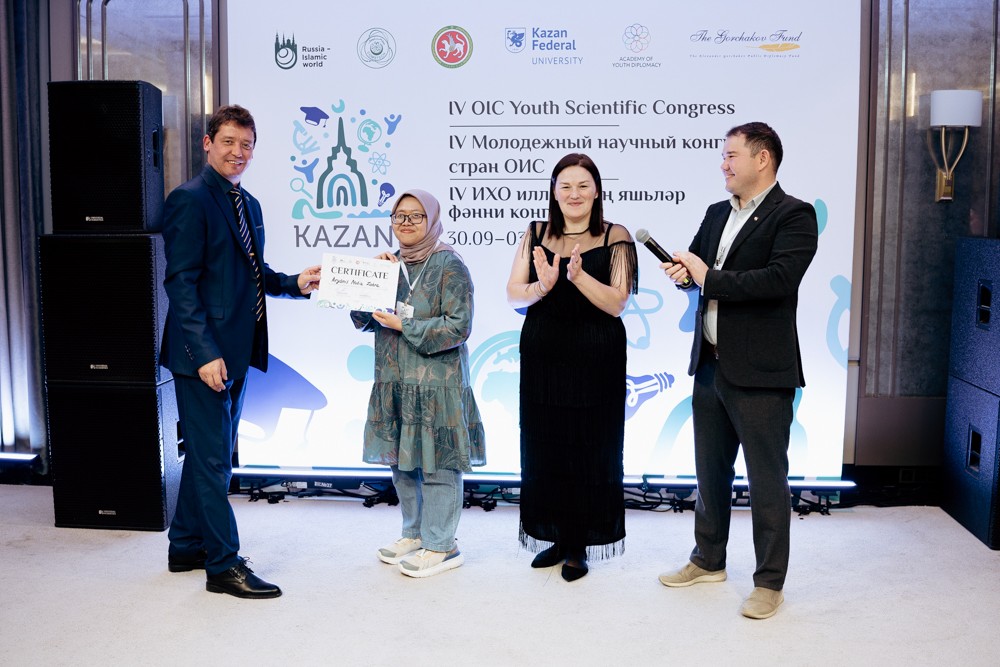
The congress concluded on the evening of October 2 with the closing ceremony and gala dinner at the Bilyar Palace. The evening was filled with traditional dance and cultural performances, a rich spread of food, a networking session, and moments when participants from many nations danced together.
The highlight of the night was the announcement of the best paper presentations. The judges selected the best participants from each track, and Dr. Aryanis Mutia Zahra was named one of the best paper presenters in Track 1, Biomedicine and Biotechnology. The recognition comes with an opportunity for mentorship and research collaboration with the judges.
Expanding International Networks for UGM
Participation in the IV OIC Youth Scientific Congress broadened the international network of ABE FAT UGM with researchers and institutions across OIC countries and Russia. The best paper recognition and the planned mentorship with the judges open opportunities for continued collaboration in metabolomics, biotechnology, and sustainable agriculture, strengthening UGM’s contribution to the global scientific community.

Contributor: Aryanis Mutia Zahra
Editor : HP