Sambak Village, Kajoran District, Magelang Regency, 4 February 2025 – The Department of Agricultural and Biosystems Engineering (DTPB), Faculty of Agricultural Technology (FTP), Universitas Gadjah Mada (UGM), conducted an integrated field study and community service program in Sambak Village. The activity was designed as a contextual learning platform for students while simultaneously serving as a tangible contribution of academia to supporting village development based on local potential.
The activity involved 20 undergraduate and postgraduate students from DTPB FTP UGM. This high level of participation reflects the department’s strong commitment to instilling community service values, social awareness, and a deeper understanding of real-world challenges faced by rural communities, particularly in the agricultural and agro-industrial sectors.
Implementation of Postharvest Technology at Sambak Tofu Enterprise
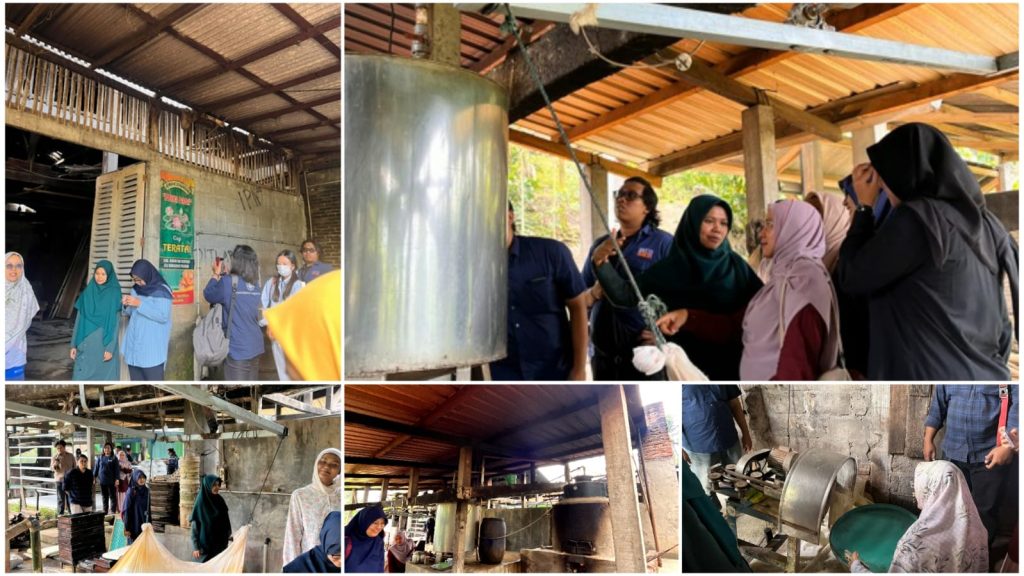
The program began with a visit to a Small Medium Tofu Enterprise (SMTE) in Sambak Village. During this visit, students observed firsthand the implementation of steam boiler technology developed and installed by DTPB FTP UGM to support tofu production processes.
The steam boiler system has delivered significant positive impacts, including more stable heat generation, improved product cleanliness and quality, and enhanced environmental sustainability through reduced fuel consumption. Students also learned about the management of tofu wastewater, which is processed through a biodigester system. The biogas produced is utilized as a household energy source by local residents, demonstrating the practical application of circular economy principles at the village level.
Exploring Local Cassava Agroindustry
The next visit was conducted to a cassava processing facility in Sambak Village. In addition to coffee, Sambak is also known as a producer of cassava chips. During this visit, students studied the cassava processing chain from raw materials to finished products, while identifying opportunities to improve production efficiency and product quality through appropriate technology.’
Community Service with Women Farmer Groups
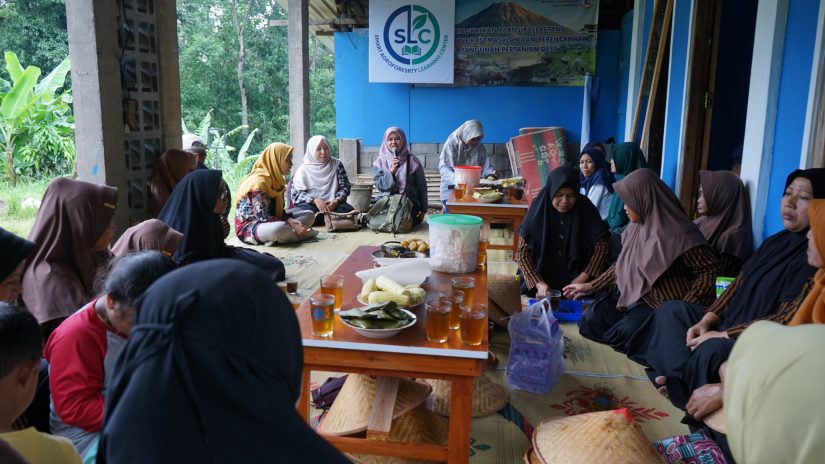
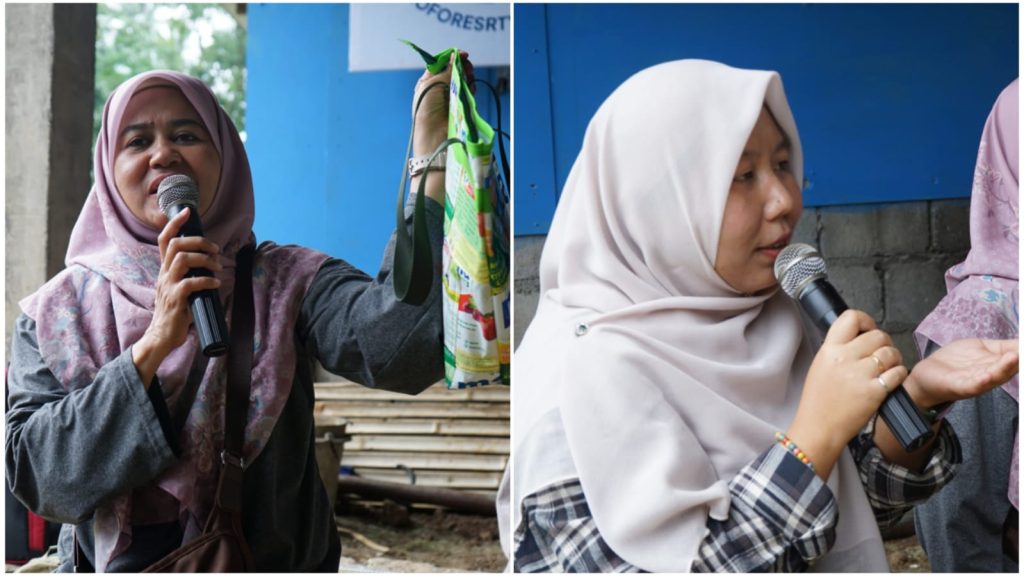
The program continued at the Agroforestry Learning Center at Sambak Fruit Garden in the form of community service activities involving the Women Farmer Group (Kelompok Wanita Tani/KWT) of Sambak Village. The activity featured Prof. Latifah binti Abd Manaf, a lecturer from the Department of Environmental Science and Technology, Faculty of Forestry and Environmental, Universiti Putra Malaysia (UPM), as a resource person, alongside Dr. Nur Amiera Kamarudin, a postdoctoral researcher from Universiti Putra Malaysia currently undertaking her postdoctoral program at DTPB FTP UGM.
The community service session was attended by DTPB FTP UGM faculty members, including Prof. Lilik Sutiarso, Dr. Ngadisih, Dr. nat. techn. Rizki Maftukhah, Dr. Bayu Nugraha, and Dr. Nurhayati Tarigan, demonstrating institutional support for sustainable village development initiatives.
Participatory Discussions and Problem Identification
The community service activities began with the division of KWT members into small discussion groups facilitated by postgraduate students from DTPB FTP UGM. This participatory approach aimed to build emotional closeness, mutual trust, and more open communication regarding challenges and aspirations.
From the group discussions, KWT members highlighted key challenges, including pest management, coffee cultivation practices, and coffee processing techniques. The group expressed strong expectations for continuous assistance and mentoring from DTPB FTP UGM to address these issues.

Responding to these inputs, Dr. Ngadisih expressed appreciation for the openness of community members in sharing their real conditions, which serves as a critical foundation for designing effective and targeted assistance programs.
Meanwhile, Prof. Latifah binti Abd Manaf conveyed her positive impressions of Sambak Village’s progress:
“I highly appreciate the progress and initiatives undertaken by the Women Farmer Groups in Sambak Village. There have been many positive changes since my last visit, and today we can see numerous programs and initiatives led by the women farmers to protect and sustain the village environment,” she stated.
Sustained Commitment and Contribution to the SDGs
Through this integrated program, DTPB FTP UGM reaffirmed its commitment to continuous research-based village assistance while positioning Sambak Village as a living laboratory for the development of sustainable agricultural and agro-industrial technologies.

This activity aligns with the achievement of the Sustainable Development Goals (SDGs), particularly SDG 4 (Quality Education), SDG 7 (Affordable and Clean Energy), SDG 8 (Decent Work and Economic Growth), SDG 12 (Responsible Consumption and Production), and SDG 17 (Partnerships for the Goals).