Bangka, June 4, 2026 – Efforts to restore the glory of Bangka white pepper (sahang) as one of Indonesia’s leading agricultural commodities are being strengthened through collaboration among academics, local government, farmers, and international partners. The Department of Agricultural and Biosystems Engineering (DTPB), Faculty of Agricultural Technology, Universitas Gadjah Mada (FTP UGM), is leading the development of a revitalization roadmap for Bangka white pepper through an approach that integrates climate change adaptation, agroengineering innovation, and research-based regional development planning.
The program, entitled “Integrating Climate Change Adaptation, Agroengineering Innovation, and Regional Development Planning for the Sustainability of White Pepper Plantations on Bangka Island,” is led by Dr. Ngadisih, S.T.P., M.Sc. from DTPB FTP UGM. The initiative is designed as an applied research and community empowerment program aimed at addressing the various challenges that have contributed to the decline in white pepper productivity in Bangka.
For decades, Bangka white pepper has been recognized as one of Indonesia’s flagship plantation commodities. However, in recent years, the sector has faced numerous challenges, including land degradation, soil erosion, land-use change, and the impacts of climate change, which have increased the risk of pest and disease outbreaks. These issues have gradually weakened the competitiveness of Indonesian pepper in the global market.
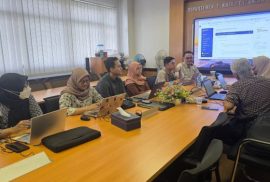
As an initial step, the UGM team, in collaboration with the Bangka Regency Government, conducted field surveys from June 1–3, 2026, across several pepper-producing areas. The activities were carried out together with the Regent of Bangka to directly identify the challenges faced by farmers and validate development needs within the pepper sector.

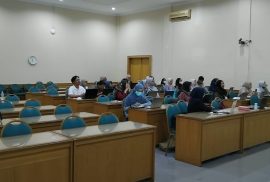
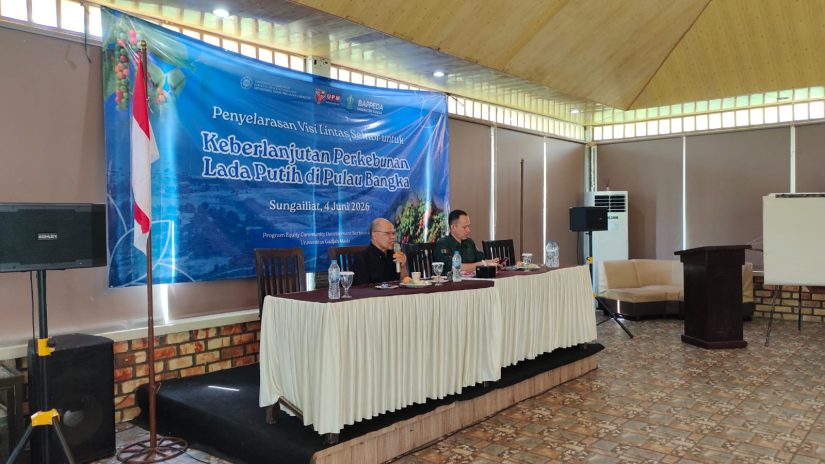
The survey findings served as the basis for the Focus Group Discussion (FGD) entitled “Aligning Cross-Sectoral Visions for the Sustainability of White Pepper Plantations on Bangka Island,” held at Pesona Bay Sungailiat on June 4, 2026. The forum brought together local government representatives, farmer groups, academics, and international partners to formulate an evidence-based roadmap for white pepper revitalization.
The event was attended by the Acting Regional Secretary of Bangka Regency, Drs. Asep Setiawan, the Head of the Regional Development Planning Agency (BAPPEDA) of Bangka Regency, Ir. Pan Budi Marwoto, M.Si., and the Vice Dean for Research, Community Service, Collaboration, and Alumni Affairs of FTP UGM, Dr. Sri Rahayoe, S.T.P., M.P. The discussion was introduced by Prof. Dr. Ir. Lilik Sutiarso, M.Eng., while keynote speakers included Muhammad Chrisna Satriagasa, S.Si., M.Sc., M.Ec.Dev., Ph.D., and Prof. Ts. Dr. Rosnah Shamsudin from Universiti Putra Malaysia, who provided global perspectives on sustainable agricultural and agro-industrial development.
Through this initiative, DTPB FTP UGM serves as an interdisciplinary platform that brings together expertise from various fields to formulate a revitalization strategy that focuses not only on increasing productivity but also on improving soil health, water-use efficiency, climate resilience, and farmer capacity development.
Beyond roadmap development, the program will continue with a series of capacity-building and training activities for farmers. In the next phase, UGM, together with international partners from BOKU University, Austria, will provide training on soil health management, irrigation management, agricultural waste management, and smart farming technologies to enhance the productivity and sustainability of Bangka’s white pepper plantations.
Dr. Ngadisih explained that the program adopts an integrated approach combining technological innovation, farmer empowerment, and policy support.
“Ensuring the sustainability of white pepper plantations requires more than technological interventions. It demands synergy among stakeholders to build a production system that is resilient to climate change and market dynamics,” she stated.
Using a System of Systems approach, the program is expected to strengthen the competitiveness of Bangka white pepper while enhancing farmers’ positions within the commodity value chain. In addition to supporting regional economic development, the initiative contributes to the achievement of the Sustainable Development Goals (SDGs), particularly in poverty reduction, food security, and climate action.
For DTPB FTP UGM, participation in this program reflects the university’s commitment to delivering science-based solutions with tangible impacts on society. Through cross-sectoral and international collaboration, UGM continues to promote the transformation of Indonesia’s agricultural sector toward greater resilience, productivity, and sustainability amid increasingly complex global challenges.