Yogyakarta, July 1, 2026 – Strengthening international academic collaboration and enhancing research quality were the main highlights of the Mini Clinic Session organized by the Land and Water Resources Engineering Laboratory (TSLA), Department of Agricultural and Biosystems Engineering, Faculty of Agricultural Technology, Universitas Gadjah Mada (UGM). The event brought together lecturers, researchers, and graduate students to discuss ongoing research while receiving valuable insights from Prof. Gary R. Sands of the Department of Bioproducts and Biosystems Engineering, University of Minnesota, United States.

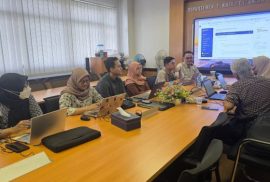
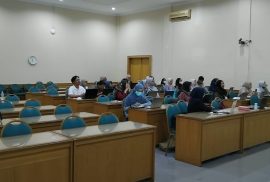
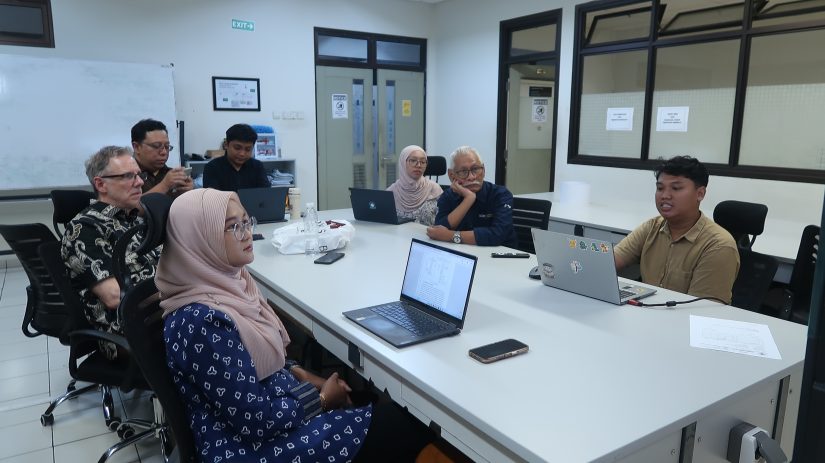
Held at the Agrometeorology Laboratory, the mini clinic served as an academic forum where students presented their research findings, exchanged ideas with faculty members, and received constructive feedback from both national and international experts.
The session was attended by Dr. Hanggar Ganara Mawandha (Head of the TSLA Laboratory), Dr. Muhamad Khoiru Zaki, Prof. Dr. Ir. Sigit Supadmo Arif, and Dr. Eng. Ansita Gupitakingkin Pradipta, Chair of the Center for Irrigation Modernization and Agricultural Studies (PK-MIP), along with researchers and students from the Department of Agricultural and Biosystems Engineering.
The event featured presentations from two graduate students who showcased their latest research.
Bagus Dwi Putra Atmaja presented his study entitled “Development of a Deep Learning-Based Primary Canal Discharge Prediction Model for Cropping Pattern Planning in the Sapon Irrigation Area, Kulon Progo Regency.” His research explores the application of artificial intelligence to predict irrigation canal discharge, providing decision support for more effective cropping pattern planning.
Meanwhile, Devi Ramdani presented her research entitled “Evaluation of Sprinkler Irrigation Implementation through Hydraulic Analysis and Christiansen Uniformity Analysis on Coastal Agricultural Land in Glagah, Kulon Progo.” Her study evaluates the hydraulic performance and water distribution uniformity of sprinkler irrigation systems to improve irrigation efficiency in coastal farming areas.
Following the presentations, participants engaged in an intensive discussion, exchanging ideas on research methodologies, data analysis, and future development opportunities. The interactive session enabled students to receive direct feedback from both UGM academics and Prof. Gary Sands.
The program continued with a presentation introducing the TSLA Laboratory, highlighting its research roadmap and ongoing projects in irrigation engineering, hydrology, precision agriculture, climate adaptation, and sustainable water resources management.
Prof. Gary Sands expressed his appreciation for the discussions and research presented during the session.
“Thank you for the inspiring ideas and discussions we shared today. Although our countries have different soil characteristics, cultures, and hydraulic systems, we are addressing many of the same challenges. We have common goals, and there are numerous opportunities for collaboration. I was impressed to see that much of the work conducted in this laboratory has a meaningful impact on both society and the environment.”
He also emphasized that collaborative research between universities from different countries is essential for developing practical solutions to global agricultural and environmental challenges.
Prof. Dr. Ir. Sigit Supadmo Arif expressed his gratitude to Prof. Gary for sharing his expertise and encouraged continued collaboration between the two institutions.
“Please do not hesitate to visit Yogyakarta again. I believe there are still many research projects and collaborative opportunities that we can develop together.”
The students also shared their reflections after the session.
Devi Ramdani explained that the discussion provided new perspectives on her research and opened opportunities for further improvement.
“I gained many valuable insights from Prof. Gary regarding both my research results and its future development.”
Similarly, Bagus Dwi Putra Atmaja described the session as an unforgettable academic experience.
“Presenting my research to an international professor was a completely new experience. The discussion broadened my perspective and motivated me to continue improving my research.”
Through activities such as the Mini Clinic Session, the Department of Agricultural and Biosystems Engineering, Faculty of Agricultural Technology, UGM, continues to strengthen its commitment to fostering an international academic environment. By connecting students with leading scholars from around the world, the department aims to enhance research quality, encourage global collaboration, and produce innovations that contribute to sustainable agricultural and environmental development.