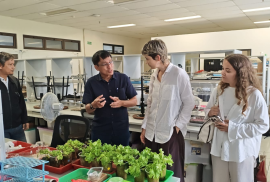
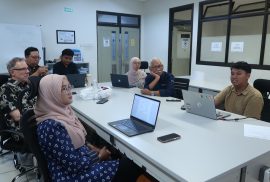
Magelang, June 24, 2025 — The Department of Agricultural and Biosystems Engineering (DTPB), Faculty of Agricultural Technology UGM, continues to solidify its position at the forefront of agricultural technology innovation through field-based research activities. In a strategic collaboration, the Computer-aided Postharvest Technology research team, led by Dr. Bayu Nugraha, involved Lea Noel, a student from Université de La Réunion, France, in a research project focusing on optimizing the food security of local horticultural products. This initiative, supported by the 2025 Bank Indonesia Research Grant (RGBI), also includes Dr. Fahrizal Yusuf Affandi from UGM Vocational School, postharvest expert Dr. Ir. Nursigit Bintoro from DTPB UGM, as well as DTPB undergraduate students Risma, Alfian, and Asep, and master’s student Halim.
As a tropical country, Indonesia is a paradise for various horticultural commodities that play a vital role in the national economy. This sector provides food, income for millions of smallholder farmers, and foreign exchange for the country. Despite significant production growth through technological adoption and improved varieties, the sector still faces major challenges. High postharvest losses due to the perishable nature of the products remain critical issues, exacerbated by uneven cold chain infrastructure and the impacts of climate change. This research aims to address these challenges by developing accessible and affordable tools for local farmers to support the logistics and transportation of horticultural products.

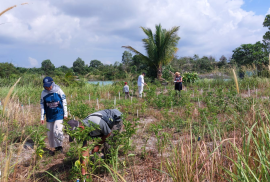
During the activity held in Srumbung District, Magelang, the team collected samples of freshly harvested chili peppers and salak fruit. Both international and undergraduate students actively participated in all stages of the research process, including initial quality assessment, transport condition simulations using prototype technology under development, and final evaluations. Direct exposure to real field conditions allowed students to better understand the complexity of the horticultural supply chain and how engineering solutions can help overcome its challenges. This activity marked the kick-off of the research, with the chili and salak harvest serving as the first batch of research samples supported by Bank Indonesia.

For Lea Noel, this activity provided hands-on experience with the realities of tropical agriculture in Indonesia. Meanwhile, for DTPB UGM students, it offered a valuable opportunity to apply agricultural engineering knowledge to real-world problems. The research is expected to produce practical technological solutions with a wide-reaching impact on improving supply chain efficiency, farmer welfare, and national food security.
This initiative aligns with efforts to achieve the Sustainable Development Goals (SDGs), particularly:
-
SDG 2 (Zero Hunger): By reducing postharvest losses and improving the availability of quality food for the population.
-
SDG 8 (Decent Work and Economic Growth): By increasing product value and smallholder farmers’ income through improved postharvest quality.
-
SDG 9 (Industry, Innovation, and Infrastructure): Through the development of affordable applied technology to address cold chain infrastructure limitations.
-
SDG 12 (Responsible Consumption and Production): By contributing to food loss reduction along the horticultural supply chain.
-
SDG 17 (Partnerships for the Goals): Through strengthened research collaboration between academics (UGM and Vocational School), international students (France), and local stakeholders.