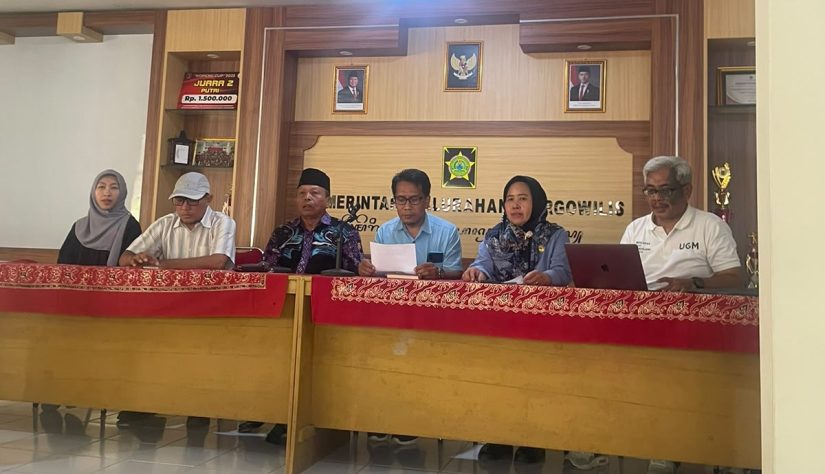
Kulon Progo, June 23, 2026 – The development of cattle and sheep farming in Hargowilis Village, Kulon Progo Regency, requires not only increased livestock production but also sustainable and economically valuable waste management. To support this effort, the Special Region of Yogyakarta Government, through the Department of Community Empowerment, Kalurahan Affairs, Population, and Civil Registration (PMKKPS DIY), invited Dr. Joko Nugroho Wahyu Kariyadi, S.T.P., M.Eng., Ph.D., a lecturer from the Department of Agricultural and Biosystems Engineering (DTPB), Faculty of Agricultural Technology, Universitas Gadjah Mada (FTP UGM), to serve as a speaker in a Community Empowerment Program held at the Hargowilis Village Hall on Tuesday (June 23).
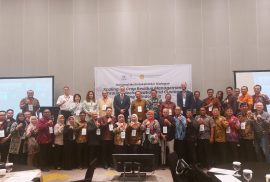
The event, attended by approximately 30 participants, served as a capacity-building forum for local communities in managing livestock enterprises while utilizing organic waste as a value-added resource. Participants included the Head of Hargowilis Village, the BKK Hargowilis Activity Implementation Team, members of the Village Consultative Body (BPKal), beneficiaries of the Karangkopek Financial Assistance Program, and representatives from PMKKPS DIY.
This activity was part of a community empowerment initiative targeting Karangkopek villages, a term used in the Special Region of Yogyakarta to describe villages that do not possess village-owned land (pelungguh and/or pengarem-arem) to finance government operations and village officials’ salaries. Through the Special Financial Assistance (BKK) scheme, the provincial government seeks to strengthen productive economic activities and improve community capacity to foster greater village self-reliance and sustainability.
In 2026, Hargowilis Village is expanding its livestock development program through cattle breeding and fattening systems while continuing its sheep breeding activities initiated in 2025. The village plans to purchase eight Limousine and Simmental crossbred cattle this year. In addition, local farmers currently manage 15 Texel-Merino crossbred sheep and one breeding buck to support livestock reproduction.
Recognizing this potential, Dr. Joko delivered a presentation on organic waste composting as a practical solution for increasing the added value of livestock farming while minimizing environmental impacts.
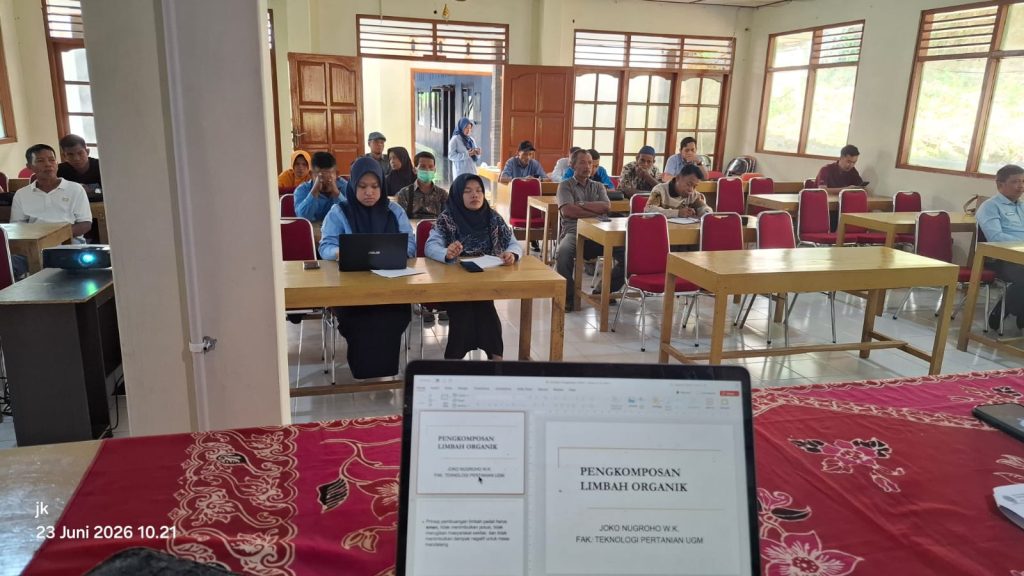
His presentation covered various topics, including types of organic waste treatment, cost components in waste processing, factors influencing the Break-Even Point (BEP), and simple business analysis methods that can be applied at the village level.
According to Dr. Joko, livestock waste management should no longer be viewed as a supplementary activity but rather as an integral part of a sustainable farming system.
He emphasized the importance of understanding the economic aspects of waste processing, including production cost calculations and break-even analysis, to ensure long-term business viability.
The Community Empowerment Assistance Program for Karangkopek villages is expected to broaden participants’ knowledge while aligning community understanding regarding the implementation of empowerment programs funded through the BKK Karangkopek scheme. As a result, the initiative is expected not only to strengthen technical capacities but also to enhance village economic independence.
Through this activity, community members gained valuable insights into organic waste processing technologies and practical approaches for developing more efficient, environmentally friendly, and sustainable livestock-based enterprises.
Looking ahead, the Hargowilis Village Government hopes that capacity-building programs under the Karangkopek initiative will encourage the emergence of innovative village-based enterprises, ultimately improving community welfare and strengthening the local economy based on regional resources.