Banjarbaru, July 23, 2026 – Improving horticultural productivity depends not only on the use of high-quality seeds but also on farmers’ ability to apply cultivation technologies that are suited to local land conditions and crop requirements. Addressing this challenge, Ardan Wiratmoko, S.T.P., M.Sc., a lecturer from the Department of Agricultural and Biosystems Engineering (DTPB), Faculty of Agricultural Technology, Universitas Gadjah Mada (FTP UGM), served as a resource person in the training program entitled “Strengthening Farmers’ Capacity through the Application of Horticultural Cultivation Technology to Improve Sustainable Productivity,” held on Thursday, July 23, 2026.
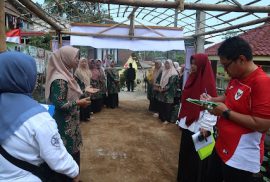
The activity was part of the HILING CSR Program (Greening and Environmental Management) initiated by PT Pertamina Patra Niaga Aviation Fuel Terminal (AFT) Syamsudin Noor. The training took place at the Ngudi Rahayu Farmer Group in Syamsudin Noor Village, Banjarbaru City, South Kalimantan, and was attended by approximately 40 members of the farmer group and local farmers from the surrounding operational area.
Strengthening Farmers through Appropriate Agricultural Technology
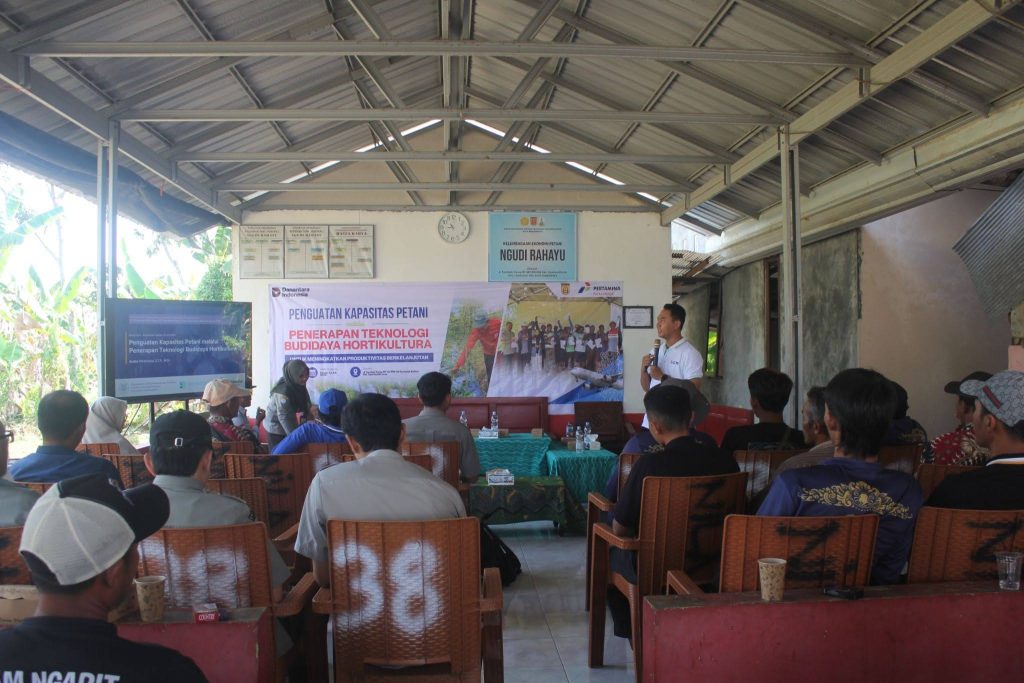
The Ngudi Rahayu Farmer Group cultivates a variety of horticultural commodities, including chili peppers, melons, mustard greens, spinach, and other vegetable crops. However, farmers continue to face several cultivation challenges, such as leaf curl disease, plant wilting, root rot, suboptimal vegetative growth, low melon productivity, and irrigation and nutrient management practices that have not yet fully matched crop requirements.
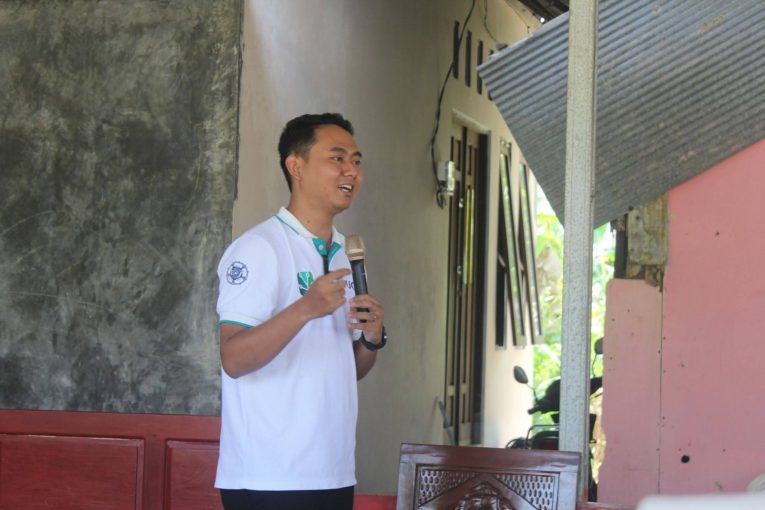
During the training, Ardan presented strategies to improve horticultural productivity through the identification of cultivation constraints, soil and nutrient management, efficient fertilization practices, integrated pest and disease management, and the application of cultivation technologies and irrigation systems tailored to local field conditions.
According to Ardan, agricultural technology should always be selected based on farmers’ actual needs and field conditions.
“Agricultural technology does not always have to be sophisticated or expensive. It should be selected based on the problems faced, land characteristics, crop types, and farmers’ capacities so that it can truly improve water-use efficiency, nutrient management, and overall crop productivity,” said Ardan.
Field Discussions to Develop Practical Technology Recommendations
In addition to the classroom session, the program included interactive discussions, field observations, and on-site identification of cultivation problems together with participating farmers. This approach encouraged farmers to better understand the relationship between soil characteristics, plant health, water management, fertilizer application, and the selection of appropriate cultivation technologies.
The findings from the field observations will serve as the basis for developing recommendations on production facilities and priority technologies that can be gradually implemented by the Ngudi Rahayu Farmer Group according to local needs.
The Head of the Ngudi Rahayu Farmer Group, Sakim, expressed his appreciation for the training, noting that the materials directly addressed the challenges faced by local farmers.
“We now better understand that soil conditions, fertilization, water management, and plant health are closely interconnected. We hope this program can continue through further mentoring and the implementation of technologies that match both farmers’ needs and our local land conditions,” said Sakim.
Strengthening Collaboration among Universities, Industry, and Communities
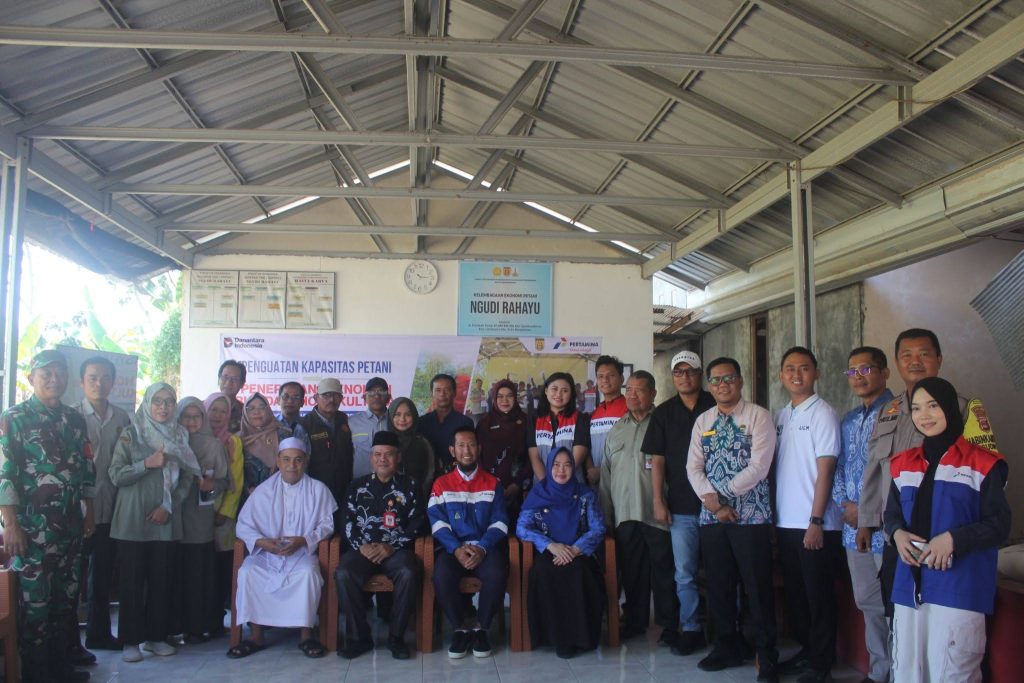
Dimas Budiman, AFT Manager of Syamsudin Noor, explained that the activity reflects the company’s commitment to supporting community empowerment through sustainable agricultural development in areas surrounding its operational facilities.
“Through the HILING Program, we aim to support the development of more productive and environmentally friendly horticultural farming. Our collaboration with UGM is expected to strengthen farmers’ capacity while promoting community self-reliance and improving local livelihoods,” Dimas explained.
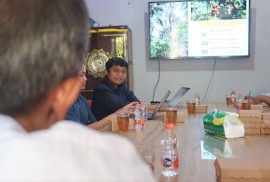
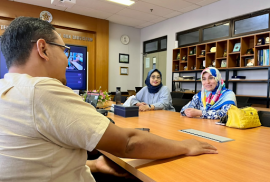
The collaboration between PT Pertamina Patra Niaga AFT Syamsudin Noor, Universitas Gadjah Mada, and the Ngudi Rahayu Farmer Group is expected to generate technical recommendations on cultivation practices, water management, production inputs, and priority technologies that can be implemented progressively.
Through the synergy between academia, industry, and local communities, this initiative is expected to strengthen farmers’ capacity to develop horticultural farming systems that are more productive, efficient, environmentally adaptive, and sustainable. The collaboration also demonstrates the commitment of the Department of Agricultural and Biosystems Engineering, FTP UGM, to transferring technology and innovation to society as part of its contribution to strengthening Indonesia’s agricultural sector.