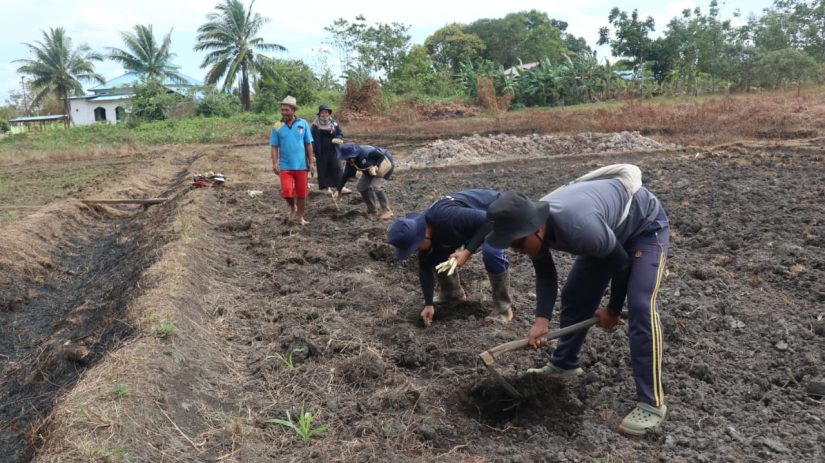
Merauke, South Papua — The Patriot Expedition Team (TEP) 1 of Universitas Gadjah Mada (UGM), led by Chandra Setyawan, S.T.P., M.Eng., Ph.D., a lecturer at the Department of Agricultural Engineering and Biosystems, Faculty of Agricultural Technology, UGM, has developed a 2,500-square-meter integrated agricultural demonstration plot in the Muting Transmigration Area (KT Muting), Merauke Regency, South Papua. The initiative focuses on soil and water conservation, as well as optimizing land and water resources to support sustainable agricultural development in the area.
The development of the demonstration plot is part of a collaboration between UGM and the Ministry of Transmigration to support the development of the potential of transmigration areas. Through an Agricultural Engineering and Biosystems approach, the program focuses on land and water resource management as an important component in supporting agricultural productivity and sustainability in KT Muting.
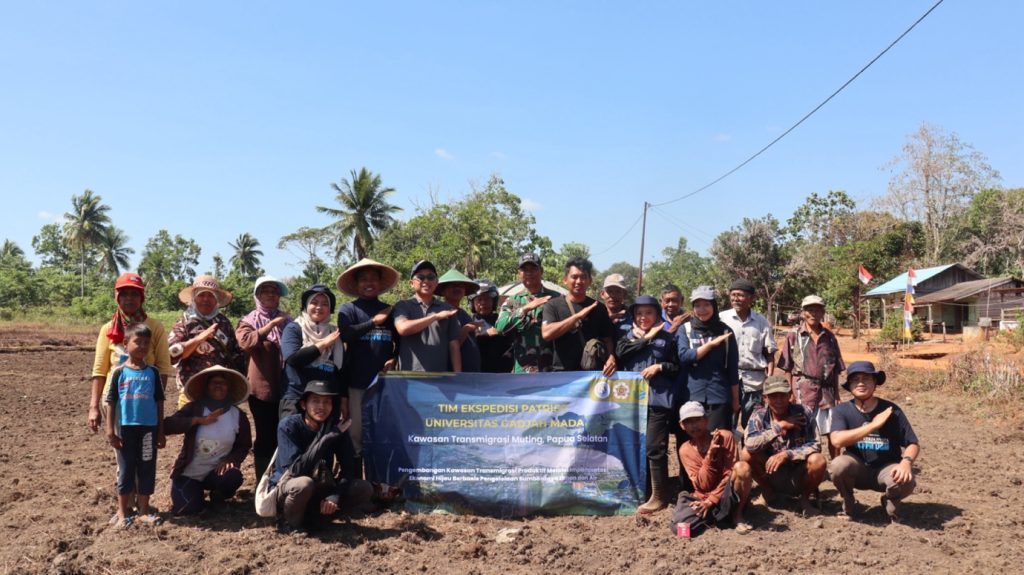
Optimizing Land and Water Resources in the Transmigration Area
The Muting Transmigration Area has been inhabited by transmigrant communities from various regions, particularly Java, since around 1990. Over time, the area has developed potential in the agricultural, plantation, and livestock sectors.
The environmental conditions of KT Muting, characterized by relatively high rainfall and the availability of water resources, provide opportunities for agricultural development. At the same time, land and water management requires appropriate approaches to ensure that these resources can be utilized efficiently and sustainably.
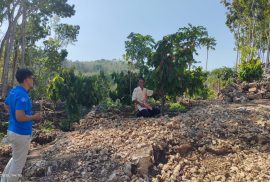
In this context, TEP 1 UGM developed the demonstration plot as a pilot site for implementing an integrated approach to land and water management. The demonstration plot also serves as a field-based platform to identify local conditions, test resource management approaches, and introduce practices that can be implemented and further developed together with the community.
TEP 1 UGM consists of Tri Ariani, S.T.P., specializing in agricultural economics; Khulaimi, S.P., specializing in agronomy; Ilham Mubarok, S.T.P., specializing in water resources and plantation management; Ariqonitahanif Putri Rahim, S.Si., specializing in geography and land mapping; and Fariz Jordan Fadillah, S.Pt., M.Sc., specializing in animal science.
This multidisciplinary collaboration supports a more comprehensive assessment of the area’s potential and challenges. Meanwhile, the Agricultural Engineering and Biosystems field contributes to strengthening land and water resource management, particularly through the application of soil and water conservation practices.
Demonstration Plot as a Model for Soil and Water Conservation
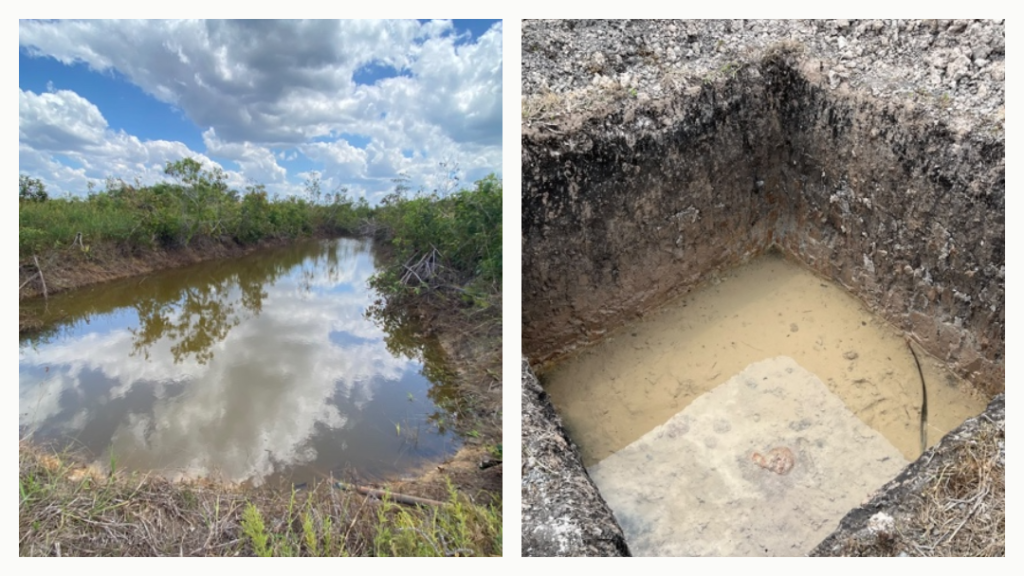
One of the main components of the initiative is the development of a soil and water conservation demonstration plot featuring a small-scale conservation pond constructed within the agricultural area. The site is also being used to test the cultivation of the Gamagora superior rice variety, developed through research by a team from UGM’s Faculty of Agriculture, using direct seeding or Tanam Benih Langsung (Tabela), along with the cultivation of high-quality forage grass.
The conservation pond is expected to become part of a field-level water management strategy. Stored water can be utilized to support agricultural activities, while the water storage facility also helps optimize the use of available rainfall in the area.
The relatively shallow groundwater table in KT Muting indicates the potential of local water resources to support the development of the area. In addition to the conservation pond, the area also has several elongated surface water storage facilities, or long storage, constructed to support agricultural activities carried out by local communities.
The presence of various types of water storage facilities is an important component in developing a water management system suited to the area’s characteristics. Integrating rainwater harvesting, water storage, and water utilization for agricultural land is one approach that can support water resource resilience in the transmigration area.
Promoting Agricultural Management Based on Local Resources
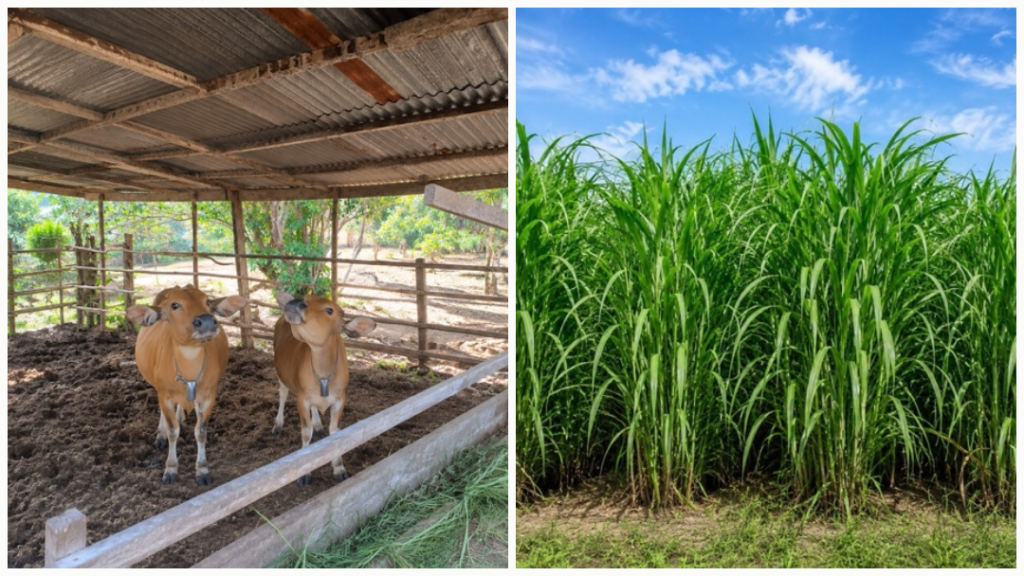
In addition to developing conservation infrastructure, TEP 1 UGM has also conducted an assessment of land conditions and available resources in KT Muting. This assessment is necessary to understand the characteristics of the area and determine management approaches suited to local conditions.
A locally based approach is important because agricultural development is not only concerned with increasing production but also with ensuring that land and water resources can be utilized efficiently over the long term.
Through the demonstration plot, local communities can directly observe the implementation of land and water management practices at the field scale. The pilot model is expected to serve as a learning platform as well as a foundation for expanding resource management practices throughout the transmigration area.
Strengthening the Green Economy through Land and Water Management
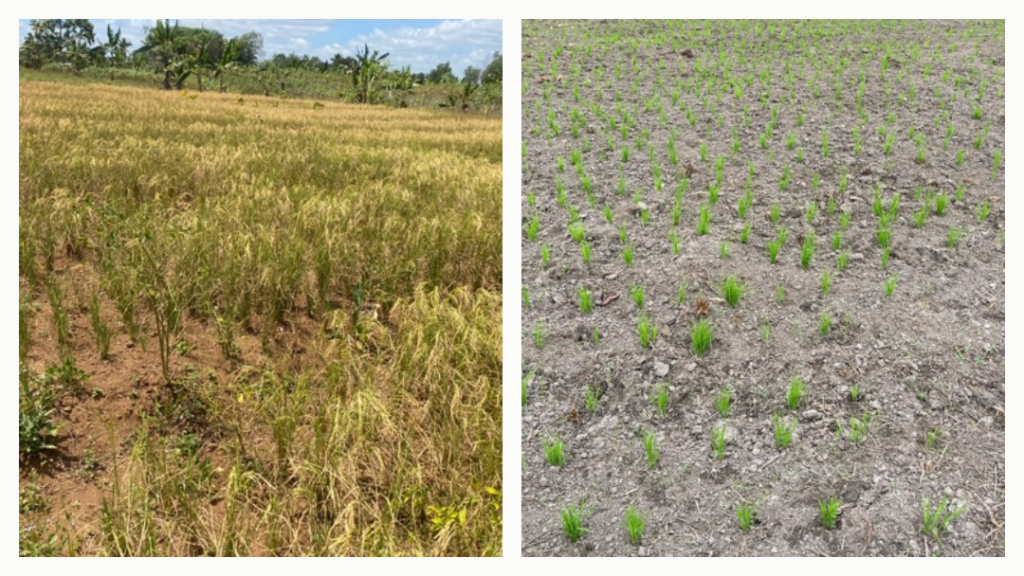
The development of the demonstration plot in KT Muting adopts a green economy approach through the optimization of natural resource utilization. Under this approach, agricultural activities are developed while considering the efficient use of land and water resources and the long-term sustainability of natural resources.
By integrating soil and water conservation with agricultural land management, the TEP 1 UGM initiative is expected to contribute to the sustainable development of KT Muting. Appropriate water resource management is also an important component in creating agricultural systems that are adaptive to environmental conditions and community needs.
The initiative further strengthens UGM’s contribution to the development of transmigration areas through a science- and technology-based approach. In the future, the results of the demonstration plot development are expected to serve as one example of the application of technology and land and water resource management practices that can be adapted to the characteristics of other transmigration areas in South Papua.