Yogyakarta, November 3, 2025 — The consumption of animal-based products in Indonesia continues to rise as public awareness grows regarding the importance of animal protein for health. However, the livestock industry still faces major challenges, particularly in terms of animal care, housing management, and compliance with animal welfare standards during slaughtering. Public concerns have also emerged regarding unethical or non-halal slaughtering practices that can affect both the quality and safety of meat products.
To address these issues, the Department of Agricultural and Biosystems Engineering, Faculty of Agricultural Technology, Universitas Gadjah Mada (DTPB FTP UGM) held a guest lecture titled “Environmental Stress and Meat Quality” as part of the Biophysical Physics course on November 3, 2025.
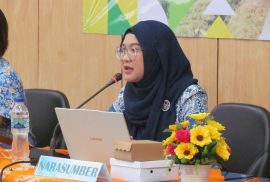
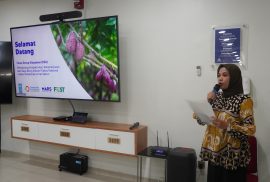
The lecture featured two researchers from the National Research and Innovation Agency (BRIN) — Dr. Laila Rahmawati, S.T.P., an expert in Postharvest Technology and Food Analysis, and Diah Pratiwi, S.T., M.Eng., an expert in Animal Product Technology. The session was opened and moderated by Dr. nat. techn. Rizki Maftukhah from DTPB FTP UGM.

In the first session, Diah Pratiwi discussed the physiological responses of livestock to environmental conditions, emphasizing how factors such as temperature, feed quality, housing, and psychological stress affect animal welfare and meat quality. She highlighted the importance of implementing animal welfare principles from farming to slaughtering to ensure safe, halal, and high-quality animal products.
The second session, delivered by Dr. Laila Rahmawati, focused on postharvest technology and meat quality parameters, including pH, moisture content, color, texture, and the biochemical processes occurring after slaughter. She also outlined best slaughtering practices that maintain animal welfare and halal integrity while ensuring food safety and quality.
This guest lecture aligns with the university’s commitment to the Sustainable Development Goals (SDGs), particularly:
-
SDG 2 (Zero Hunger): improving the quality and safety of animal-based foods,
-
SDG 12 (Responsible Consumption and Production): promoting ethical and efficient livestock production,
-
SDG 3 (Good Health and Well-being): ensuring safe and nutritious animal-derived foods for the public.
Through this event, DTPB FTP UGM aims to enhance students’ understanding of the integration between biology, technology, and ethics in animal product processing, fostering a more sustainable and humane food system.