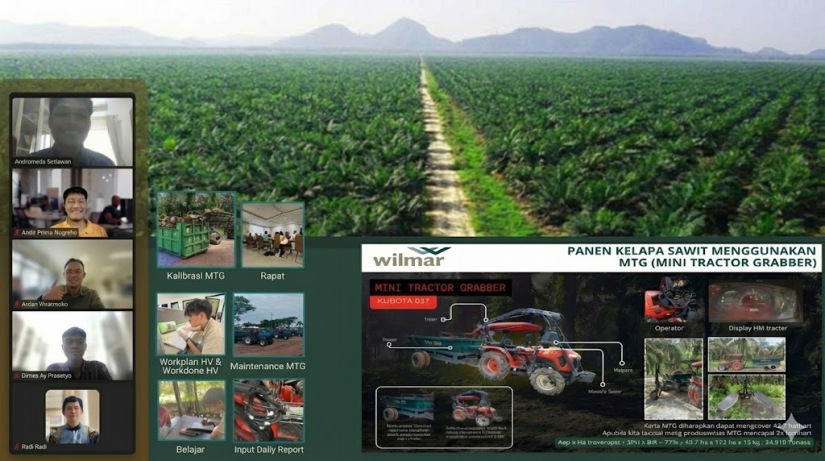
Yogyakarta, 12 February 2026 – Two Agricultural Engineering students from the Faculty of Agricultural Technology (FTP), Universitas Gadjah Mada (UGM), Andromeda Setiawan and Dimas Aji Prasetyo, presented the progress of their Industrial Internship at Wilmar International Plantation. The presentation was conducted online on Friday, 12 February 2026, at 1:00 PM WIB, as part of the evaluation and documentation of the internship program.

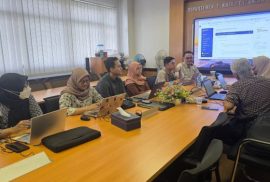
The session was attended by academic supervisors from Universitas Gadjah Mada, including the Coordinator of the Biosystems Machinery Expertise Group, Dr. Andri Prima Nugroho, Prof. Bambang Purwantana, Ardan Wiratmoko, STP., M.Sc., and Dr. Radi, STP., M.Eng.
In his presentation, Andromeda Setiawan elaborated on various aspects of oil palm harvesting activities in which he had been involved. He highlighted several critical issues encountered in the field, including:
Weather Impact: Heavy rainfall and unpredictable weather conditions caused damage to manual collection paths (pasar pikul roads).
Facilities and Infrastructure: Damaged collection roads due to heavy rainfall became a major obstacle to transportation mobility and the hauling of harvested fresh fruit bunches (MTG).
Operator Shortage: The identification of insufficient machine operators as another significant challenge within the plantation.
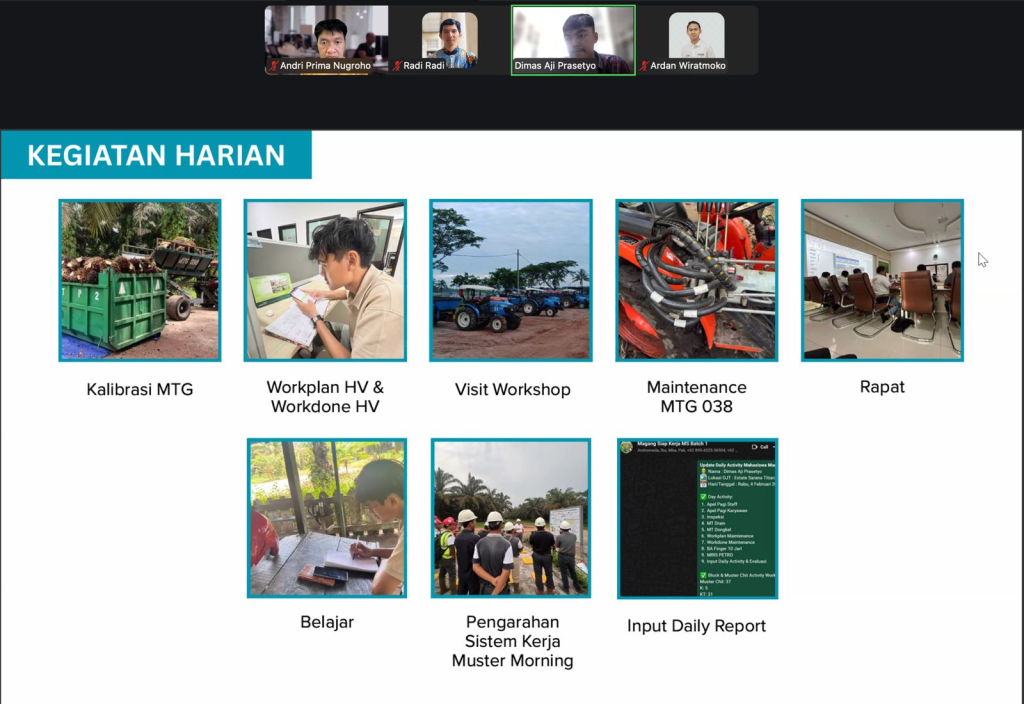
Andromeda also described his daily internship activities, which included “Rawcall” (morning assembly) from 4:45 to 6:30 AM, field observation and operational supervision, labor management, and report preparation as part of his responsibilities as a Field Controller (FC). He also submitted daily activity reports to the Site Technical Coordinator (STC).
Dimas Aji Prasetyo also presented his internship progress, providing a comprehensive overview of experiences and findings during the Industrial Internship program at Wilmar International Plantation.
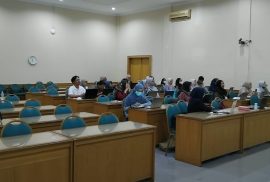
This presentation emphasized the importance of practical experience in enabling students to understand real-world challenges within the plantation industry. Academic supervisors and the Biosystems Machinery Expertise Group coordinator provided feedback and guidance to further develop the students’ findings, ensuring the relevance and quality of learning outcomes.

This industrial internship initiative aligns with several Sustainable Development Goals (SDGs), particularly:
SDG 2: Zero Hunger – Through efforts to improve oil palm harvesting efficiency and identify productivity constraints, contributing to food security and sustainable agriculture.
SDG 4: Quality Education – By providing direct industry-based learning experiences and developing essential skills in observation, problem analysis, and reporting for Agricultural Engineering students.
SDG 9: Industry, Innovation, and Infrastructure – By identifying infrastructure challenges (collection roads) and the need for innovation in workforce management within the plantation sector, encouraging the development of a more resilient industry.
The presentation served as an important platform for students to share their experiences and findings while receiving constructive feedback from academic supervisors. It is expected that this experience will equip students with relevant competencies and contribute to innovative solutions in the oil palm industry.