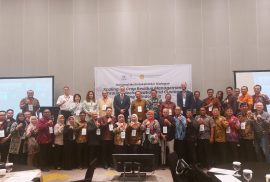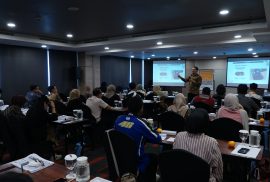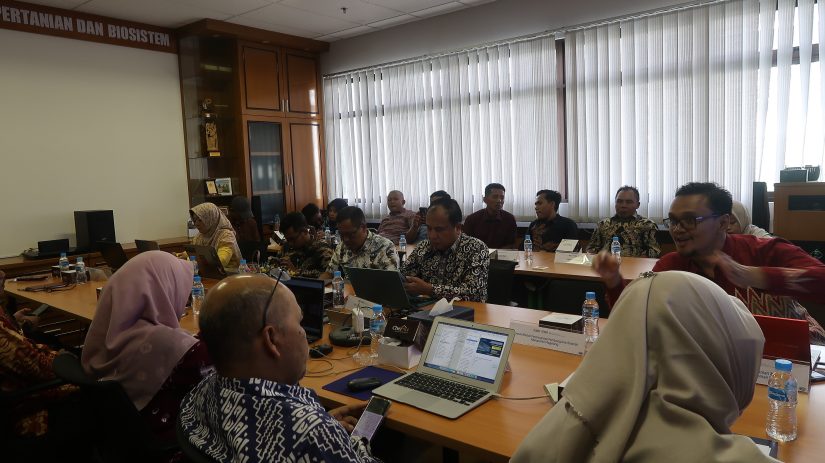
Magelang, May 21, 2026 – After more than four years of community assistance programs in Sambak Village, Kajoran District, Magelang Regency, the Department of Agricultural and Biosystems Engineering (DTPB), Faculty of Agricultural Technology, Universitas Gadjah Mada (FTP UGM), reaffirmed its commitment to impactful and sustainable community engagement. This commitment was reflected through a Focus Group Discussion (FGD) entitled “Pentahelix Collaboration in Zero-Waste-Based Agrotourism Management in Sambak Village,” bringing together academia, government institutions, local communities, businesses, and other stakeholders.
The activity marked an important step in designing the sustainability strategy for Sambak Village development following the completion of support from the Yanmar Environmental Sustainability Support Association (YESSA) grant and DTPB FTP UGM’s mentoring program, which has been implemented since 2022.
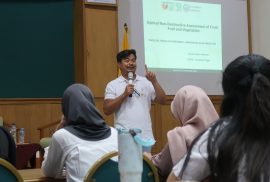
The FGD was attended by representatives from Sambak Village Government, Magelang Regency Government agencies, related institutions, and academics from DTPB FTP UGM. The Regent of Magelang was represented by Nanda Cahyadi Pribadi, A.P., M.Si., Head of the Regional Development Planning, Research, and Innovation Agency (Bappeda Litbang) of Magelang Regency. Meanwhile, the Dean of FTP UGM was represented by Dr. Sri Rahayoe, Vice Dean for Cooperation Affairs of FTP UGM. As a keynote speaker, DTPB FTP UGM also invited Prof. Subejo, Vice Dean for Cooperation Affairs at the Faculty of Agriculture UGM, to provide perspectives on strengthening village institutions.
Sambak Village: From Assisted Village to a Model of Impactful Community Engagement
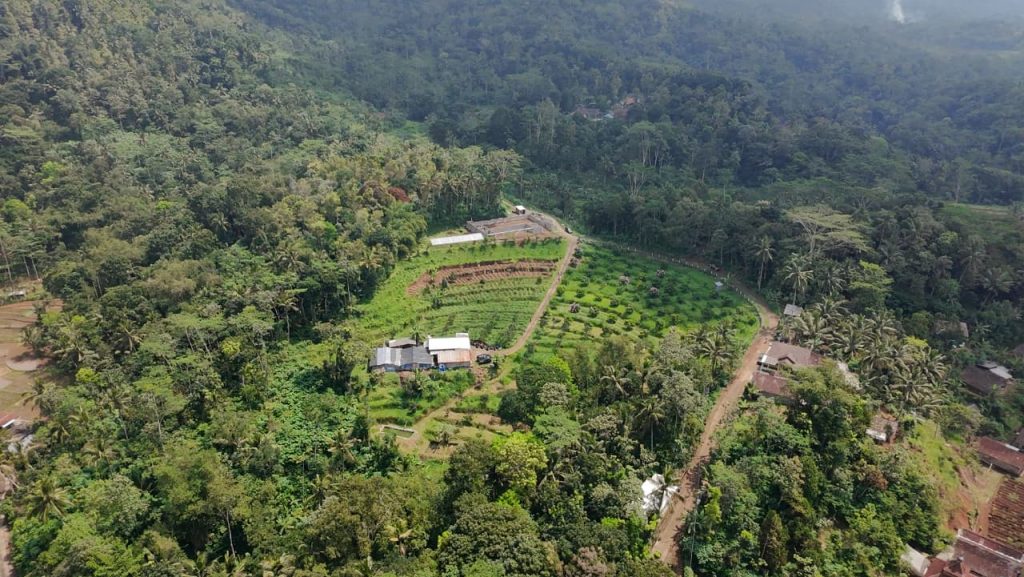
Sambak Village has been a fostered village of DTPB FTP UGM since 2022 through collaboration with the Yanmar Environmental Sustainability Support Association (YESSA), a Japan-based organization supporting environmental sustainability and community empowerment initiatives.
Throughout the mentoring period, numerous development programs were implemented, ranging from the establishment of agroforestry areas and improving local coffee production and quality to developing a small-medium tofu enterprise through environmentally friendly and efficient tofu production technology using steam boiler systems.
This transformation demonstrates that university community engagement extends beyond technology transfer, serving as a catalyst for community empowerment and sustainable village development.
Dari Pendampingan Menuju Kemandirian Desa
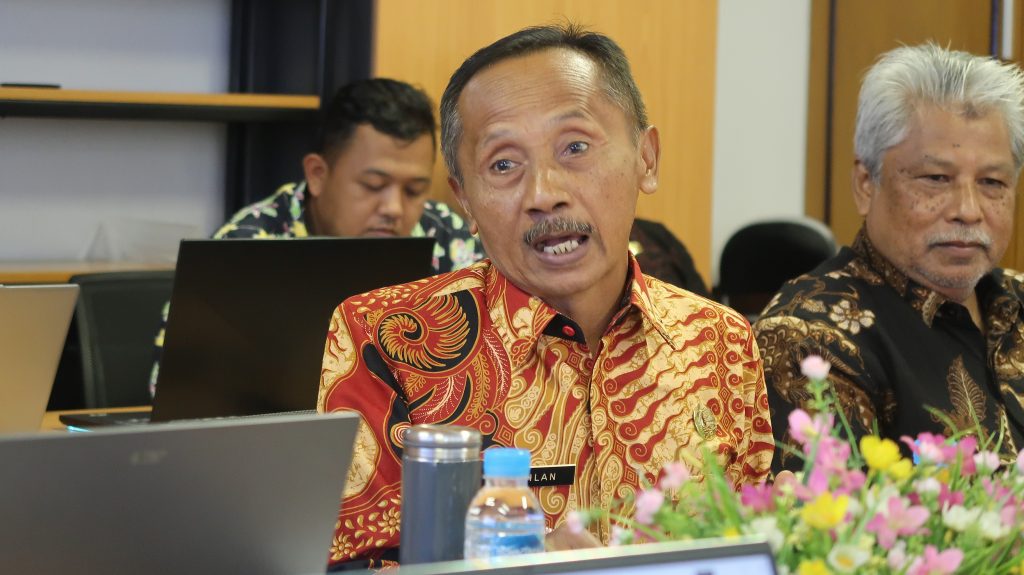
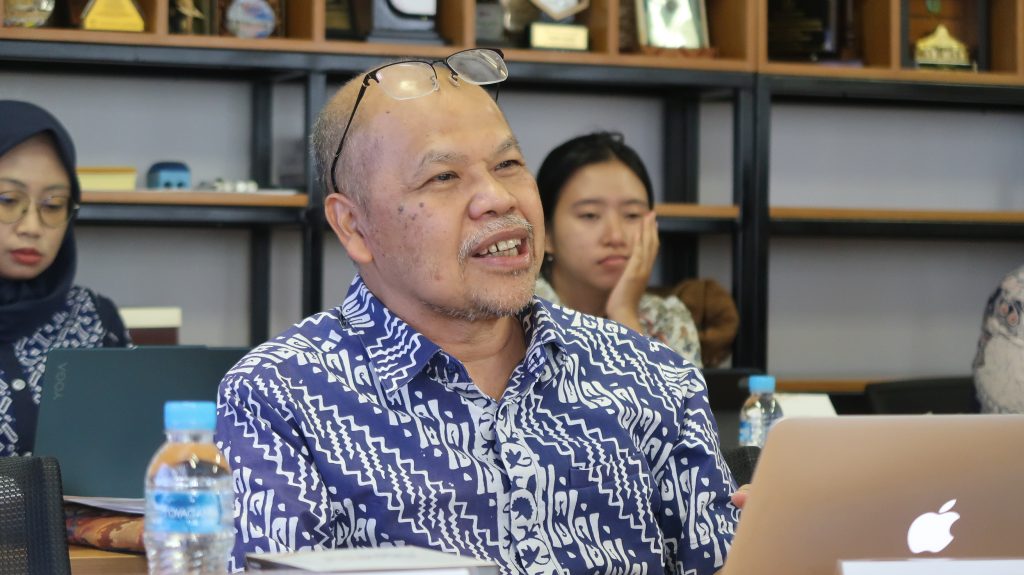
Sambak Village Head Dahlan (left) and Prof. Lilik Sutiarso (right).
Sambak Village Head Dahlan expressed his appreciation for the long-term assistance provided.
“There are still many things Sambak Village needs to achieve the aspirations of our community. We sincerely thank DTPB and YESSA for all their activities and support for our village,” he stated.
The Head of the DTPB–YESSA Team, Prof. Lilik Sutiarso, emphasized that the four-year mentoring initiative should not be viewed as the end of collaboration.
“These four years are not the end of our program. Rather, this is a transition process from DTPB UGM and YESSA to Sambak Village so it can be managed, maintained, and further developed independently. We hope government institutions and the village community can begin initiating programs based on the village’s own needs,” he explained.
He further noted that Sambak Village has also evolved into a learning and research platform.
“Numerous local and international studies have been conducted in Sambak Village. Various assets and facilities have also been placed there. Moving forward, all these potentials need to be integrated and managed collectively so their impact can be expanded further,” he added.
Prof. Lilik also reaffirmed that DTPB FTP UGM would continue providing mentoring and discussion opportunities despite the completion of grant funding.
Institutional Strengthening as the Key to Sustainability
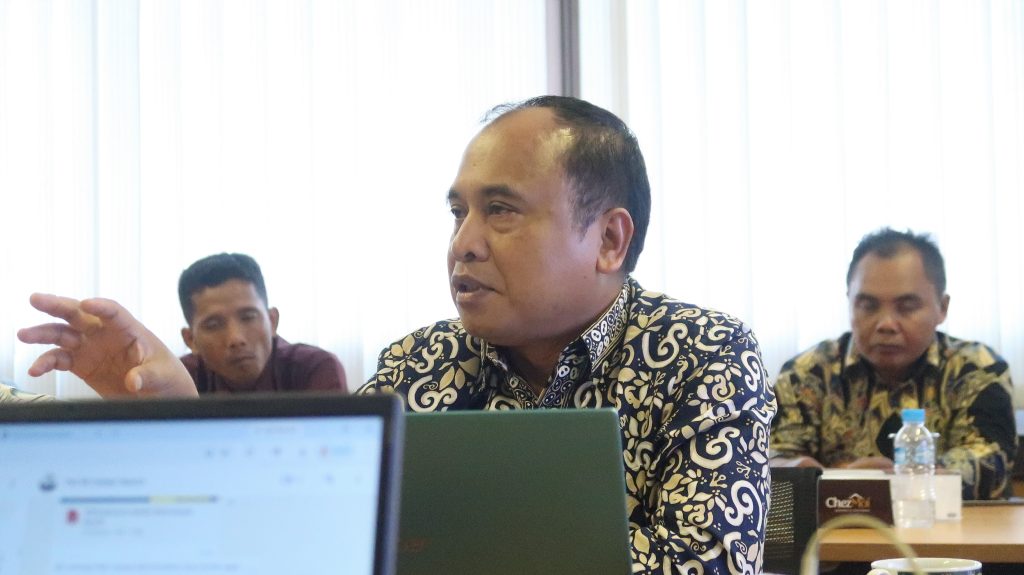
During the discussion session, Prof. Subejo emphasized that successful village development relies heavily on strong institutions.
“Discussing institutions means discussing strong organizations as well as effective governance and regulations. Without solid institutional foundations, the aspirations and uniqueness envisioned by the village will be difficult to achieve,” he explained.
He also highlighted current challenges in Indonesia’s agricultural sector, including declining agricultural labor and increasing land-use conversion.
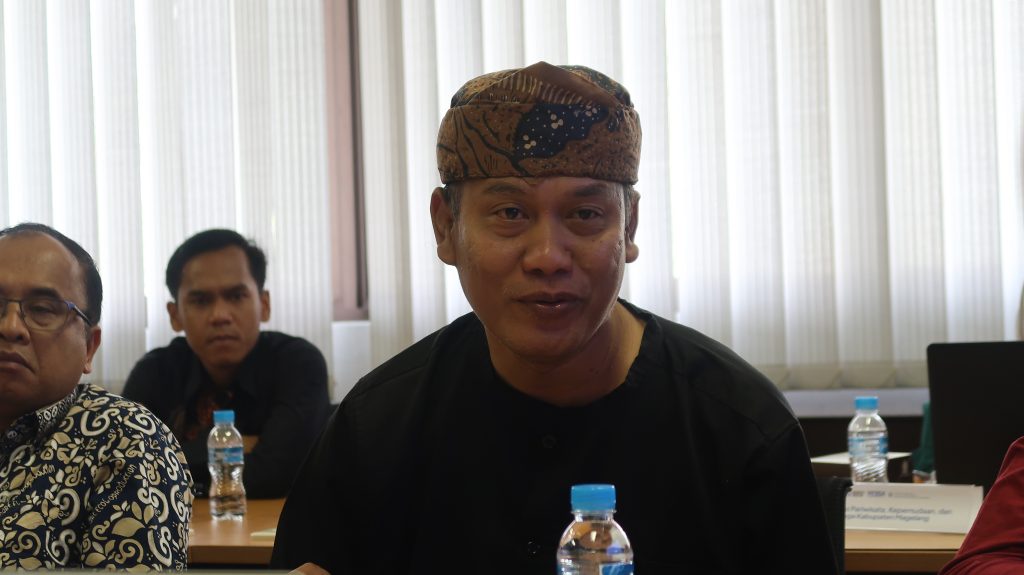
This perspective was reinforced by Nanda Cahyadi Pribadi, who noted that Sambak Village already possesses a functioning ecosystem that now requires institutional reinforcement.
“This village ecosystem has already been established. The next priority is strengthening institutional aspects. Village regulations are important to ensure the continuity of existing programs,” he stated.
He also praised Sambak Village’s progress and reaffirmed local government support for future development initiatives.
Pentahelix Synergy Encourages Sustainable Agrotourism
Several government agencies also expressed support through cross-sector collaboration opportunities. The Livestock and Fisheries Agency offered learning partnerships with livestock community groups. Meanwhile, the Agriculture Agency expressed support for developing food and horticultural commodities, including avocado cultivation.
At the same time, the Tourism Agency highlighted Sambak Village’s potential to be developed into a sustainable agrotourism destination.
Currently, Sambak Village has been categorized as a developing tourism village in Magelang Regency, with opportunities for strengthening institutional capacity through tourism awareness groups (Pokdarwis) and village-owned enterprises (BUMDes).
DTPB FTP UGM’s Commitment to Impactful Community Engagement
DTPB FTP UGM’s involvement in Sambak Village reflects the implementation of the Tri Dharma of Higher Education, particularly community service integrated with research and innovation.
Over the past four years, Sambak Village has evolved beyond a mentoring location into a social laboratory and implementation space for various research outcomes involving local and international researchers.
The approach implemented by DTPB FTP UGM demonstrates that impactful community engagement does not end with program completion. Instead, it focuses on creating ecosystems capable of growing independently, being managed by communities, and generating sustainable socio-economic impacts.