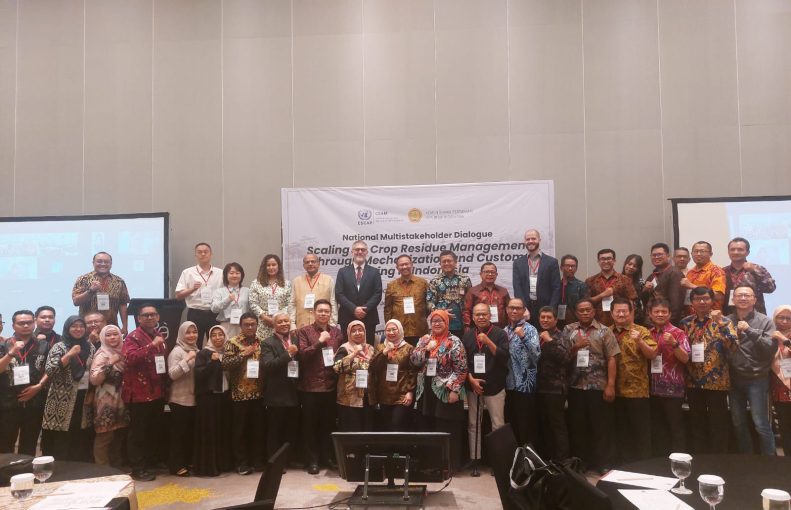
Yogyakarta, September 1, 2026 – Crop residue management remains one of the challenges in promoting sustainable agriculture in Indonesia. The practice of burning agricultural residues, particularly rice straw and rice husks, can have negative environmental impacts. Mechanization and the reuse of crop residues offer an alternative approach to addressing this issue.
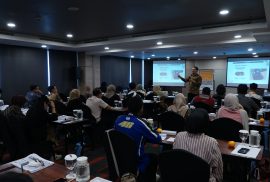
This topic was discussed during the National Multistakeholder Dialogue entitled “Scaling Crop Residue Management Through Mechanization and Custom Hiring in Indonesia”, held on September 1, 2026. The event was organized by the United Nations Economic and Social Commission for Asia and the Pacific (UN ESCAP) – Centre for Sustainable Agricultural Mechanization (CSAM) in collaboration with the BRMP for Agricultural Mechanization, Ministry of Agriculture of the Republic of Indonesia.
The Department of Agricultural and Biosystems Engineering (TPB), Faculty of Agricultural Technology (FTP), Universitas Gadjah Mada (UGM) participated in the dialogue through three lecturers: Prof. Lilik Sutiarso as one of the speakers, and Dr. Radi and Sri Markumningsih, Ph.D. as participants.

Sharing Experiences from a Crop Residue Management Pilot Project
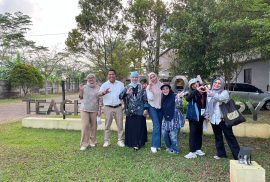
The participation of TPB UGM lecturers was closely related to the experience of the CSAM–UGM collaboration in implementing a pilot project in 2023. Dr. Radi and Sri Markumningsih, Ph.D. were members of the UGM team involved in the collaboration.
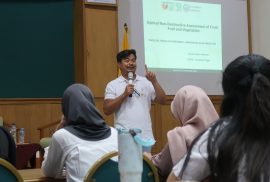
During the dialogue, Prof. Lilik Sutiarso shared experiences and lessons learned from the activity entitled “Experiences and Lessons Learned from Crop Residue Management Pilot Activities in Indonesia”, which was implemented in three hamlets in Yogyakarta through a pilot project.
As the leader of the UGM project team, Prof. Lilik explained that one of the main challenges identified at the pilot locations was the way farmers handled crop residues, particularly rice straw and rice husks. Following harvest activities, these residues were commonly burned, creating negative environmental impacts.
In response to this situation, the UGM team proposed an approach based on agricultural mechanization to reduce the practice of burning agricultural residues while increasing their potential for reuse.
“The main challenge we faced was how farmers handled crop residues, particularly rice straw and rice husks, which were commonly burned. Therefore, we proposed a pilot project to reduce agricultural residue burning through an agricultural mechanization approach,” said Prof. Lilik.
Through this approach, agricultural residues were no longer viewed simply as waste that needed to be disposed of or burned. Instead, they could be reused for various purposes. Rice straw could be processed into fermented livestock feed, compressed for storage as hay (pressed straw storage), or utilized as compost.
Mechanization to Improve Residue Utilization
The pilot project introduced several mechanization technologies to the community, including choppers, threshers, and pressers. These technologies were intended to assist farmers in handling agricultural residues more effectively and efficiently.
The use of mechanization was expected not only to reduce dependence on residue burning but also to provide alternative methods for utilizing agricultural residues that could benefit farming and livestock activities.
The pilot project produced several key achievements. One of them was an increase in the mechanization index of agricultural activities at the pilot project locations.
Another achievement was an improvement in postharvest waste management. Nearly 90 percent of postharvest waste in the form of rice straw was stored and processed into livestock feed. This demonstrated a change in how the community managed crop residues after harvest.
Through the project, farmers were not only introduced to mechanization technologies but also trained to recognize the potential of agricultural residues as reusable resources while maintaining environmental sustainability.
A Pilot Project as the Beginning of Community Self-Reliance
Prof. Lilik emphasized that the implementation of a pilot project should not simply end when the program itself is completed. According to him, the sustainability of the program depends on the community’s ability to continue and develop the practices that have been introduced.
“When the pilot project ends, it does not mean that the activities we have introduced should simply stop. There needs to be voluntary contributions from the participants because the program itself also provides benefits to them,” Prof. Lilik explained.
This approach positions the community not merely as recipients of technology, but as active actors in maintaining the sustainability of the program. Once the community is able to independently implement and sustain the practices, the next step is to expand the dissemination of knowledge and experience.
One of the proposed approaches is the establishment of a learning center as a platform for continuous learning and knowledge sharing. The learning center could provide a space for communities to further develop their knowledge of crop residue management while sharing their experiences with other communities.