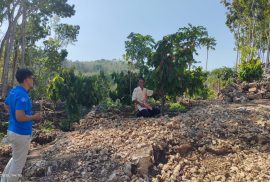
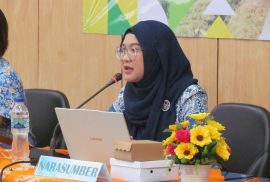
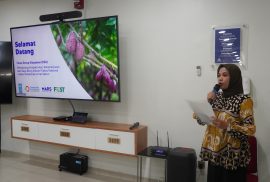
Pandeglang, 26 February 2026 – The Center for Irrigation and Agricultural Modernization Studies (PKMIP) of the Faculty of Agricultural Technology, Universitas Gadjah Mada (UGM), conducted a survey and technical discussion regarding the planned implementation of the Irrigation Management System (SIPASI) at the Cibaliung Irrigation Area (DI Cibaliung), Pandeglang Regency, Banten. The activity took place from 23–26 February 2026 as part of strengthening institutional collaboration between the Department of Agricultural and Biosystems Engineering (DTPB) FTP UGM and Balai Besar Wilayah Sungai Cidanau Ciujung Cidurian (BBWS C3).
The DTPB FTP UGM team involved in the activity included Prof. Dr. Ir. Sigit Supadmo, M.Eng.; Muhamad Khoiru Zaki, S.P., M.P., Ph.D.; Andri Prima Nugroho, S.T.P., M.Sc., Ph.D.; Hanggar Ganara Mawandha, S.T., M.Eng., Ph.D.; Ardan Wiratmoko, S.T.P., M.Sc.; and Rohmad Basuki, S.T.P. The agenda comprised technical discussions with BBWS C3 and field visits to Nanggala Village, Cibaliung District, to directly observe irrigation network conditions and operational systems.
Prof. Dr. Ir. Sigit Supadmo, M.Eng. emphasized that irrigation system strengthening must be addressed comprehensively.
Irrigation modernization does not only concern physical infrastructure, but also governance and decision-making systems. Through SIPASI, operational processes are expected to become more measurable, transparent, and data-driven.
In line with this, Andri Prima Nugroho, S.T.P., M.Sc., Ph.D. highlighted the importance of integrating monitoring technology into the system.
With the support of integrated water level sensors and discharge measurement devices, the system can provide real-time information so that water distribution management becomes more precise and responsive.
Sumarna, Head of Nanggala Village, also conveyed his expectations regarding the development plan.
We hope this program can help improve water service reliability for farmers in our area. If water management improves, it will certainly have a positive impact on agricultural productivity within the community.
Beyond strengthening synergy between academia and government institutions in water resource management, the initiative also contributes to several Sustainable Development Goals (SDGs), including SDG 2 (Zero Hunger), SDG 6 (Clean Water and Sanitation), SDG 9 (Industry, Innovation, and Infrastructure), SDG 13 (Climate Action), and SDG 17 (Partnerships for the Goals).
Through sustained collaboration between DTPB FTP UGM, BBWS Cidanau Ciujung Cidurian, and village authorities, the implementation of SIPASI in DI Cibaliung is expected to serve as an initial step toward a more adaptive, efficient, and sustainable irrigation system in support of national food security.