West Pasaman, Indonesia – As part of efforts to strengthen development and community empowerment in transmigration areas, the Indonesian Ministry of Transmigration collaborated with several leading universities, including Universitas Gadjah Mada (UGM), to establish the Patriot Expedition Team. The program serves as a catalyst for regional transformation through applied research initiatives, one of which was conducted in the Ranah Balingka Beremas transmigration area, comprising Ranah Batahan, Koto Balingka, and Sungai Beremas Districts in West Pasaman Regency, West Sumatra.
The project was led by Chandra Setyawan, a lecturer from the Department of Agricultural and Biosystems Engineering (DTPB), Faculty of Agricultural Technology (FTP), UGM. Together with fellow team members from FTP UGM, including Pujo Saroyo, Tri Ariani, Fadhel Munelson, and Wahyu Duwi Santodo, the team worked collaboratively to formulate a development design for region-specific priority plantation commodities, focusing on oil palm.
The research was conducted over approximately four months, from August to November 2025. Activities included identifying local priority commodities, analyzing supply chains and market potential, and formulating commodity development strategies based on regional characteristics. Data collection and analysis employed descriptive, qualitative, quantitative, interdisciplinary, and participatory approaches.
Spatial Analysis Identifies Oil Palm as the Leading Commodity
Using spatial analysis and land suitability assessment based on Geographic Information Systems (GIS), the team identified significant potential for plantation development within the study area. Spatial datasets included rainfall, temperature, elevation, slope, soil type, soil texture, drainage, land cover, and accessibility.
These datasets were processed using GIS techniques such as overlay analysis, buffering, proximity analysis, and interpolation. Results showed that approximately 63,216.15 hectares, equivalent to 91 percent of the study area, were highly suitable for oil palm cultivation.
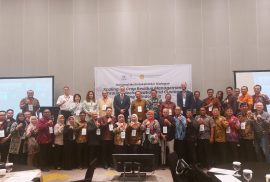
To strengthen the technical findings, a series of Focus Group Discussions (FGDs) were conducted involving government agencies, community leaders, industry stakeholders, and farmers. The discussions ensured that the determination of priority commodities considered not only technical and environmental aspects but also local economic, social, and policy dimensions.
Based on the combined results of spatial analysis and stakeholder consultations, oil palm was identified as the most promising plantation commodity for regional development.
Understanding the Palm Oil Value Chain
The economy of the transmigration area is highly dependent on the oil palm sector. Community members participate as plantation managers, small-scale fresh fruit bunch (FFB) collectors, large-scale aggregators, and palm oil processing companies.
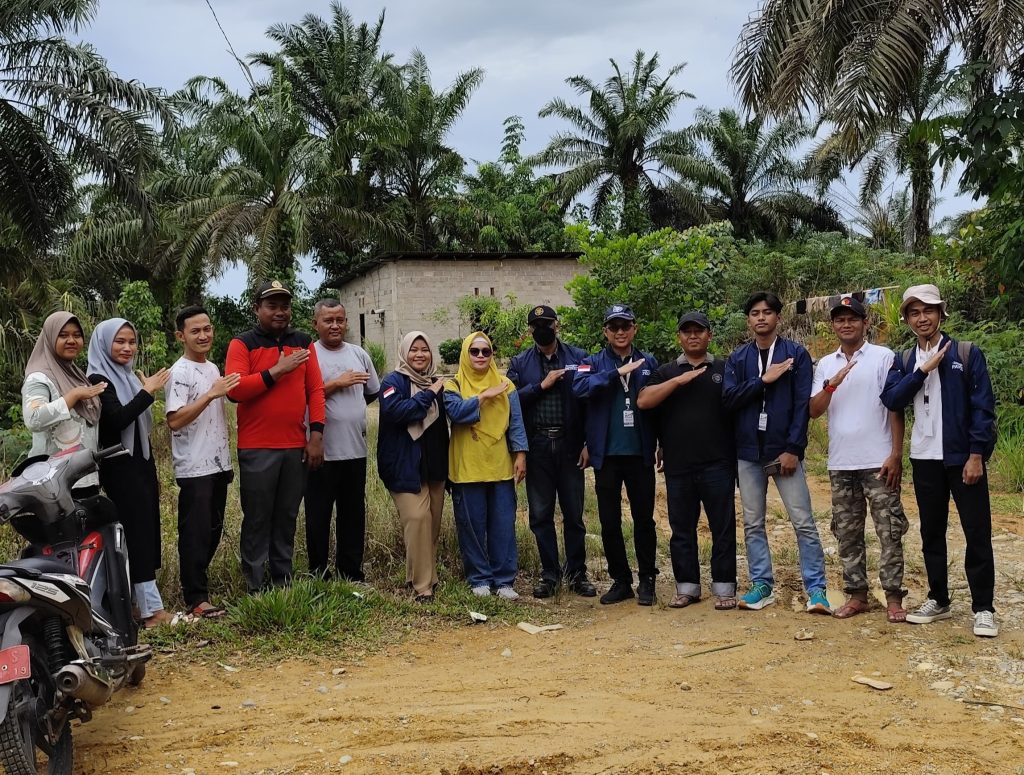
To better understand the economic dynamics of the region, the research team conducted a comprehensive value chain analysis covering stakeholders from upstream production to downstream processing and marketing. Primary data were collected through interviews and in-depth discussions with each actor involved in the supply chain.
The analysis identified several critical points where interventions could improve farmer welfare, strengthen supply chain efficiency, and enhance regional competitiveness.
Strategic Recommendations for Sustainable Development
The study highlighted the need for integrated policies involving central and local governments, private sector actors, and transmigration communities. Key strategic recommendations include:
- Strengthening commodity development policies based on regional characteristics.
- Reforming the palm oil supply chain through stronger farmer institutions.
- Enhancing environmental conservation and disaster risk reduction measures.
- Expanding farmer capacity-building and agricultural entrepreneurship programs.
- Accelerating improvements in infrastructure supporting the value chain.
The recommendations were tailored to the specific characteristics of each district. Ranah Batahan was identified as a potential upstream agribusiness hub, Koto Balingka as a palm oil downstream processing cluster, and Sungai Beremas as a coastal logistics center.
These development pathways require targeted policy interventions that integrate infrastructure development, farmer institutional strengthening, supply chain modernization, and climate resilience measures.
Building Independent and Sustainable Transmigration Areas
The Patriot Expedition is expected to become more than a platform for knowledge and technology transfer. The initiative aims to support the creation of independent, productive, and sustainable transmigration communities capable of adapting to future economic and environmental challenges.
Through interdisciplinary research and collaboration, FTP UGM continues to contribute scientific expertise to support inclusive regional development while strengthening the competitiveness and sustainability of Indonesia’s agricultural sector.
Contributor: Tri Ariani