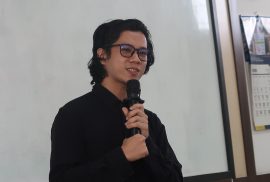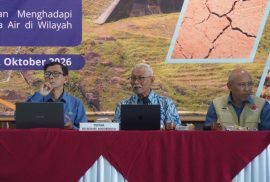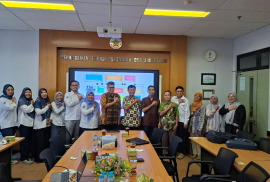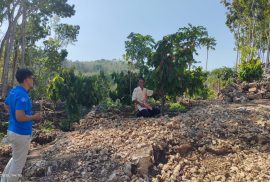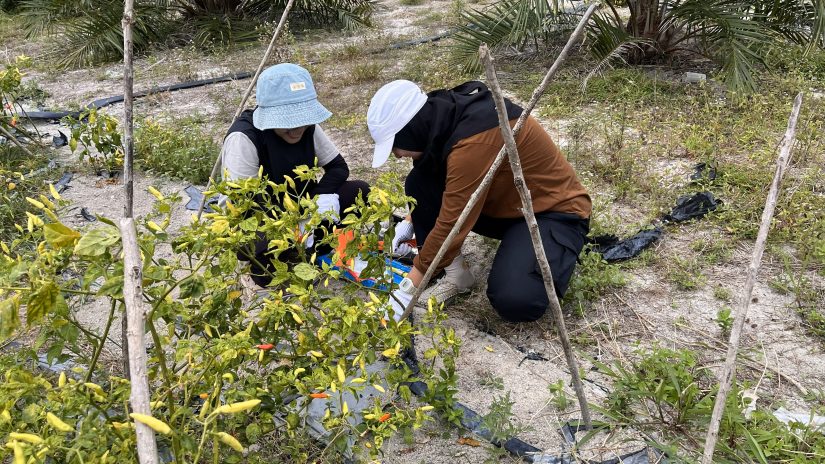
Bangka, January 25, 2026 — The Department of Agricultural and Biosystems Engineering (DTPB), Faculty of Agricultural Technology, Universitas Gadjah Mada (UGM), conducted collaborative research on post-tin mining land in Bangka Regency as part of efforts to support sustainable agriculture, food security, and the Net Zero Emission target. The activity involved Dr.nat.techn. Rizki Maftukhah, STP, M.Sc., serving as both lead researcher and research team member.
This collaborative research engaged international and national partners, namely Universität für Bodenkultur Wien (BOKU) and the Regional Development Planning Agency (BAPPEDA) of Bangka Regency, as part of strengthening cross-institutional research collaboration in post-tin mining land management.
Three Collaborative Research Projects on Post-Tin Mining Land
The collaborative research was implemented through three main research projects:
- “Long-Term Effectiveness of Local Amendment Application on Heavy Metal Accumulation in Cassava (Manihot esculenta) Cultivated on Post-Tin Mining Land”, led by Dr.nat.techn. Rizki Maftukhah, STP, M.Sc.
- “Small-scale Circular Agriculture Enterprises for Food Security: Transition with Eco-Innovations in Post Tin Mining Area of Bangka Island”, led by Dr. Ngadisih, S.T.P., M.Sc., IPM., ASEAN Eng.
- “Rehabilitation of Post-Mining Land Using Indigofera tinctoria as a Means to Achieve Net Zero Emission and Restore Indonesia’s Sovereignty in Natural Dyes”, led by Prof. Dr. Ir. Benito Heru Purwanto, MP, M.Agr.
These three studies focus on the rehabilitation of post-tin mining land in Bangka Regency through integrated scientific, ecological, and economic approaches.
Research Objectives: Sustainable Agriculture and Net Zero Emission
The research aims to examine the long-term effectiveness of local amendments applied to post-tin mining land to support agricultural activities. In addition, the research seeks to develop small-scale circular agriculture enterprise models based on eco-innovation in Bangka Island to strengthen local food security.

Furthermore, the utilization of Indigofera tinctoria is studied as a land rehabilitation agent, a carbon sequestration plant to support Net Zero Emission targets, and a natural dye source with potential to strengthen the national textile industry.
Research Implementation in Bangka Regency
The collaborative research activities were conducted on post-tin mining land located in Bangka Regency over a period of five days, from January 25 to 29, 2029. During this period, the research team carried out site surveys, initial soil sampling, preparation of local amendments, and coordination with local farmers.

The research involved two postgraduate students, one field technician, local farmers, and local government representatives, and is expected to generate scientifically based and applicable recommendations for sustainable management of post-tin mining land in Bangka.
Supporting DTPB FTP UGM Internationalization and SDGs Achievement
This collaborative research activity aligns with the vision of DTPB FTP UGM to strengthen the internationalization of education and research, particularly through strategic collaboration with international institutions such as Universität für Bodenkultur Wien (BOKU). The partnership supports knowledge exchange, research quality enhancement, and the development of sustainable agricultural innovations at the global level.
Moreover, this activity contributes to the achievement of the Sustainable Development Goals (SDGs), particularly:
- SDG 2 – Zero Hunger
- SDG 9 – Industry, Innovation and Infrastructure
- SDG 12 – Responsible Consumption and Production
- SDG 13 – Climate Action
- SDG 17 – Partnerships for the Goals
Through this collaborative research, DTPB FTP UGM reaffirms its commitment to producing impactful, research-based innovations that benefit society and environmental sustainability.