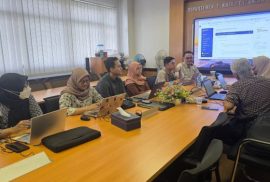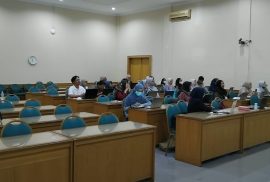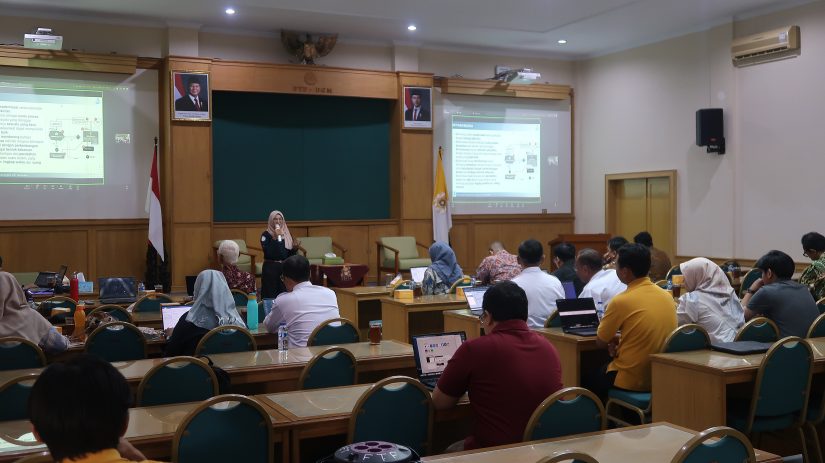
Yogyakarta – The Faculty of Agricultural Technology, Universitas Gadjah Mada (FTP UGM), through the Center for Irrigation and Agricultural Modernization Studies (PKMIP), organized a discussion forum titled Introduction and Implementation of SIPASI 2.0 on Friday, April 10, 2026. The event brought together stakeholders from the Directorate General of Water Resources, Ministry of Public Works, as part of efforts to support irrigation modernization programs in Indonesia.
The event was attended offline by Dr. Dani Riyadi, Head of the Subdirectorate of Data and Information System Development, Directorate of Water Resources Engineering Development, and Dr. Vicky Ariyanti, Head of the Operation and Maintenance Division of the Serayu Opak River Basin Organization, along with their teams. Meanwhile, several officials and institutional representatives joined online, including the Director of Irrigation and Swamps, the Director of Operation and Maintenance Development, representatives from the Irrigation Engineering Center, and representatives from the Pompengan Jeneberang River Basin Organization.

Right: Opening remarks were also delivered by Dr. Dani Riyadi, Head of the Subdirectorate of Data and Information System Development, Directorate General of Water Resources, Ministry of Public Works.
The discussion began with remarks from Prof. Dr. Kuncoro Harto Widodo, who emphasized the importance of collaboration between academia and government in addressing increasingly complex water resource management challenges, including climate change, resource limitations, and the need to improve irrigation service efficiency. Dr. Dani Riyadi also highlighted the importance of strengthening integrated water resource information systems as a foundation for faster and more accurate decision-making in irrigation management.
Irrigation Modernization Concept and SIPASI 2.0 as a Gradual Process
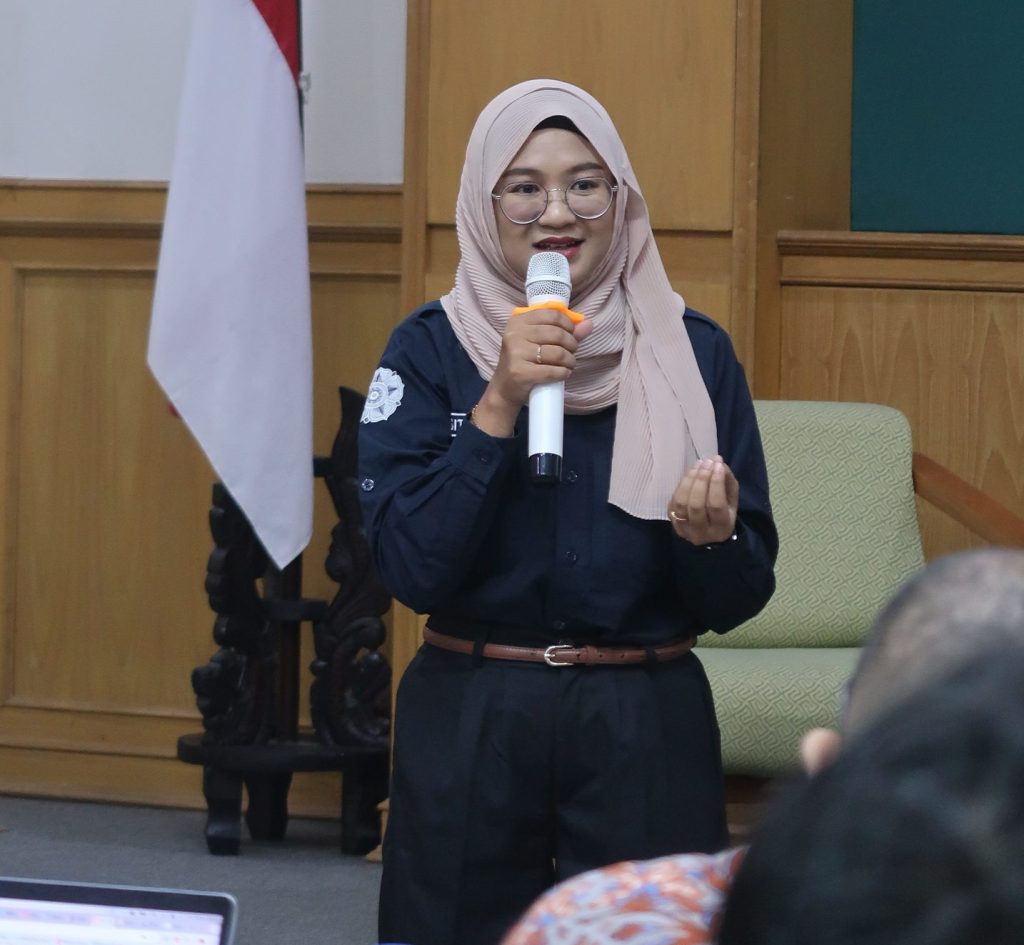
As a conceptual introduction, Prof. Dr. Ir. Sigit Supadmo Arif, M.Eng., Professor in irrigation engineering and management at FTP UGM and member of the PKMIP advisory board, explained that irrigation modernization is not merely about adopting technology, but rather a comprehensive transformation involving technical, institutional, and human resource aspects.
He emphasized that modernization must be understood as an integrated system transformation rather than solely a technological upgrade.
Dr. Ansita further explained that modernization cannot be implemented instantly, but must be adjusted to the readiness level of each irrigation area, including infrastructure, institutional capacity, and human resources. In this context, SIPASI serves as one of the implementation tools for modern irrigation management through data integration, field monitoring, and analytical support for more accurate decision-making.

Technical Explanation and Implementation Case Study
A technical presentation on SIPASI was delivered by Ir. Andri Prima Nugroho, S.T.P., M.Sc., Ph.D., who explained SIPASI’s role as part of smart irrigation water management. The system is designed to support integrated, data-driven irrigation management from planning to field operations.
Furthermore, Petrus Bambang Edi Subiantara and Yohanes Sujut Triyanta presented the implementation of SIPASI 2.0 in the Tabo-tabo Irrigation Area. The case demonstrated that data-based systems can improve water distribution efficiency and enhance cropping pattern planning.

The discussion was dynamic, with participants providing various inputs. Representatives from the Directorate of Irrigation and Swamps emphasized the importance of ease in data collection and processing, as well as the readiness of operational budgets, including hosting and data transmission costs. Institutional aspects were also highlighted, particularly the need to strengthen farmer organizations to support technology implementation, as such institutions are not yet fully established in some irrigation areas.
In response, Prof. Sigit Supadmo Arif stressed that irrigation modernization must be understood collectively by all stakeholders, including farmers, and supported through continuous training programs and the development of knowledge management centers.
System Integration and National Policy

From a policy perspective, Dr. Dani Riyadi stated that SIPASI development should be integrated into a national water resource data platform covering multiple sectors such as rivers and dams, involving various institutions. This integration is considered essential for improving decision-making speed and accuracy, as well as enhancing public service delivery.
Meanwhile, the Director of Operation and Maintenance Development highlighted the importance of system sustainability through clear maintenance mechanisms, flexible technology implementation, and phased adoption without requiring all components to be fulfilled simultaneously. Prof. Sigit Supadmo Arif reinforced that irrigation modernization is a right for all irrigation areas, although it requires certain technical prerequisites and allows selective technology adoption.
Technical, Economic Aspects and Impact of Implementation

The discussion also covered technical and economic aspects of SIPASI implementation. Representatives from the Irrigation Engineering Center emphasized the importance of cost-benefit analysis, including impacts on agricultural productivity, equipment depreciation, and data governance schemes.
The SIPASI team explained that software costs are relatively manageable, but operational and maintenance costs require careful consideration. The system is designed to be flexible, with partially open data management.
Dr. Ansita Gupitakingkin Pradipta further emphasized that the impact of SIPASI implementation must be viewed systemically within the framework of the five pillars of irrigation modernization. Evaluations in several irrigation areas have shown positive impacts, including increased water productivity, reduced operation and maintenance costs, and decreased environmental risks.
From a field implementation perspective, SIPASI also has the potential to increase cropping intensity, although predictive models are still under development.
Additionally, representatives from the Serayu Opak River Basin Organization raised questions regarding the integration of SIPASI with existing systems, particularly in rehabilitated irrigation areas. It was noted that such integration requires further policy-level discussions, including source code management and platform development in each region.
Overall, it was agreed that systems like SIPASI must be developed in an adaptive and contextual manner, considering the needs and readiness of each irrigation area.
Through this activity, PKMIP FTP UGM demonstrates its commitment to advancing research-based, applicable, and sustainable irrigation modernization. Active involvement in multi-stakeholder discussions, the development of systems such as SIPASI 2.0, and contributions to data-driven policy recommendations reflect PKMIP’s professionalism in bridging academic knowledge and field practice.
This systematic, adaptive, and collaborative approach ensures that innovations are not only scientifically robust but also practical and relevant to real-world irrigation management needs in Indonesia.
This activity also aligns with the achievement of the Sustainable Development Goals (SDGs), particularly:
- SDG 2 (Zero Hunger)
- SDG 6 (Clean Water and Sanitation)
- SDG 9 (Industry, Innovation, and Infrastructure)
- SDG 17 (Partnerships for the Goals)