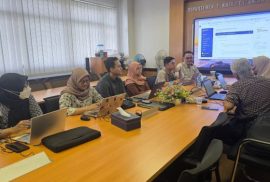
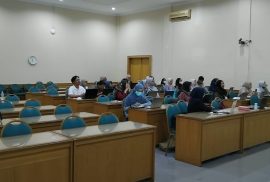
Yogyakarta, August 14, 2026 – The development of precision agriculture technology is increasingly important in supporting more efficient, data-driven, and sustainable agricultural systems. In line with this development, the Department of Agricultural and Biosystems Engineering (DTPB), Faculty of Agricultural Technology, Universitas Gadjah Mada (FTP UGM), held a discussion with PT Sang Hyang Seri to explore potential collaboration in the development and application of precision agriculture technologies.
The meeting provided a forum for both institutions to exchange perspectives on the development of agricultural technology and discuss opportunities for collaboration that could connect academic research with practical applications in the agricultural sector.
Exploring Opportunities for Precision Agriculture Collaboration
The discussion focused on the potential utilization of precision agriculture technologies to support more effective agricultural management. Precision agriculture enables agricultural activities to be supported by data and technology, allowing farmers and agricultural stakeholders to make more accurate decisions based on actual field conditions.
Through this collaboration, DTPB FTP UGM and PT Sang Hyang Seri explored opportunities to integrate research, technological innovation, and field implementation. The collaboration is expected to contribute to the development of agricultural systems that are more efficient, adaptive, and responsive to changing field conditions.
The discussion also highlighted the importance of data in modern agricultural management. Field data can provide valuable information for understanding crop conditions, land characteristics, and other factors that influence agricultural productivity.
Integrating Agricultural Data and Field Technologies

One of the areas discussed was the utilization of agricultural data, land mapping, and sensor-based technologies to support precision agriculture applications.
The integration of these technologies can provide more comprehensive information for agricultural management. Land mapping, for example, can help identify variations in field conditions, while sensors can be used to monitor specific parameters that are relevant to crop growth and production.
The availability of accurate and timely data is expected to support better decision-making throughout the agricultural production process. This approach is particularly relevant to efforts to improve resource-use efficiency and optimize agricultural production.
Bridging Research and Agricultural Practice
The potential collaboration between DTPB FTP UGM and PT Sang Hyang Seri also reflects the importance of strengthening the connection between academic research and practical applications in the agricultural sector.
As an academic institution, DTPB FTP UGM continues to develop research and innovation in agricultural engineering and biosystems, including precision agriculture, smart farming, agricultural machinery, environmental technology, and digital agricultural systems.
Meanwhile, collaboration with industry partners provides opportunities to test and apply research outcomes in real-world agricultural settings. Such cooperation can help ensure that technological innovations developed through research respond to actual challenges faced by the agricultural sector.
Supporting the Modernization of Indonesian Agriculture