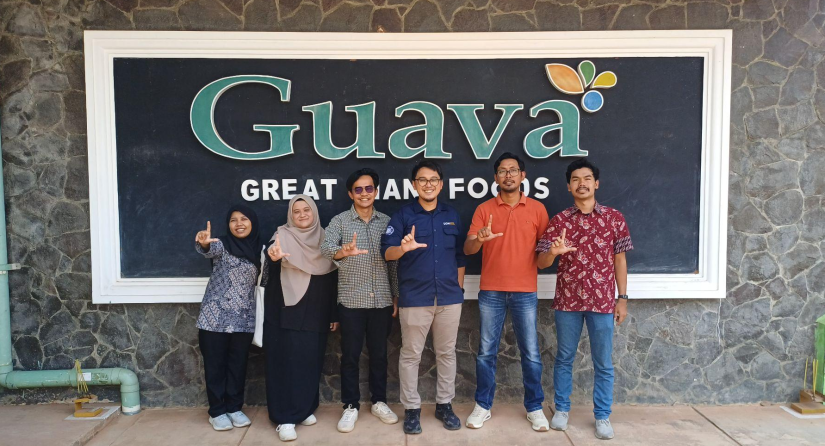
Lampung, August 5, 2026 – The development of postharvest technology requires a direct understanding of industrial conditions and needs. To expand opportunities for applied research collaboration, the Department of Agricultural and Biosystems Engineering (DTPB), Faculty of Agricultural Technology, Universitas Gadjah Mada (FTP UGM) visited PT Great Giant Pineapple (GGP) in Lampung on August 4–5, 2026.
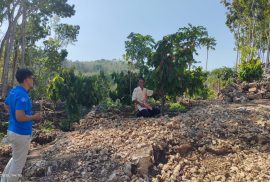
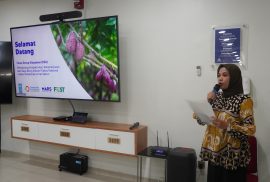
The visit provided an opportunity to directly observe horticultural product handling processes while discussing various challenges in postharvest handling and distribution. The discussions covered pineapple and banana commodities, including opportunities to develop technologies for product monitoring and quality detection.
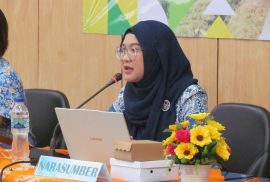
Representing DTPB FTP UGM, Dr. Bayu Nugraha, S.T.P., M.Sc., Ph.D., participated in the visit. Discussions with the GGP team focused on technological needs to support product handling processes, particularly technologies capable of detecting internal fruit conditions that cannot be identified through external visual inspection.
Identifying Internal Quality Challenges in Pineapple
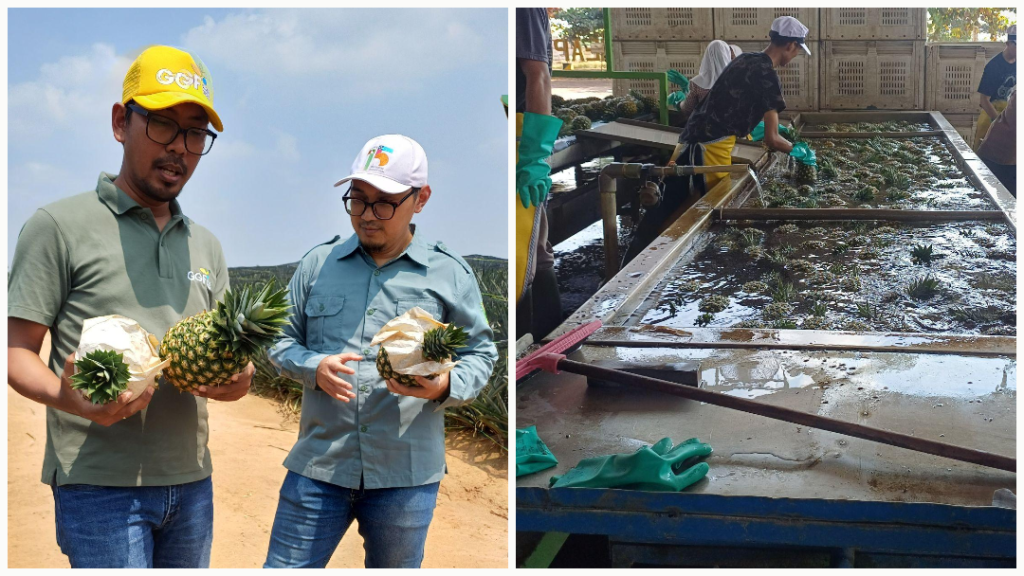
One of the issues discussed was translucency in pineapple fruit, a condition in which the flesh becomes transparent or water-soaked in appearance. This condition presents a challenge during the sorting process because it cannot always be identified based on the fruit’s external appearance.
In addition to translucency, internal pineapple maturity was another issue addressed during the discussion. External observation does not always provide sufficient information about the condition of the fruit’s interior.
The discussion explored several non-destructive technologies that could potentially be used to detect internal fruit conditions, including infrared technology, spectroscopy, thermal imaging, and X-ray imaging. The development of these technologies could support quality inspection without damaging the products.
Observing Product Handling Processes Firsthand
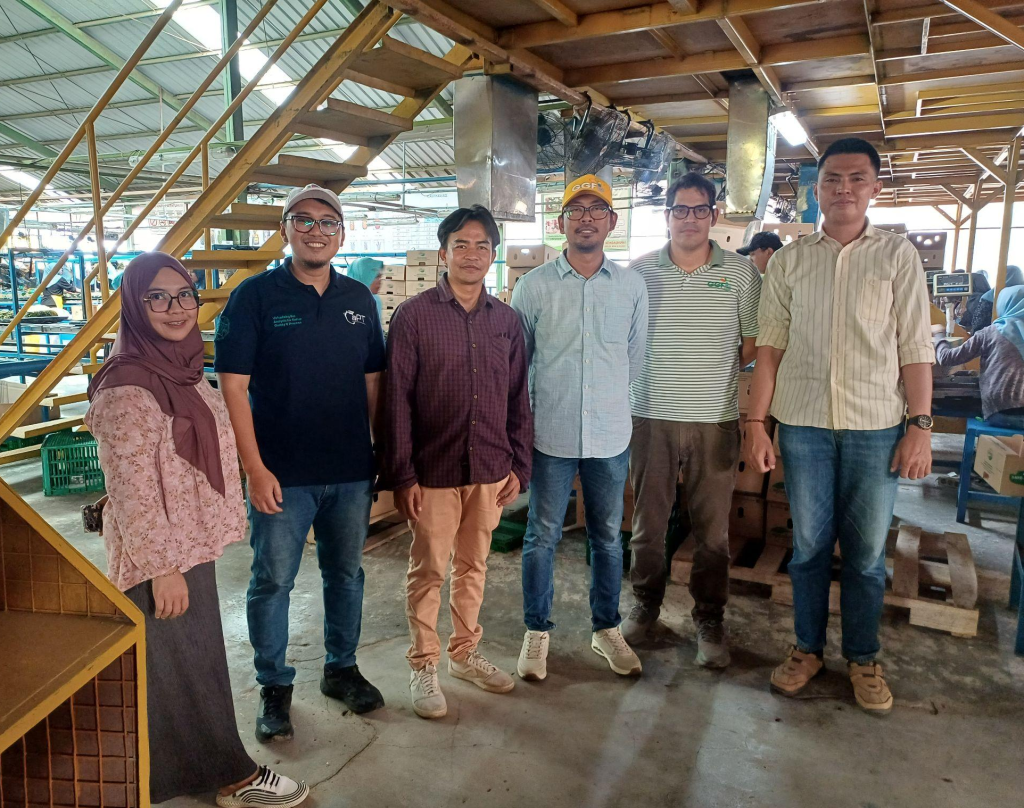
The field visit continued with direct observation of pineapple handling processes at GGP’s packing house. For export products, the handling process includes washing, coating, coating drying, labeling and foam net installation, packaging, and rapid cooling before shipment.
Meanwhile, products intended for the local market undergo different handling procedures, including differences in cold storage practices. These variations demonstrate that postharvest control requirements are also influenced by the destination market, distribution system, and transportation duration.
The visit also included discussions on potential mechanical damage during handling and its possible effects on the internal condition of the fruit. The occurrence of fungal growth on the fruit crown was another aspect considered in the product handling process.
Exploring Opportunities for Non-Destructive Technology Development
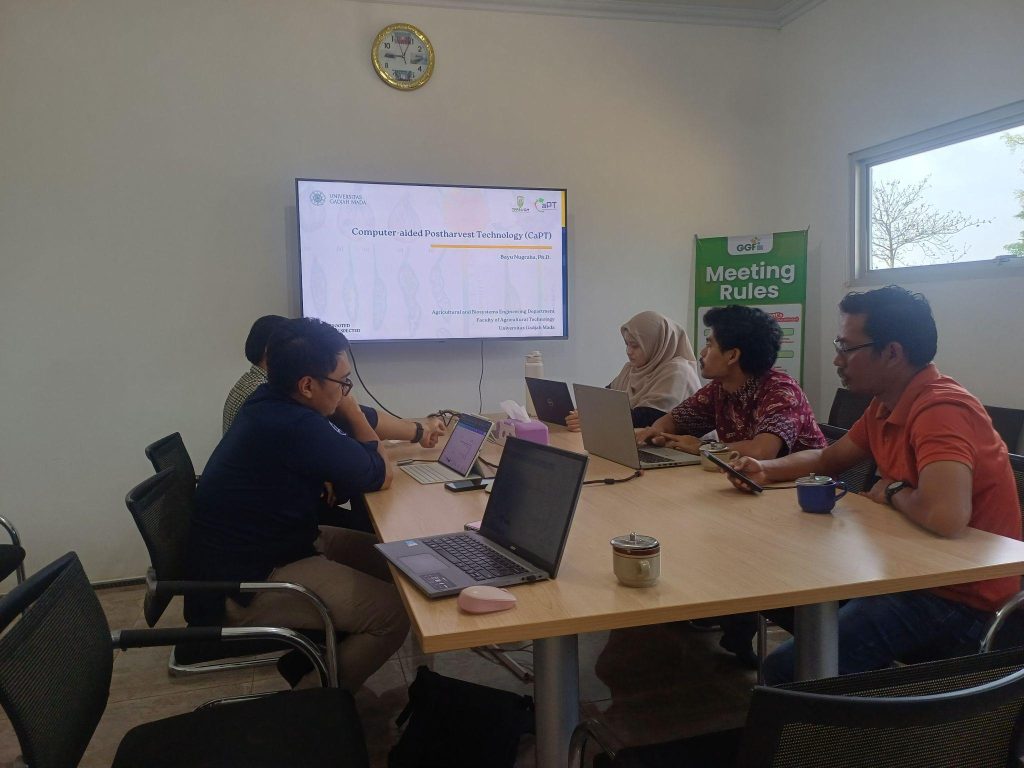
The various challenges identified during the visit highlight opportunities to develop technologies that can support the sorting and quality control of horticultural products.
One of the technologies discussed was X-ray imaging for detecting internal fruit conditions. This technology has the potential to identify internal damage or changes that cannot be observed visually from the fruit surface.
Similar needs were also identified for other commodities handled by GGP, such as guava. Internal fruit characteristics, including the degree of redness inside the fruit, can be difficult to determine without appropriate inspection methods.
Strengthening Research Collaboration between DTPB FTP UGM and PT GGP
The DTPB FTP UGM visit to PT Great Giant Pineapple represents a step toward connecting industrial technological needs with research expertise in higher education. The challenges identified in the field can serve as a basis for developing more applicable research aligned with industrial requirements.
Future collaboration may include the development of technologies for internal quality detection, product condition monitoring, and non-destructive postharvest technology. In addition to research development, the collaboration also opens opportunities for DTPB FTP UGM students to undertake internships at PT Great Giant Pineapple, providing them with firsthand experience in horticultural product handling and quality control within an industrial environment.
Through direct visits and discussions with industry partners, DTPB FTP UGM continues to expand opportunities for research oriented toward real-world needs. Collaboration with PT Great Giant Pineapple represents a step toward connecting research-based postharvest technology development with its practical application in the horticultural industry.
Written by: Naufal Lathif Perdana
Editor: Haryo Prasetyo