DTPB FTP UGM Researchers Strengthen Smart Seaweed Innovation through International Collaboration at PAIR Sulawesi Annual Meeting 2026

Makassar, July 23, 2026 – As the country with the second-longest coastline in the world and one of the world’s largest seaweed producers, Indonesia holds tremendous potential to strengthen its blue economy through innovative and sustainable seaweed farming technologies. Supporting this vision, researchers from the Department of Agricultural and Biosystems Engineering (DTPB), Faculty of Agricultural Technology, Universitas Gadjah Mada (FTP UGM) participated in the Partnership for Australia–Indonesia Research (PAIR) Sulawesi Annual Meeting 2026 to advance the development of Smart Seaweed, a digital technology-based approach integrating automation and Decision Support Systems (DSS) to improve the productivity, efficiency, and competitiveness of Indonesia’s seaweed industry.

Indonesia–Australia Collaboration Advances Smart Seaweed Research

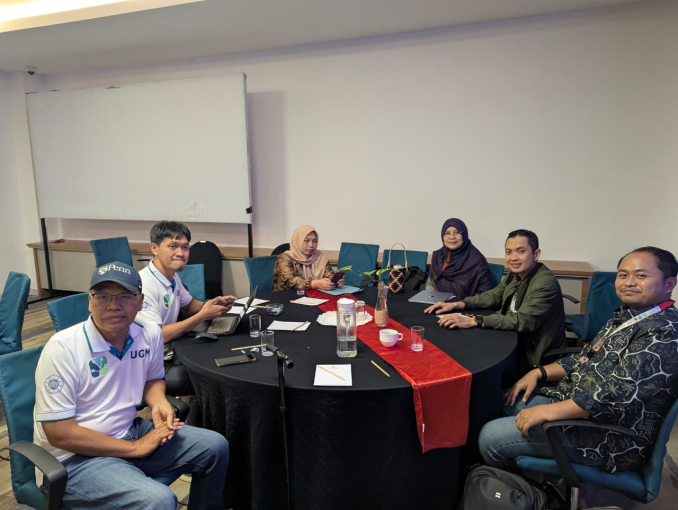
The PAIR Sulawesi Annual Meeting 2026 was held from July 20–23, 2026, at UNHAS Hotel & Convention, Hasanuddin University, Makassar, under the theme “Coastal Communities Sulawesi: Science, Policy and Action.” The annual forum brought together researchers, academics, government representatives, development partners, and other stakeholders to present first-year research outcomes, evaluate ongoing projects, and define research priorities for the coming year.

The DTPB FTP UGM delegation consisted of Prof. Dr. Ir. Lilik Sutiarso, M.Eng., Ir. Andri Prima Nugroho, S.T.P., M.Sc., Ph.D., IPU., ASEAN Eng., APEC Eng., and Samuel Gatot Marseno, S.TP. Their participation forms part of the Sea-Tech: Sustainable Seaweed Cultivation through Smart Technology and Automation research initiative, which focuses on developing technological solutions to improve the efficiency and sustainability of seaweed cultivation.

PAIR Sulawesi is a bilateral research initiative funded by the Australian Government through the Department of Foreign Affairs and Trade (DFAT) and the Government of Indonesia through the Ministry of Higher Education, Science, and Technology and the Indonesia Endowment Fund for Education (LPDP). The program is jointly managed by the Australia-Indonesia Centre (AIC), Monash University, and Hasanuddin University.

Currently, PAIR Sulawesi involves 19 universities and approximately 180 researchers working across six provinces in Sulawesi, focusing on three major themes: seaweed circular economy, net-zero healthcare facilities, and climate change and health.

Developing Smart Seaweed through Data-Driven Digital Technologies

For DTPB FTP UGM, participation in PAIR Sulawesi represents a strategic contribution of agricultural and biosystems engineering to the development of technology-driven seaweed farming systems. The research integrates field data collection, monitoring technologies, automation, and the development of dashboards and Decision Support Systems (DSS) for governments and other stakeholders.

Through these technologies, production data, environmental conditions, supply chain dynamics, and cultivation performance can be comprehensively analyzed to support data-driven decision-making.

According to Dr. Andri Prima Nugroho, technology development must always begin with the real needs of coastal communities.

“Technology should be developed based on the actual challenges faced by seaweed farmers. This annual meeting provides an opportunity for researchers and stakeholders to integrate field data, practical experiences, and policy needs, ensuring that the innovations developed are truly applicable and beneficial,” said Dr. Andri.

Linking Field Surveys to Government Decision Support Dashboards

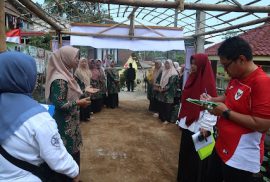
The participation of DTPB FTP UGM in PAIR Sulawesi Annual Meeting 2026 builds upon an earlier field survey conducted in Punaga Village, Takalar Regency, South Sulawesi, from January 25–27, 2026.

During the survey, the research team collected comprehensive data on seaweed production, market prices, supply chains, and institutional conditions at the regional level.

These datasets have become the foundation for developing the Government User Interface Dashboard, an information system designed to help local governments monitor the seaweed sector through transparent, measurable, and evidence-based policy support.

The annual meeting provided an opportunity to present and discuss these findings with multidisciplinary research teams, contributing to the further refinement of Smart Seaweed technologies.

Strengthening Multidisciplinary Collaboration for Sustainable Coastal Development

Discussions throughout the meeting highlighted that advancing Indonesia’s seaweed sector requires far more than cultivation innovations alone. Success depends on integrating expertise from agricultural engineering, information technology, remote sensing, circular economy, governance, and public policy.

Prof. Dr. Ir. Lilik Sutiarso, M.Eng. emphasized the important role of agricultural and biosystems engineering in connecting field data with practical management needs.

“The challenge is not merely to develop technology or generate data, but to build systems capable of interpreting field conditions, identifying risks, and supporting better decision-making. Therefore, collaboration among researchers, governments, and local communities is essential,” Prof. Lilik explained.

The PAIR Sulawesi Annual Meeting 2026 featured high-level plenary sessions, policy forums on circular economy, net-zero initiatives, climate change and health, interdisciplinary research discussions, and a closing ceremony attended by the Australian Ambassador to Indonesia.

Driving the Transformation of Seaweed Farming through Smart Agriculture

Through its participation in PAIR Sulawesi Annual Meeting 2026, DTPB FTP UGM reaffirmed its commitment to developing agricultural and biosystems technologies that extend beyond academic publications to deliver practical solutions for society.

The development of Smart Seaweed is expected to improve the effectiveness of seaweed farming monitoring, enable faster and more accurate decision-making, enhance farmers’ livelihoods, and strengthen the sustainability of Indonesia’s coastal economy.

In line with the spirit of international collaboration, the program also opens broader opportunities for DTPB FTP UGM to expand research partnerships with universities, government agencies, and international institutions in advancing technology- and innovation-driven transformation of Indonesia’s marine and coastal sectors.

Leave A Comment

Your email address will not be published. Required fields are marked *

*

This site uses Akismet to reduce spam. Learn how your comment data is processed.